

It often starts with a small moment that is easy to dismiss. You visit for lunch and notice your mother seems unusually tired, or your father pauses longer than usual while getting up from a chair. When you ask about it, the answer comes quickly: “I’m fine.” Maybe they laugh it off with, “It’s nothing,” or blame it on “just getting older.” The conversation moves on, but the uneasy feeling stays with you after you leave.
For many older adults, minimizing physical or cognitive difficulties feels easier than admitting something may be changing. Some do not want relatives to worry.
Others fear losing privacy, control over daily life, or the ability to continue living the way they always have. Even people who are normally open and independent often begin downplaying discomfort, exhaustion, forgetfulness, or trouble keeping up with everyday tasks.
Part of what makes this difficult for adult children is how subtle the early clues can be. Nothing seems serious enough to point to one clear explanation. Instead, there might be a growing sense that interactions feel different than they used to. You start questioning your own instincts and wondering whether you are reading too much into ordinary aging.
This blog is designed to help make those observations clearer. It will walk through why many seniors conceal difficulties, what patterns tend to matter most, how to separate isolated moments from more meaningful shifts, and how to approach the situation without turning every conversation into conflict.
Here is the Quick Answer:
Older adults sometimes minimize or conceal physical, emotional, or cognitive struggles to avoid worrying others or losing control over daily life. Repeated inconsistencies, not isolated moments, are usually what matter most.
This article explains how to recognize behavioral and environmental patterns, verify concerns calmly, approach conversations respectfully, and understand when outside involvement or ongoing assistance may be appropriate.
Why do elderly people hide health issues?
For many older adults, minimizing physical or cognitive difficulties is not really about deception. More often, it comes from a desire to maintain normalcy, avoid uncomfortable conversations, or protect the life they are used to living. Understanding the motivation behind the behavior can make family interactions less tense and more productive.

Fear of Losing Independence
Many seniors worry that admitting problems will lead to unwanted changes in their lives. They often fear losing the ability to drive, manage their own schedule, live at home, or make decisions without outside involvement.
Because of that, even small limitations are sometimes brushed aside. Some older adults insist they are managing fine because acknowledging otherwise can raise fears about losing control.

Related: How to Start Home Care for Seniors for the First Time in North Vancouver?
Not Wanting to Worry Family Members
Parents often continue trying to protect their children long after those children become adults themselves. Some older adults stay quiet about pain, fatigue, memory lapses, or mobility problems because they do not want relatives to feel stressed or responsible.
In many cases, they believe they are helping by keeping concerns to themselves. From the senior’s perspective, staying quiet can feel more considerate than involving family in every new difficulty.
Embarrassment, Pride, and Denial
Many people were raised to handle personal problems privately and avoid talking openly about physical decline. Admitting they need assistance with everyday tasks can feel uncomfortable or embarrassing, especially for someone who has always been self-reliant.
Denial is not always dramatic or intentional. Some people continue dismissing limitations or postponing conversations about them because acknowledging those realities feels emotionally uncomfortable. Often this is subtle rather than intentional.
Cognitive Changes and Reduced Self-Awareness
Sometimes the person genuinely does not recognize how much things have shifted. Mild cognitive decline can affect insight, judgment, and awareness of day-to-day functioning.
Family members often notice a clear difference in behavior or ability while the older adult believes everything is mostly unchanged. In these situations, minimizing problems often reflects reduced self-awareness rather than deliberate concealment.

Top Red Flags of Elderly Hiding Health Issues
Early clues are easy to explain away on their own. What matters more is the pattern; several small shifts appearing together or becoming more noticeable over time. These are some of the most common red flags adult children tend to notice first.
1. Declining Hygiene
Clothing may look repeatedly unwashed, or grooming habits can slip noticeably. A once-neat person can suddenly seem less attentive to bathing, shaving, hair care, or laundry.
2. Weight Changes
Looser clothing, an emptier fridge, or noticeable weight loss can point to eating difficulties or reduced appetite. Sudden weight gain can also reflect mobility or medication-related problems.
3. Falls or Unexplained Bruises
Small bruises, sore movements, or vague explanations about “bumping into something” sometimes suggest balance problems or falls that were never mentioned to family.
4. Medication Mismanagement
Pill bottles can appear disorganized, expired, duplicated, or half-finished unexpectedly. Missed doses and confusion around prescriptions often become visible before they are openly discussed.
5. Cognitive Lapses
Conversations sometimes become harder to follow, appointments get forgotten, or the same stories repeat more often than usual. Families sometimes dismiss these moments as typical aging at first.
6. Social Withdrawal
Someone who once enjoyed phone calls, outings, or visits can begin canceling plans or staying home more frequently.
7. Mood or Personality Shifts
Irritability, unusual frustration, apathy, or emotional flatness can appear gradually. Conversations sometimes feel unusually tense, flat, or emotionally distant compared to the past.
8. Home Disorganization
Mail piles up, dishes stay undone longer, or familiar spaces begin looking neglected. The home can appear less organized or harder to maintain than before.
9. Driving-Related Concerns
New dents on the car, hesitation while driving, getting lost on familiar routes, or avoiding certain roads can point to growing difficulty behind the wheel.
10. Defensiveness or Avoidance
Questions about wellbeing can quickly get dismissed or redirected. Some older adults become unusually private, minimize obvious difficulties, or avoid letting others visit their home.
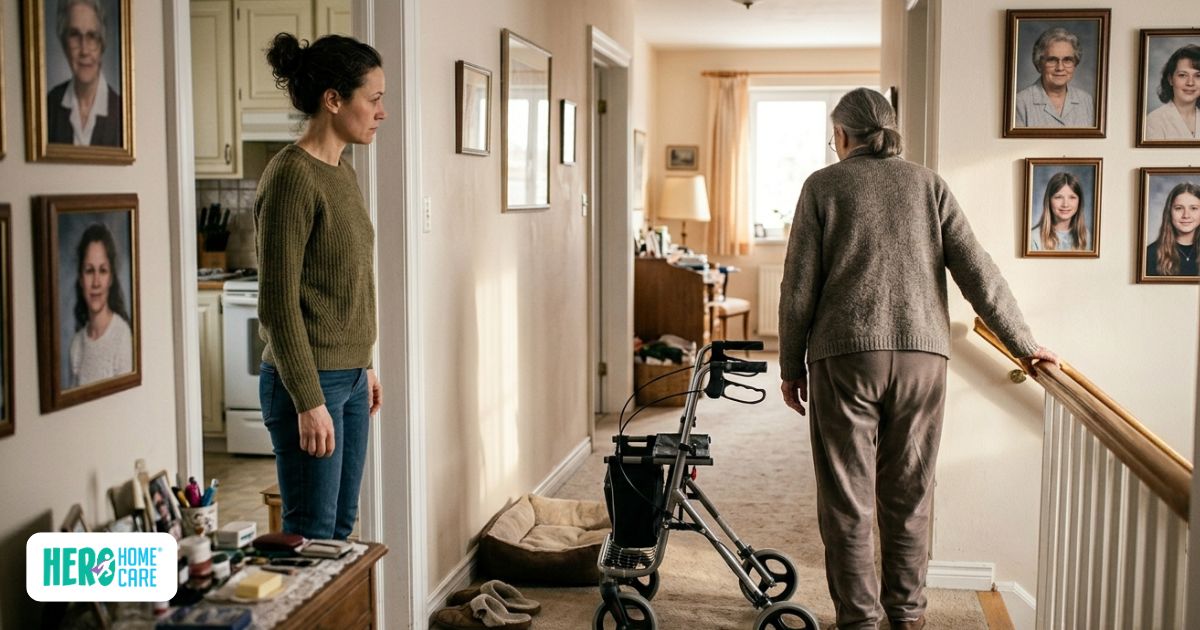
Signs Your Parent Is Hiding Health Problems
Small shifts in daily life rarely arrive all at once. More often, they emerge in small ways that are easy to dismiss individually; a little less energy, less interest in familiar activities, or subtle differences in how someone manages their day. On their own, these moments often do not seem alarming. Seen together over time, they can begin forming a clearer picture.
Physical Signs of Hidden Health Problems
Physical decline often shows up indirectly before it is openly acknowledged. A parent who once moved comfortably around the house may begin sitting more often, walking more slowly, or tiring earlier during ordinary activities. One early clue is that they stop suggesting outings that require extra effort, or they seem unusually drained after simple tasks.
Appearance can shift gradually as well. Appearance and movement can begin telling a different story than the person’s words. Sometimes the person minimizes these differences so naturally that relatives start second-guessing what they are seeing.

Related: Signs Your Senior Parent Is Forgetting Medication, And What to Do
Behavioral Changes That Signal Health Issues
Behavioral shifts can be easier to notice than physical ones, especially for adult children who do not see their parent every day. Someone who used to answer calls quickly, attend community events, or enjoy regular hobbies may begin pulling back from those activities.
The pattern is usually subtle rather than dramatic. Plans get canceled more frequently, errands are postponed, or familiar habits quietly disappear from daily life. Over time, the person can seem less engaged with the outside world than they once were.
Cognitive and Memory-Related Warning Signs
Memory and concentration problems do not always appear as obvious disorientation. Sometimes the first clue is simply that conversations feel less consistent. Stories repeat more often, details get mixed up, or attention drifts during discussions that would previously have been easy to follow.
Daily functioning sometimes becomes less reliable. Appointments are forgotten, instructions become harder to track, or tasks that require organization start taking much longer than before. These moments can come and go, which often makes them harder for relatives to interpret clearly.
Learn More: Early Warning Signs of Dementia

Emotional and Personality Changes
Mood shifts sometimes appear before physical limitations become obvious. A person who was once patient and easygoing may become unusually irritable, withdrawn, anxious, or emotionally flat during conversations.
In other cases, the difference is harder to define but still noticeable. Interactions can feel tense in ways they never used to, or the person can seem less interested in connecting socially. Visits sometimes end with a lingering sense that things are no longer quite the same, even if they cannot point to one specific reason.
Home and Environment Clues
The condition of the home can quietly reflect how well someone is managing everyday responsibilities. Spaces that were once tidy may become harder to maintain, not necessarily because the person stopped caring, but because keeping up with chores has become more physically or mentally demanding.
Unopened mail sometimes sits untouched for days, food expires unnoticed, or clutter slowly builds in areas that used to stay organized. These details are easy to overlook during short visits, but repeated patterns inside the home often reveal more than brief conversations do.
How Seniors Hide or Mask Health Problems
Concealment rarely looks dramatic in everyday life. More commonly, it appears through small conversational habits, avoidance patterns, or routines designed to keep other people from noticing how much daily life has become harder to manage.
Using Excuses to Dismiss Symptoms
Many older adults develop quick explanations that shut down further discussion. Ongoing pain becomes “just stiffness,” exhaustion is blamed on poor sleep, and forgetfulness gets brushed aside as “a senior moment.”
These responses usually sound casual and familiar, which is part of why they are easy to accept at first. Repetition matters more than any single comment. Over time, the same explanations start appearing around multiple situations.

Deflecting or Changing the Subject
Some people redirect conversations the moment questions become too personal. A discussion about missed appointments suddenly shifts toward grandchildren, politics, or what happened on television that week.
Others answer vaguely and move on quickly. Instead of directly addressing mobility, memory, eating habits, or doctor visits, they keep the conversation focused elsewhere so attention never stays on the original topic for long.
Relying on a Spouse to Cover Up Issues
In long-term relationships, partners frequently compensate for one another in ways outsiders barely notice. One spouse may quietly handle medications, appointments, finances, or reminders while making it appear everything is functioning normally.
During visits, the healthier partner may answer questions first, fill in missing details, or smooth over mistakes before anyone else notices them. In many households, this happens protectively rather than deceptively.

Related: When Should Seniors Stop Driving? Signs, Age Factors, and Safety Guide
Hiding Clutter or Hoarding Behavior
Some older adults prepare carefully before visitors arrive. Counters get cleared quickly, certain rooms stay closed, and stacks of paperwork are moved out of sight temporarily.
The goal is not always to create a perfectly clean home. More often, it is to prevent others from seeing how difficult organization and upkeep have become behind the scenes.
Avoiding Social Situations to Hide Symptoms
Pulling back socially can become another form of concealment. Someone who feels self-conscious about memory lapses, mobility limitations, hearing problems, or fatigue may start declining invitations that once felt easy.
At first, the reasons sound temporary or practical, such as being tired, busy, or not feeling up for company. Eventually, visits, outings, and group activities become noticeably less frequent, reducing the chances that others will notice what is changing day to day.

How to Tell If Your Parent Is Really Hiding Health Issues
When something feels off, it is easy to second-guess yourself. The goal is not to prove anything through one conversation or isolated moment. A clearer picture usually comes from paying attention to consistency over time and approaching the situation with curiosity rather than confrontation.
Observing Patterns Over Time
Single incidents rarely tell the full story. A missed phone call, forgotten errand, or messy kitchen can happen to anyone. What matters more is whether the same kinds of inconsistencies keep appearing across different visits, conversations, or routines.
Over time, certain themes may start repeating themselves. Explanations stop matching what you are seeing, stories become less consistent, or daily tasks appear harder to manage than before. Looking at the overall pattern usually gives a more accurate picture than focusing on one event alone.
Ask Open-Ended Questions (Not Yes/No Questions)
Direct yes-or-no questions tend to shut conversations down quickly. Asking “Are you okay?” often leads to a quick “I’m fine” without much discussion.
Broader questions usually create more natural conversations. Instead of asking, “Did you take your medication?” try asking how they are managing prescriptions lately. Rather than “Is everything okay at home?” ask what parts of the week have felt harder to keep up with. These kinds of questions encourage fuller answers without sounding accusatory.
Checking Medical and Daily Living Clues
Sometimes the clearest information comes from ordinary daily details. Asking someone to explain how they are handling meals, appointments, errands, medications, or household tasks can reveal whether life still feels organized and manageable.
The goal is not to catch mistakes or test memory. It is simply to listen for explanations that feel clear, realistic, and consistent with what you already know about their day-to-day life.
Learn More: Signs Your Senior Parent Is Forgetting Medication
Talking to Other People (Neighbors, Friends, Doctors)
People who interact with your parent regularly may notice shifts that are harder to see during occasional visits. Neighbors, close friends, relatives, or community members sometimes pick up on differences in energy, routine, or behavior before immediate family fully recognizes them.
In some situations, it may also help to share observations with a doctor or pharmacist, particularly if safety or daily functioning seems affected. These conversations work best when approached respectfully and realistically, without expecting professionals to disclose private medical information.

When should you be concerned about hidden health issues?
One unusual incident rarely explains the full picture. Concern becomes more reasonable when several warning patterns begin appearing together or when everyday functioning becomes less reliable over time.
Repeated falls, medication mistakes, unsafe driving situations, increasing disorientation, or clear difficulty managing meals, hygiene, or household responsibilities usually deserve closer attention. The same is true when behavior or personality changes become persistent enough to affect judgment, communication, or daily stability.
At a certain point, waiting for absolute proof can delay needed support. When ongoing difficulties begin affecting safety, nutrition, mobility, or the ability to live independently at home, it is reasonable to involve additional medical, family, or professional guidance.
What to Do If Your Parent Is Hiding Health Problems
Once your concern starts feeling consistent rather than occasional, it helps to shift from speculation toward practical coordination. The goal is not to confront your parent aggressively or force immediate decisions. Small, steady actions usually provide a clearer picture and create more stability for everyone involved.
Increase Visits and Observation
Spending more regular time together can reveal whether certain difficulties are becoming more consistent. Short visits, phone calls, shared errands, or meals together sometimes provide more useful insight than one long conversation focused entirely on wellbeing.
Pay attention to how things compare over time. Is the house being maintained the same way? Are appointments, meals, or routines becoming harder to keep up with?
Looking at consistency across several interactions usually gives a more reliable understanding than reacting to one isolated moment.
Involve Other Family Members
Many adult children carry these worries privately for too long because they are unsure whether they are overreacting. Talking with siblings or trusted relatives can help compare observations and reduce the pressure of managing everything alone.
Keeping those conversations calm and factual tends to work best. Instead of debating conclusions immediately, focus on specific examples and recurring situations that multiple people have noticed independently.
Learn More: Sharing Caregiving Duties With Siblings
Contact Healthcare Providers
When functioning appears less reliable, encouraging a medical appointment can provide useful clarity. In some situations, it may help to attend the appointment together or share observations with the doctor ahead of time.
The focus should remain practical rather than accusatory. Framing appointments around overall wellbeing, medication reviews, mobility, memory, or energy levels is usually more productive than presenting the situation as a confrontation.
Use External Support Services
Sometimes the most helpful step is introducing practical assistance before the situation becomes a crisis.
Community senior programs, meal delivery services, transportation assistance, housekeeping support, or companionship visits can reduce strain while helping older adults stay more connected and stable at home.
Professional caregivers can also provide another layer of day-to-day awareness. Regular in-home assistance may help with meals, errands, reminders, mobility, and social interaction while giving relatives a clearer understanding of how things are going between visits.

How to Talk to a Parent Who Is Hiding Health Problems
These discussions can feel emotionally loaded because topics like aging, memory, physical limitations, and independence are closely tied to identity and control over daily life. Even well-meaning questions can trigger defensiveness if the person feels judged or pressured.
Timing usually matters more than perfect wording. Raising concerns during an argument, immediately after an incident, or in a stressful moment rarely goes well. Calmer settings (during a meal, a drive, or a routine visit) generally create more space for honest discussion.
Observations also land better than accusations. Saying, “I’ve noticed a few things lately and wanted to check in,” is usually easier to hear than insisting someone can no longer manage independently. Questions tend to keep the exchange more open as well.
It also helps to avoid correcting every explanation immediately. Some older adults speak cautiously at first, especially if they worry the discussion could lead to unwanted changes or loss of independence.
These conversations rarely resolve all at once. A person who dismisses concerns initially may become more open after several calm discussions spread across time.
Certain approaches almost always increase tension. Ultimatums, sarcasm, panic-driven reactions, or speaking to someone like a child usually create resistance instead of cooperation.
A more productive approach keeps the focus on understanding rather than control. The goal is not to win an argument, but to keep communication open enough for honest discussions about wellbeing and everyday functioning.
Risks of Ignoring Hidden Health Problems in Seniors
Many situations become far more disruptive not because the original difficulty was severe, but because nobody realized how much daily life had started to slip. Small problems are usually easier to address early, while prolonged inattention can narrow the options available later.
Physical and cognitive difficulties rarely stay frozen in place. Missed medications, untreated pain, poor nutrition, or increasing forgetfulness can slowly affect mobility, energy, judgment, and day-to-day functioning.
What begins as occasional inconsistency can eventually interfere with eating properly, keeping appointments, moving safely around the home, or managing basic responsibilities.
Accidents also become more likely when warning patterns continue unchecked. Falls, medication mix-ups, dehydration, and unsafe living conditions tend to develop when ordinary routines are no longer being managed reliably. In some households, the environment itself becomes harder to maintain, creating additional hazards through clutter, spoiled food, unpaid bills, or neglected upkeep.
Emotional wellbeing can shift as well. People who are struggling privately sometimes become increasingly withdrawn, anxious, frustrated, or disconnected from social life. Reduced interaction with others can make existing difficulties harder to recognize and harder to address.
Eventually, situations that might have been handled through earlier attention can lead to emergency room visits, hospitalization, or a sudden need for much more intensive care. Paying attention sooner does not guarantee every problem can be avoided, but it often allows families to respond with more stability, flexibility, and time to make thoughtful decisions.
Learn More: When Is 24-Hour Home Care Necessary for Seniors?

How Hero Home Care Helps Detect and Manage Hidden Health Issues
One of the hardest parts for adult children is that they usually are not present often enough to see what everyday life truly looks like. Short phone calls and occasional visits can miss the smaller inconsistencies that build slowly between conversations.
Through recurring visits, caregivers at Hero Home Care often become a steadier point of contact inside the home. Through ordinary interaction, such as preparing meals, helping with errands, accompanying customers to appointments, or simply spending time together, it becomes easier to notice when energy, appetite, organization, mobility, or mood no longer seem typical for that person.
The value is not constant evaluation or medical monitoring. Familiarity simply creates a clearer sense of what is normal day to day. Small differences that might be invisible during occasional family visits are often easier to recognize when someone sees the person regularly and understands their usual habits and routines.
For some families, regular involvement also reduces uncertainty.
A daughter living outside North Vancouver had grown concerned because her father was becoming harder to reach consistently by phone. After regular visits with Shorya, a Hero from Hero Home Care, it became easier to notice that meals were being skipped and medications were no longer staying organized reliably. The situation had not reached an emergency, but the added consistency helped the family address smaller difficulties before they turned into something more serious.
Beyond observation, companionship can also ease some of the withdrawal that develops when older adults spend long periods alone. Shared activities, conversation, transportation assistance, and help with household tasks can make daily life feel more stable while giving families a better understanding of how their loved one is actually doing between visits.
Final Thoughts: Protecting Your Parent’s Health and Well-Being
Many older adults minimize physical, emotional, or cognitive struggles for reasons that are deeply human; pride, privacy, fear of losing control, or simply not wanting to worry the people around them. Small inconsistencies do not always point to a serious situation, but repeated patterns deserve thoughtful attention rather than endless rationalization or delay.
Approaching the situation calmly usually leads to better conversations and clearer understanding than reacting out of panic or frustration. Earlier involvement can create more options, reduce unnecessary crises, and make day-to-day life easier to stabilize.
For families in North Vancouver who need additional consistency, companionship care, or practical assistance at home, Hero Home Care can provide another layer of regular presence and day-to-day support.