
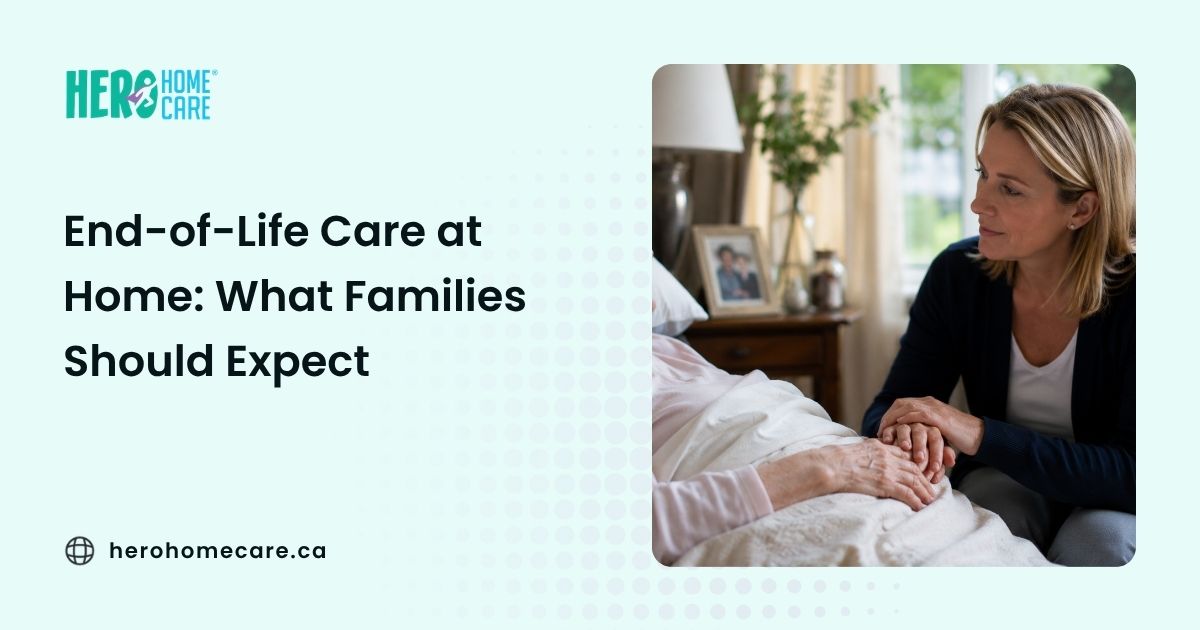
Hearing that a loved one is nearing the end of life can leave people feeling unprepared, even when the decline has been gradual. Daily decisions suddenly carry more weight, and many relatives are left trying to understand what care at home will actually involve, how needs may change, and what kind of help will be required along the way.
End-of-life care at home is centered on comfort, dignity, and reducing day-to-day strain as illness progresses. Depending on the condition and stage of care, this may include managing pain and symptoms, helping with bathing and personal hygiene, adjusting the home for safety and accessibility, providing emotional or spiritual guidance, and assisting with everyday caregiving responsibilities that become harder to handle alone.
For some households, home-based care allows a loved one to remain in familiar surroundings with people they know well. Nurses, doctors, professional caregivers, and relatives may all become part of the care process in different ways, with responsibilities gradually shifting as daily demands grow.
This article explains what families can expect during end-of-life care at home, including how care plans are created, how needs change over time, what may be needed inside the home, and how to prepare for the final days with greater clarity and steadiness.
Here is the Quick Answer:
End-of-life care at home usually involves a gradual increase in hands-on assistance, medical coordination, symptom management, and household adjustments as physical needs change. Care may continue for weeks, months, or longer depending on illness progression, physical decline, and changing medical needs.
Households may need to prepare living spaces, arrange equipment, manage medications, and adapt to increasing supervision needs as the condition advances. Near the end of life, reduced eating, extended sleeping, limited communication, and lower responsiveness are common.
Nurses, palliative teams, and in-home providers frequently help coordinate care, guide next steps, and reduce some of the physical and logistical strain inside the home.
What is an end of life care plan?
An end-of-life care plan is a written guide that outlines how care should be handled as a serious illness progresses. It helps everyone involved understand the person’s wishes, medical priorities, and preferred approach to treatment at home. It becomes a reference point when decisions need to be made quickly or when expressing preferences becomes harder later on.
Care decisions are usually developed through conversations between doctors, nurses, close relatives, and the individual receiving care whenever possible. Some discussions happen gradually over multiple appointments, while others begin after a major diagnosis or hospital stay. The purpose is not to predict every detail ahead of time, but to make future decisions easier to navigate.
An end-of-life care plan may outline decisions around pain relief, symptom management, medications, emergency instructions, resuscitation decisions, hospital transfers, and where the person wishes to receive care. It can also cover personal priorities such as religious practices, visitors, daily habits, or who should make decisions if the person becomes unable to speak for themselves.
Advance care planning is often part of this process. These conversations allow people to express their wishes earlier, before urgent decisions need to be made under pressure. Having those decisions documented can reduce confusion and make coordination between healthcare providers and relatives more straightforward during later stages of care.

What Happens During End-of-Life Care at Home
Home-based end-of-life care often develops over time rather than changing all at once. Early on, many people still take part in familiar activities and make decisions about their treatment and preferences.
As illness advances, mobility and stamina gradually decline, household responsibilities expand, and more hands-on assistance becomes necessary. Doctors, nurses, relatives, and in-home providers often begin coordinating more closely as caregiving tasks become harder for one family to manage alone.
Early Stage of End-of-Life Care
In the earlier phase, many individuals still spend time out of bed, eat regular meals, hold conversations, and participate in familiar activities, even if energy levels have started to decline. Medical appointments often become more frequent, medications sometimes change, and healthcare providers begin discussing future planning alongside symptom monitoring.
Daily routines gradually begin shifting in practical ways. Tasks that once felt simple may take longer or require more effort. Longer periods of rest become more common, and schedules may begin revolving around appointments, treatment side effects, or fluctuating energy levels.
Additional involvement usually develops step by step during this period. Visiting nurses, aides, or palliative teams may begin checking in periodically as coordination inside the house becomes more demanding. Many households are still trying to preserve familiar patterns while quietly adapting to increasing medical needs.
Middle Stage (Increasing Needs)
As illness progresses, stamina and mobility may decline more noticeably. Walking often requires assistance, transfers become harder, and time spent resting or sleeping usually increases. Activities such as bathing, dressing, preparing meals, or using the bathroom become difficult to manage independently.
Eating can also become more difficult. Appetite frequently drops, while swallowing sometimes requires closer monitoring, and meals often become smaller and less frequent. Medication schedules, repositioning, hygiene tasks, and mobility assistance can begin filling much of the day.
At this point, day-to-day coordination usually places more pressure on the household. Relatives may rotate responsibilities, outside providers may visit more frequently, and household routines may increasingly revolve around medical and personal needs.
Fatigue can accumulate quietly, especially when nighttime waking or ongoing supervision starts affecting regular sleep.
Final Days and Active Dying Stage
Near the end of life, overall activity often becomes very limited. Many people spend most of their time sleeping or resting with their eyes closed. Eating and drinking often decrease significantly, and conversations may become shorter or stop altogether.
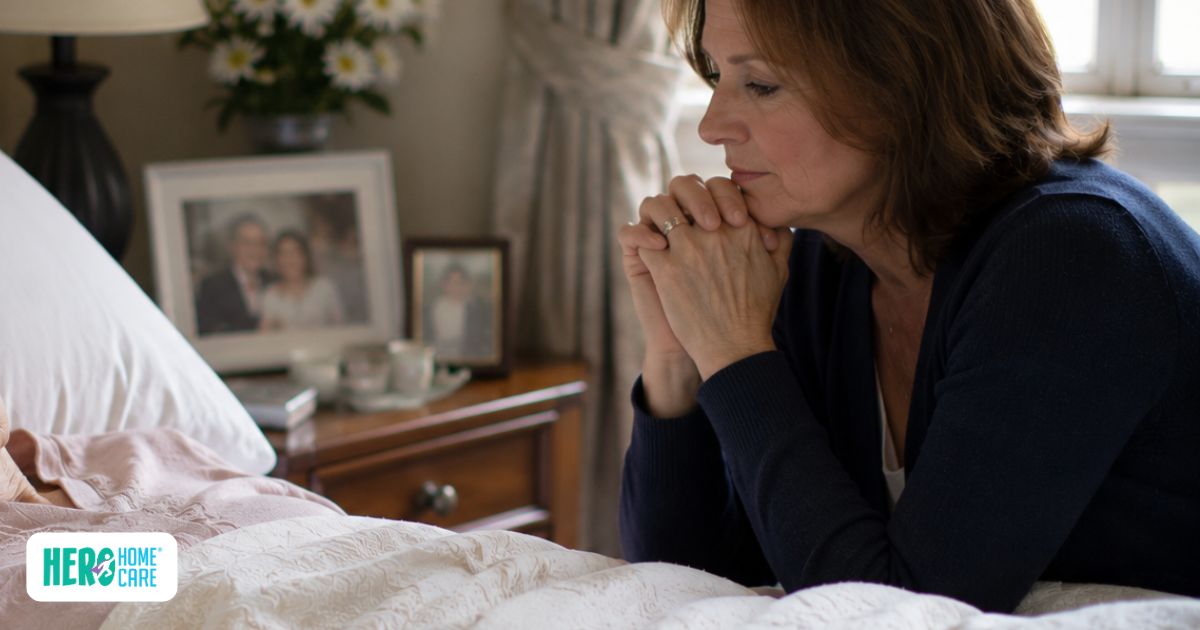
The atmosphere inside the house usually becomes quieter and less active during this phase. Visitors are often limited, lights and noise are reduced, and people close to the bedside may spend longer stretches simply sitting nearby.
Many healthcare professionals encourage families to continue speaking gently, even when the person appears less responsive. Professional attention during active dying mainly centers on easing visible distress, monitoring signs of decline, and guiding relatives through ongoing changes.
At this stage, priorities typically shift away from treatment routines and toward staying nearby, responding to signs of decline and helping relatives understand what is unfolding medically.
Key Services Included in End-of-Life Care at Home
Home-based end-of-life assistance usually brings together several forms of practical and medical help at the same time. Medical providers, personal aides, relatives, and community resources may each handle different responsibilities depending on the person’s condition, living situation, and daily needs.
Some households require only periodic visits early on, while others eventually need regular hands-on assistance throughout the day and night.
Symptom and Pain Management
One of the main priorities during end-of-life care is reducing visible distress and responding quickly when symptoms change. Nurses and medical providers may review medications regularly, monitor pain levels, and adjust treatment plans as breathing difficulties, nausea, anxiety, or restlessness fluctuate.
Communication with healthcare professionals frequently increases during this stage. Small changes in appetite, alertness, mobility, or visible discomfort may lead to medication adjustments or additional nursing guidance aimed at keeping distress more controlled.
Personal Care and Daily Assistance
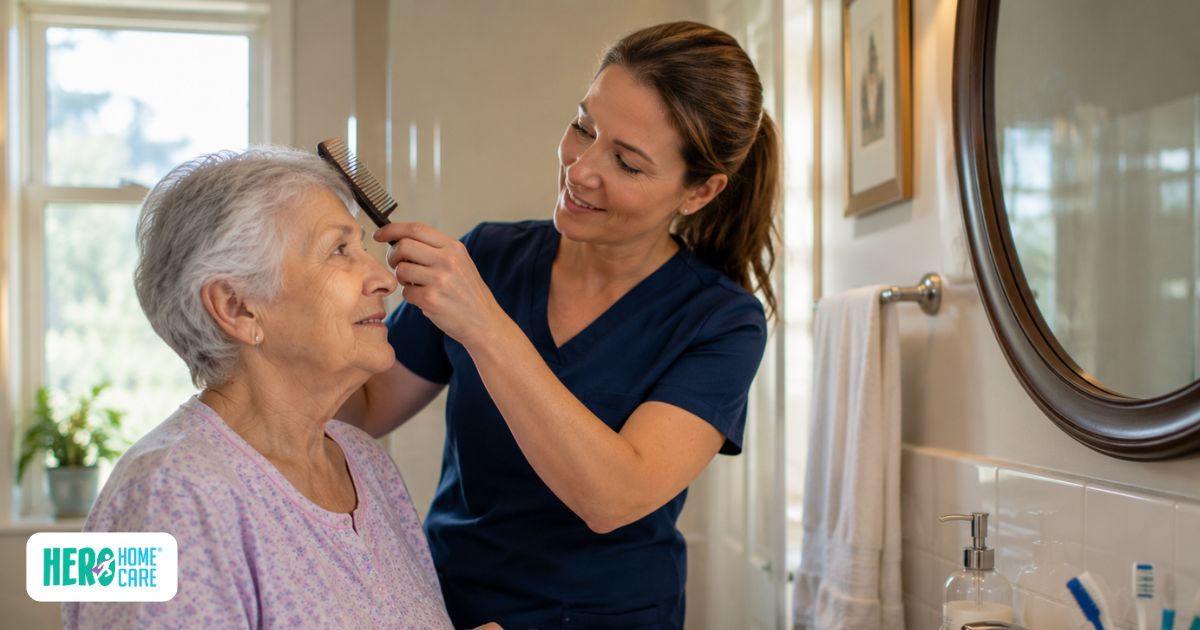
As physical strength declines, everyday tasks gradually require more hands-on involvement. Personal Care can include washing, dressing, toileting, grooming, repositioning in bed, meal preparation, and mobility support throughout the home.
Day-to-day help also extends beyond direct personal assistance. Laundry, cleaning, organizing supplies, and maintaining basic household function can become harder to manage alongside medical responsibilities. Extra hands inside the home often reduce physical strain and help daily life remain more sustainable.
Emotional and Spiritual Support
End-of-life care also includes conversation, companionship, and interpersonal connection. Preferences around social contact vary widely. Regular conversation matters to some individuals, while others prefer shorter visits, fewer voices, or more privacy.
Spiritual guidance may also become important depending on personal beliefs or cultural traditions. Clergy members, counselors, or spiritual advisors are sometimes involved for prayer, reflection, or supportive conversation. In many homes, simply having another person nearby to listen or sit quietly can ease feelings of isolation.
Support for Family Caregivers
Relatives providing ongoing assistance frequently experience deep exhaustion, disrupted sleep, and difficulty balancing household obligations with caregiving demands. Overnight waking, medication schedules, and constant supervision can gradually grow difficult to sustain without outside help.
Respite services, overnight assistance, and shared caregiving duties allow relatives to rest, attend appointments, leave the house briefly, or recover physically. Even short periods of relief can make daily life more sustainable and reduce the pressure of carrying every task alone.
How to Prepare Your Home for End-of-Life Care
Preparing a living space for end-of-life care usually involves simplifying movement, reducing unnecessary strain, and organizing essential tasks more efficiently. Early adjustments tend to work better than rushed changes later, especially as mobility and energy levels decline.
Choosing the Best Room for Daily Care
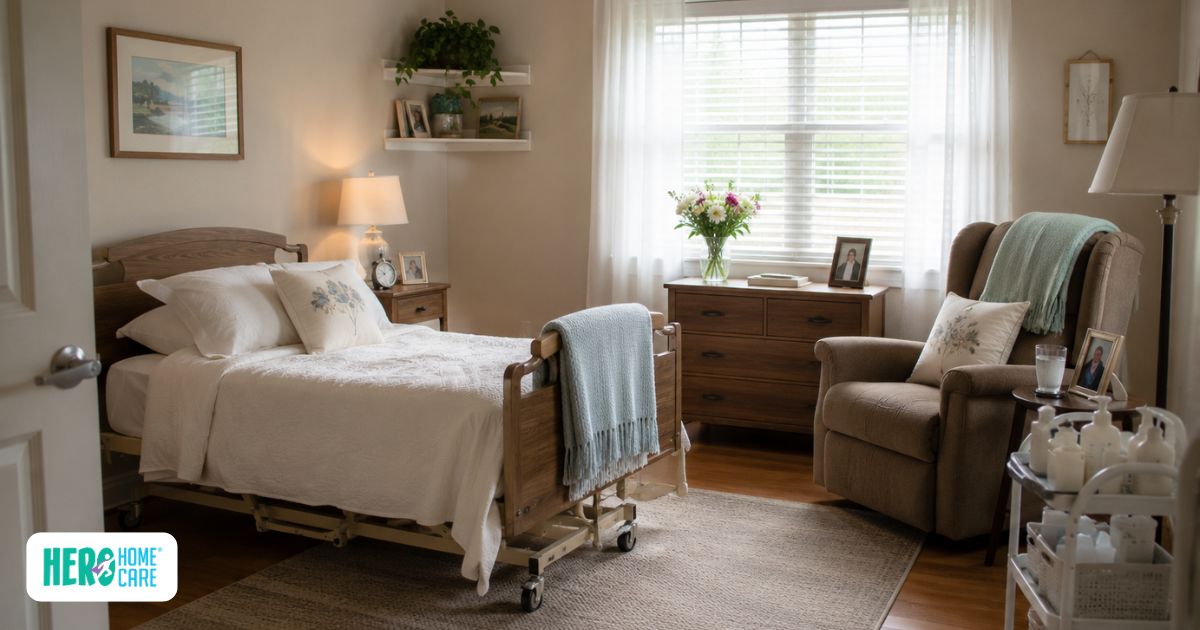
The most practical location is usually a quiet area with enough space to move around comfortably and easy access to a bathroom close to the room. In homes with multiple levels, relocating sleeping arrangements to the main floor may reduce repeated stair use and make daily assistance more manageable.
Privacy also matters. A quieter section of the house can reduce interruptions while still allowing relatives and healthcare providers to move in and out without difficulty. Wider walking space around the bed or chair also becomes increasingly useful as hands-on involvement increases.
Improving Safety and Accessibility
Clear pathways reduce unnecessary obstacles throughout the house. Loose rugs, extension cords, narrow furniture arrangements, and cluttered walkways can create tripping hazards, particularly during nighttime movement or transfers between rooms.
Lighting is another practical adjustment that is frequently overlooked. Hallways, bathrooms, and bedside areas are easier to navigate with soft lighting available after dark. Stable seating with firm cushions and armrests may also provide better support than low or heavily padded furniture.
Organizing Everyday Essentials
Keeping frequently used items within reach can reduce repeated trips across the house during the day. Medications, tissues, water, blankets, chargers, notebooks, and important paperwork are often easier to manage when stored in one accessible location.
Small organizational changes also reduce unnecessary interruptions. A dedicated drawer, bedside cart, or nearby shelf can help keep daily supplies within reach instead of scattered between different rooms.
Preparing Bathrooms and Shared Spaces
Bathrooms often require minor layout adjustments as movement grows more limited. Removing obstacles, improving floor traction, and creating additional space around sinks or toilets can make washing and toileting more manageable.
Shared areas of the house sometimes need rearranging. Narrow pathways, crowded furniture placement, and tight corners can become harder to navigate when assistance is needed during transfers or bathing. Even simple adjustments in spacing can improve movement throughout the house without making the space feel overly medical.
Learn More: How to Create a Safe Home Environment
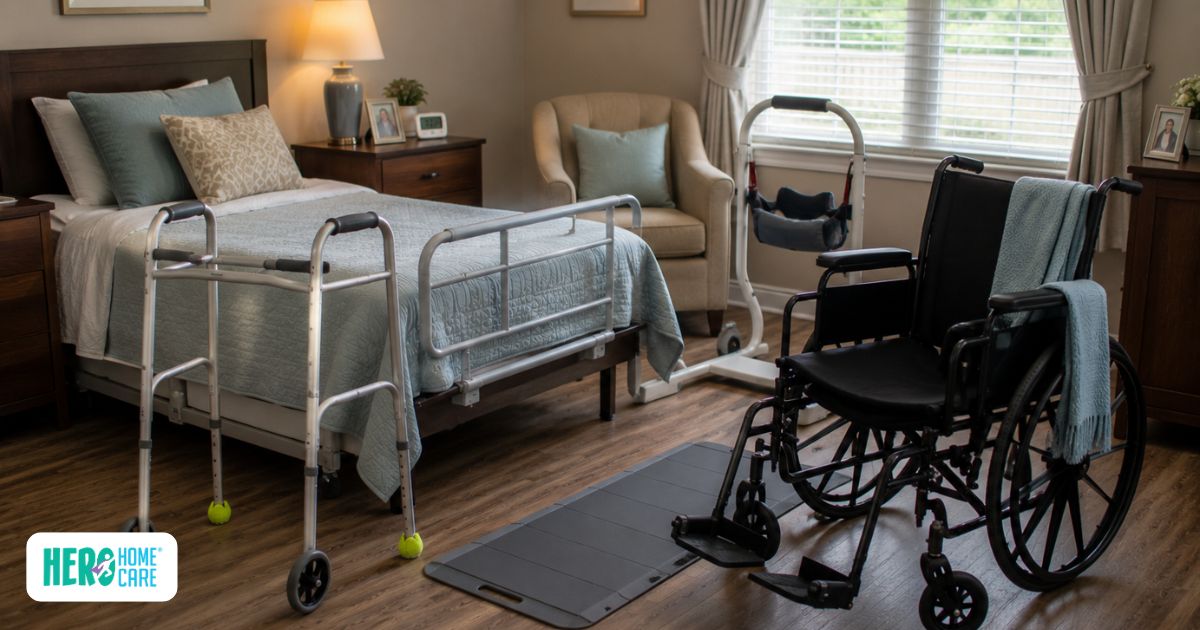
Equipment Needed for Palliative Care at Home
As end-of-life care progresses, additional equipment and supplies are often introduced gradually into the home. Some items are only needed temporarily, while others remain in regular use for weeks or months. Most households are not expected to arrange everything on their own. Healthcare teams often guide the process and recommend items based on changing physical needs.
Hospital Beds and Positioning Equipment
Adjustable hospital beds are commonly added once getting in and out of a regular bed starts requiring more effort. Raising or lowering the bed height can simplify transfers and create better working space during washing, repositioning, or clothing changes.
Positioning wedges, pillows, and supportive cushions are also frequently used to relieve pressure and maintain more comfortable body positioning throughout the day. These items are often added gradually as changing mobility makes repositioning more difficult.
Mobility and Transfer Aids
Walkers, wheelchairs, transfer poles, and bedside rails are frequently used once balance declines or moving between areas starts requiring more hands-on involvement. Some households also use transfer boards or mechanical lifting devices when repositioning places too much strain on relatives or in-home providers.
These tools are intended to improve movement between the bed, chair, bathroom, and other living areas while lowering the likelihood of falls or injury during transfers.
Oxygen and Breathing Support
Oxygen equipment is sometimes recommended when breathing grows more difficult or additional respiratory support is needed. Depending on the situation, this typically involves portable oxygen tanks, concentrators, tubing, or masks used throughout the day or only during certain periods.
Installation is often handled by a medical equipment provider, with instructions given to relatives or in-home providers on how to use and monitor the system safely.
Toileting and Hygiene Supplies
As mobility declines, bedside commodes, waterproof pads, disposable briefs, bathing aids, and no-rinse hygiene products often become part of regular assistance. These items make hygiene tasks more manageable and limit repeated bathroom trips when walking becomes tiring or unsafe.
Shower chairs, wash basins, and disposable gloves may also be added to support washing and hygiene routines more efficiently.

Bedside and Daily-Use Supplies
Many households eventually organize a small bedside area with frequently used items kept within reach. Tissues, medications, water, blankets, wipes, disposable supplies, notebooks, and charging cords are commonly stored nearby to avoid repeated trips between rooms.
Keeping these items organized in one place can simplify daily tasks and reduce repeated back-and-forth movement during the day.
Who helps arrange equipment at home?
Most medical equipment is arranged through nurses, palliative care teams, physicians, or discharge coordinators. Referrals are typically sent to medical supply companies that deliver, assemble, and explain how to use the equipment inside the home.
Not everything arrives at once. Additional supplies are often added gradually as physical requirements shift, and healthcare providers regularly reassess what remains useful and what may need adjustment later on.
How long can end of life care last?
One of the hardest parts of end-of-life care is the uncertainty around timing. Some individuals receive palliative or end-of-life assistance for only a few weeks, while others continue needing involvement over several months or longer. Even experienced healthcare providers cannot predict an exact timeline with certainty.
Serious illness rarely follows a perfectly straight path. Health may worsen rapidly for a period, followed by days or weeks that appear relatively stable. In other cases, stamina and independence fade slowly over a much longer span before more noticeable limitations appear. Appetite, movement, alertness, and energy levels also tend to fluctuate unevenly rather than changing in a steady pattern.
The underlying diagnosis strongly influences how quickly mobility, endurance, and medical requirements shift. Certain cancers may advance rapidly near the end of life, while neurological disorders or chronic organ disease can follow a much slower course. Infections, hospital stays, or abrupt setbacks may also reshape expectations unexpectedly.
Overall health and physical reserve also affect duration. Two individuals with the same diagnosis may follow very different patterns depending on age, nutrition, mobility, and additional medical conditions. Some continue participating in familiar routines much longer than expected, while others begin relying on extensive assistance far sooner.
Shifts in appetite, sleep, stamina, and recovery after illness often influence how much day-to-day involvement becomes necessary. A temporary improvement does not always mean recovery, just as a sudden setback does not always mean death is imminent. Day-to-day changes can sometimes appear inconsistent or difficult to interpret.
Because exact timing remains uncertain, many households adapt step by step as medical needs shift. Regular communication with physicians, nurses, and palliative teams can provide updated guidance and help relatives prepare for changing levels of involvement without relying too heavily on exact predictions.
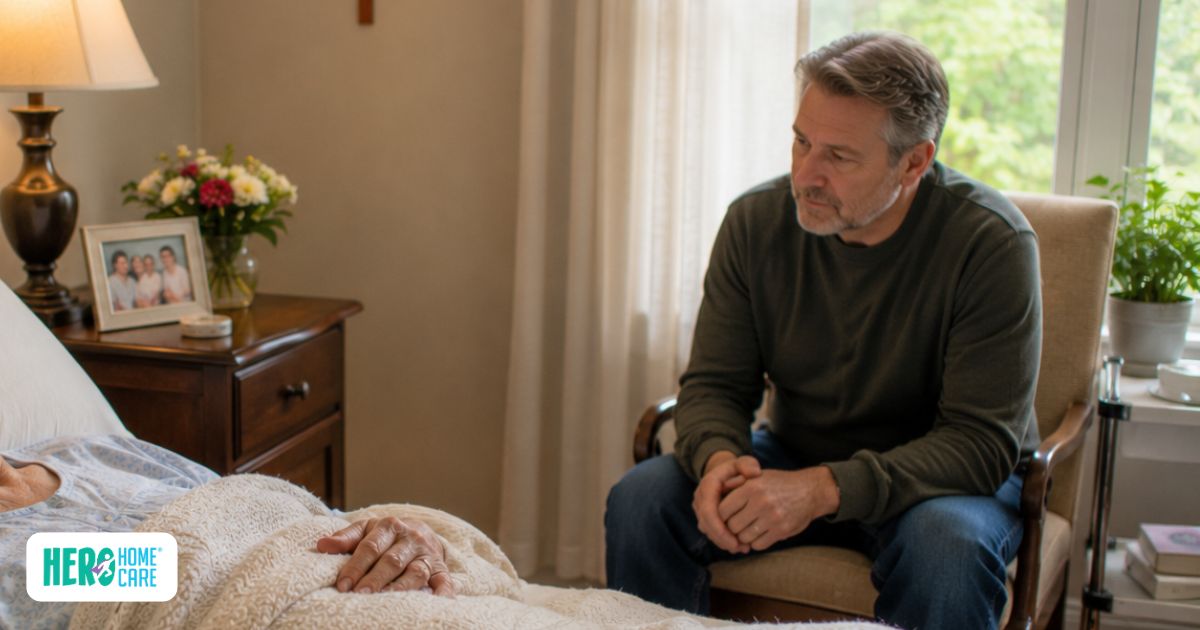
What to Expect in the Final Days and Hours of Life
Near the end of life, energy levels typically decrease significantly. Many individuals spend most of the day asleep or resting with their eyes closed, waking only briefly at times. Interest in meals, conversation, television, or familiar activities often fades as energy is conserved for basic function.
Food and fluid intake often lessen near the end. Portions shrink, swallowing can take longer, and requests for food may stop altogether. Reduced appetite at this point is common and does not necessarily indicate discomfort or suffering.
Communication becomes more limited. Responses are often shorter, delayed, or less frequent. At certain points, some people stop speaking entirely while still appearing aware of voices or touch nearby. Long pauses before answering questions are also common as alertness decreases.
Weakness is usually more visible near the end. Standing, repositioning, or lifting the head may require complete assistance. Hands and feet may feel cooler as circulation slows, and facial expressions may show less response than earlier in the illness.
Restlessness or agitation can also appear for short periods, especially during transitions between sleep and wakefulness. Disorientation, agitation, or confusion may increase temporarily, even in people who were previously calm and alert.
Responsiveness often lessens further during active dying. Eye contact may be less consistent, surroundings may draw little attention, and extended periods of unresponsiveness can occur. Despite this, many healthcare professionals encourage families to continue speaking gently and remaining present, even when responsiveness becomes very limited.
These signs do not always follow a predictable order. Alertness can briefly return before fading again, and certain signs can appear earlier or later than expected. If new signs appear suddenly or feel hard to interpret, ongoing communication with nurses, physicians, or palliative teams can help clarify what is happening and whether additional medical guidance is needed.
How to Keep a Loved One Comfortable During End-of-Life Care
Practical comfort at home often comes from simple physical adjustments repeated throughout the day. Clean skin, dry bedding, easier positioning, and reduced sensory strain can make care feel more controlled without requiring complicated steps.
Keeping the Body Clean and Dry
Regular washing helps prevent irritation, odor, and skin breakdown. A full bath is not always realistic, so sponge bathing, warm cloths, and careful cleaning after toileting may be more appropriate as strength decreases.
Pay close attention to areas where moisture collects, such as the back, underarms, skin folds, and bedding contact points. Dry clothing, clean sheets, and prompt changes after sweating or incontinence help protect fragile skin.
Mouth and Lip Care
Dry mouth and cracked lips are common near the end of life, especially when drinking decreases. Small amounts of water, oral swabs, or a damp cloth are sometimes used if recommended by the care team.
Lip balm can reduce cracking and dryness. Mouth care should be slow and careful, particularly if swallowing is weak or the person is no longer fully alert.
Bedding, Clothing, and Repositioning
Bedding should stay smooth, dry, and free of wrinkles that press into the skin. Loose clothing, lightweight layers, and breathable fabrics are usually easier to manage than tight garments or heavy blankets.
Changing position at appropriate intervals can reduce pressure on the back, hips, shoulders, and heels. If turning causes pain or resistance, nurses or palliative providers can guide safer ways to adjust the body without unnecessary strain.
Reducing Noise and Overstimulation
A less crowded physical setting can make rest easier. Lower television volume, fewer competing conversations, and reduced foot traffic near the bed help prevent unnecessary sensory strain.
Lighting, temperature, and nearby activity should be adjusted based on visible response. If grimacing, restlessness, or tense posture appears, the room feels calmer with fewer interruptions, less noise, or a simpler setup.
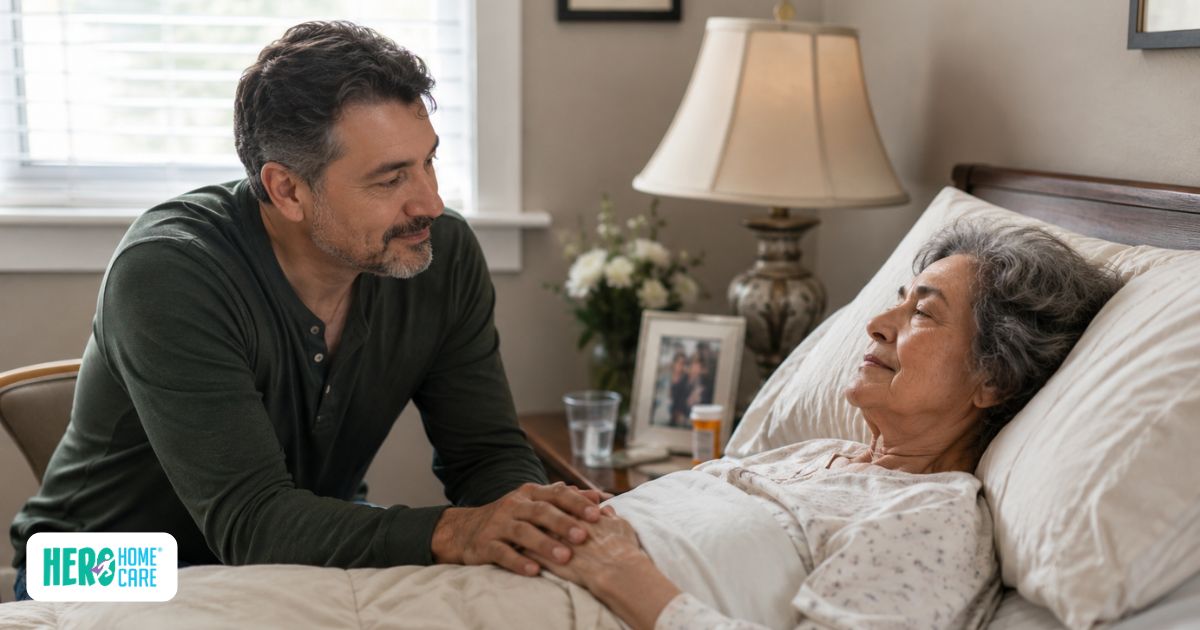
How to Comfort a Loved One During End-of-Life Care at Home
As communication becomes more limited, connection usually shifts away from long conversations and toward smaller forms of reassurance. Tone, pacing, familiarity, and simple human closeness tend to carry more weight than explanations or attempts to keep discussion going.
Speaking in a Reassuring and Steady Way
A slower speaking pace and softer tone can make the room feel less tense, especially during periods of confusion or lower awareness. Short sentences are generally easier to follow than long explanations or repeated questions.
Simple updates about what is happening nearby can also create orientation without demanding interaction. Saying things like “I’m sitting beside you” or “I’m going to adjust your blanket” keeps communication clear and predictable.
Staying Present Without Forcing Conversation
Long stretches of silence are common near the end of life. Silence does not necessarily mean discomfort, withdrawal, or lack of awareness.
Sitting nearby, reading quietly, or remaining in the room during rest periods may feel more natural than trying to maintain constant conversation. Some people respond with only brief eye contact, small movements, or short phrases, especially as energy becomes more limited.
Creating a More Settled Atmosphere
The overall tone inside the room can influence how restful the space feels. Lower voices, fewer interruptions, and a more orderly setting tend to reduce tension and overstimulation late in the day.
Familiar music at low volume, regular lighting patterns, or recognizable daily habits can also create continuity when attention and awareness fluctuate. Loud television, crowded visits, or multiple conversations happening at once may become harder to tolerate.
Small Actions That Still Matter
Brief relational gestures still carry meaning, even when interaction becomes minimal. Brushing hair back gently, adjusting a blanket without rushing, or sitting together during quiet periods can communicate steadiness without requiring much energy.
Consistency also matters. Seeing the same faces, hearing recognizable voices, and maintaining ordinary habits around the bedside can make the space feel less unfamiliar as responsiveness decreases.
What to Do When a Loved One Passes at Home
If death occurs during planned end-of-life or hospice services, the first call is usually made to the nurse or supervising medical team. They can provide direction by phone and explain what happens next before anyone arrives at the house. Emergency responders are not always required when death was expected and already medically documented.
When a death happens unexpectedly, or no palliative team is involved, relatives generally need to contact emergency services or local authorities so the death can be officially confirmed. Dispatchers typically explain the immediate steps while responders are on the way.
After arrival, a nurse, physician, paramedic, or other authorized professional confirms the death and completes the required documentation. Depending on local procedures, additional paperwork may follow before transfer arrangements can move forward. In hospice-supported situations, staff frequently coordinate much of this communication directly with the funeral home.
Transportation usually does not happen immediately. There is often time for those in the house to gather belongings, contact relatives, or sit quietly before transfer arrangements begin. Funeral providers commonly explain timelines, documentation requirements, and the next administrative steps once they are contacted.
The first several hours after a death at home are usually structured more than people expect. Medical teams, funeral staff, and other personnel generally guide the practical responsibilities step by step, so households are not left figuring everything out on their own.
When to Seek Professional End-of-Life Care Support
End-of-life responsibilities rarely stay static. What begins as periodic assistance with meals, appointments, or medication schedules can gradually shift into overnight waking, frequent repositioning, close monitoring, and constant coordination between providers. As physical decline advances, the workload inside the house usually becomes more demanding and less predictable.
Medical oversight can also become harder to manage without additional involvement. Medication schedules sometimes change quickly, appetite can fluctuate from day to day, and new symptoms sometimes appear with little warning. Relatives may find themselves uncertain about whether a change is expected, urgent, or serious enough to report.
Sleep disruption is another common threshold. Repeated nighttime waking, lifting assistance, toileting needs, or restlessness can leave spouses and adult children physically depleted after days or weeks without proper rest. Organization may begin slipping as exhaustion builds, especially when balancing employment, childcare, or responsibilities outside the household.
There are also situations where supervision requirements become difficult to maintain safely. Increased fall risk, confusion around medications, or rapid physical weakening can make it unrealistic for one individual to monitor everything alone throughout the day and night.
Seeking additional involvement does not mean relatives have failed or stopped participating. In many households, outside assistance becomes part of creating steadier oversight, clearer coordination, and a more sustainable rhythm as medical and physical demands increase.

How Hero Home Care Supports End-of-Life Care at Home in North Vancouver
During end-of-life care, households are frequently balancing medication schedules, overnight waking, washing, repositioning, meals, appointments, and constant coordination between multiple providers. Hero Home Care fits into that rhythm through practical, steady involvement, reducing how much falls on one spouse or adult child throughout the day.
In North Vancouver, Heroes regularly assist with bathing, mobility-related tasks, meal preparation, overnight monitoring, and general day-to-day coordination around the house. Seeing the same Heroes regularly creates continuity from one visit to the next. Small observations, such as reduced appetite, increasing weakness, changes in mobility, or growing fatigue, are easier to notice when the same people remain involved consistently.
One North Vancouver household had been managing overnight care almost entirely between two adult children rotating shifts after work. Once regular Hero visits were introduced, morning routines became more organized, transfers placed less strain on the children, and their father became more comfortable accepting assistance from someone he recognized each week. The shift was gradual, but daily coordination became easier to manage and overnight strain eased noticeably.
Hero Home Care does not replace medical providers or hospice teams. Instead, Heroes become part of the ongoing rhythm across the household, helping maintain steadier coordination while reducing some of the physical and logistical demands that build as end-of-life needs increase.
Final Thoughts: Providing Comfort, Dignity, and Support at Home
End-of-life care at home rarely follows a perfectly predictable path. Physical decline, changing medical realities, and shifting household responsibilities can create uncertainty even when plans are already in place. Clear communication with healthcare teams, realistic expectations, and steady day-to-day coordination usually make the experience more manageable for everyone involved.
Familiar surroundings, consistent involvement from trusted people, and practical preparation can ease some of the strain that develops as needs increase. Additional involvement also becomes part of daily life in many households, especially when overnight needs, hands-on tasks, or medical oversight become harder to manage alone.
Families in North Vancouver who need additional end-of-life support at home can contact Hero Home Care for compassionate, practical guidance during this difficult stage.