

Caring for someone with dementia at home can quickly become mentally exhausting when each day feels unpredictable. Agitation, wandering, disrupted sleep, repeated questions, and resistance around meals or hygiene frequently increase when the household lacks a steadier daily rhythm. Small changes in timing or environment can also trigger frustration more easily than relatives expect.
When meals, quiet periods, and everyday tasks happen in a more recognizable flow, the day can feel less mentally demanding overall. Regular meal times, lower-noise evenings, and repeated daily rhythms can reduce restlessness and environmental overwhelm across the household.
Shifts in household flow usually affect more than the individual receiving care. When meals, rest periods, activities, and bedtime happen in a more organized way, relatives tend to spend less time reacting to unexpected behaviors and more time anticipating needs before problems become more disruptive.
This guide explains how to build a dementia-friendly daily routine at home, including morning pacing, activity planning, evening de-escalation, visual cue systems, communication strategies, and signs that outside involvement may become necessary. For North Vancouver households already balancing complex dementia caregiving demands, organizations such as Hero Home Care are often part of that broader in-home caregiving landscape.
Here is the Quick Answer:
- A dementia-friendly day works best when meals, rest periods, activities, and bedtime follow a steady but flexible rhythm.
- Morning routines should start slowly, with fewer choices and enough time for hygiene, breakfast, and medications.
- Afternoons usually need balanced engagement, such as light movement, simple household participation, music, rest, or short social interaction.
- Evenings should become lower-stimulation to reduce sundowning, nighttime restlessness, and wandering risk.
- Visual cues, written prompts, and care plans can make the day easier to organize as memory and task sequencing decline.
- Professional in-home dementia care may become appropriate when wandering, missed medications, exhaustion, or supervision needs become difficult to manage alone.
Why is a daily routine important for dementia patients?
Dementia gradually affects how the brain processes time, sequences tasks, and interprets changing environments. As memory declines, ordinary moments such as getting dressed, moving from one room to another, or preparing for meals can become harder to follow.
Repeated sequences lower the amount of new information the brain must process across the day. Eating breakfast at the same table each morning, hearing familiar sounds before bedtime, or following a repeated sequence of activities can make the day feel easier to interpret. Clear environmental cues also make movement from one activity to another easier to follow.
Frequent schedule disruptions often increase behavioral strain. A delayed lunch, unexpected visitors, or sudden schedule changes may trigger frustration, pacing, withdrawal, or resistance around everyday tasks. Evenings tend to become more unsettled when stimulation remains high late into the day or transitions happen too quickly.
Task sequencing is another challenge that becomes more noticeable as cognitive decline progresses. Steps that once happened automatically, such as washing up before bed, taking medications after meals, or preparing for an outing, may stop connecting smoothly in the brain.
Over time, repeated sequencing allows more tasks to happen through habit instead of active recall.
Daily timing also affects physical patterns throughout the day. Meals served around similar hours may improve appetite consistency, repeated bedtime habits often support steadier overnight rest, and medications are usually easier to manage when connected to established daily anchors.
Cooperation with hygiene, dressing, or eating also tends to improve when these moments follow a recognizable order instead of changing constantly.

Morning Routine for Dementia Patients
The first few hours of the day can strongly influence how the morning progresses. Sudden noise, rushed preparation, or too many decisions early on may increase resistance and disorientation before the day has fully started.
A slower pace usually works better than trying to complete everything quickly.
Gentle Wake-Up and Morning Transitions
Getting out of bed gradually may feel less overwhelming than abrupt waking. Opening curtains, allowing natural light into the room, and following a familiar sequence each morning can make early movement through the day feel smoother. Loud television, crowded spaces, or immediate rushing into tasks may create frustration before the day properly begins.
Hygiene and Getting Ready
Washing the face, brushing teeth, and getting dressed usually become more manageable when supplies remain where the person expects to find them and clothing options stay limited. Too many choices can slow task completion or increase resistance.
Additional time may be needed when moving between the bathroom, bedroom, and kitchen, particularly during dressing or hygiene tasks.
Bathing and dressing are common flashpoints, and personal care support removes that daily conflict from the family relationship.
Breakfast and Morning Medications
Breakfast timing influences the rest of the morning more than many relatives expect. Long delays before eating can increase irritability or low energy, while crowded kitchens and multiple distractions can make meals harder to finish. Medication timing is generally simpler when connected to a regular breakfast pattern rather than changing throughout the week.
Learn More: What Should Seniors Eat to Stay Healthy at Home?
Calm Activities After Breakfast
Once breakfast is finished, a lower-pressure activity can help create a steadier shift into the afternoon. Sitting near a window, listening to soft music, looking through old photographs, or spending a few minutes outdoors is usually less demanding than immediately introducing errands or loud television. Light stretching or simple table tasks can also maintain engagement without creating excessive sensory input.

Afternoon Routine Ideas for Dementia Patients at Home
Afternoons are often the longest and least structured portion of the day. Energy levels can fluctuate, attention spans can shorten, and long inactive periods sometimes lead to pacing, irritability, or repeated questioning. Excessive stimulation, however, can become overwhelming just as quickly.
Midday Movement and Household Participation
Lunch usually works best when it happens at a fairly steady time and is followed by light movement rather than extended sitting.
A short walk, helping set the table, folding towels, or watering plants can provide participation without making the task feel performance-based. Hydration reminders are often necessary throughout the afternoon because thirst cues may become less reliable.
Low-Pressure Afternoon Engagement
Later in the day, lower-stimulation engagement is usually more tolerable than highly demanding tasks. Simple puzzles, gardening, listening to well-known songs, or brief conversations with relatives can maintain attention and reduce boredom-related restlessness.
Activities with a clear purpose generally work better than open-ended tasks requiring constant decision-making.
Adjusting Activities by Energy and Cognitive Tolerance
Energy and cognitive tolerance rarely remain identical from one day to the next. Someone in earlier-stage dementia might fold laundry independently for twenty minutes, while later-stage decline may allow only short sensory-based tasks before frustration increases. Repeated pacing, pulling away from activities, or difficulty concentrating can indicate the activity has continued too long or become too demanding.
Slower Pacing Before Evening
A slower pace before dinner can help prevent exhaustion later in the day. Some individuals benefit from a short nap, while others respond better to sitting outdoors, listening to soft music, or spending time in a lower-noise room before evening activities begin.

Best Evening and Bedtime Routine for Dementia Patients
Late-day hours are often more unsettled for people living with dementia. Fatigue, overstimulation, dim lighting, and changing activity levels can increase irritability, pacing, confusion, or resistance around bedtime. A slower household rhythm usually works better than trying to keep the evening highly active.
Slowing the Pace During the Evening
Dinner is usually more manageable when served at a fairly regular time in a lower-distraction setting.
Softer lighting, lower household noise, and low-pressure entertainment, such as a well-known television program or quiet music, can make the environment less overwhelming before bedtime.
Reducing Stimulation Before Bed
Abrupt transitions late at night are often harder to tolerate than gradual pacing toward sleep.
Bedtime hygiene, changing into sleepwear, and preparing the bedroom usually work best when handled through a more repetitive nighttime flow. Bright screens, caffeine late in the evening, or highly stimulating activities shortly before bed can make nighttime settling more difficult.
Managing Sundowning and Nighttime Restlessness
Sundowning symptoms often become more noticeable during the late afternoon and evening, particularly when the day has been overstimulating or physically exhausting. Increased pacing, irritability, suspicion, or confusion may appear as lighting changes and fatigue builds.
Families looking for additional guidance on supporting a loved one with sundowners syndrome or managing dementia wandering at night can also use lower-noise evening surroundings and fewer unnecessary nighttime disruptions.
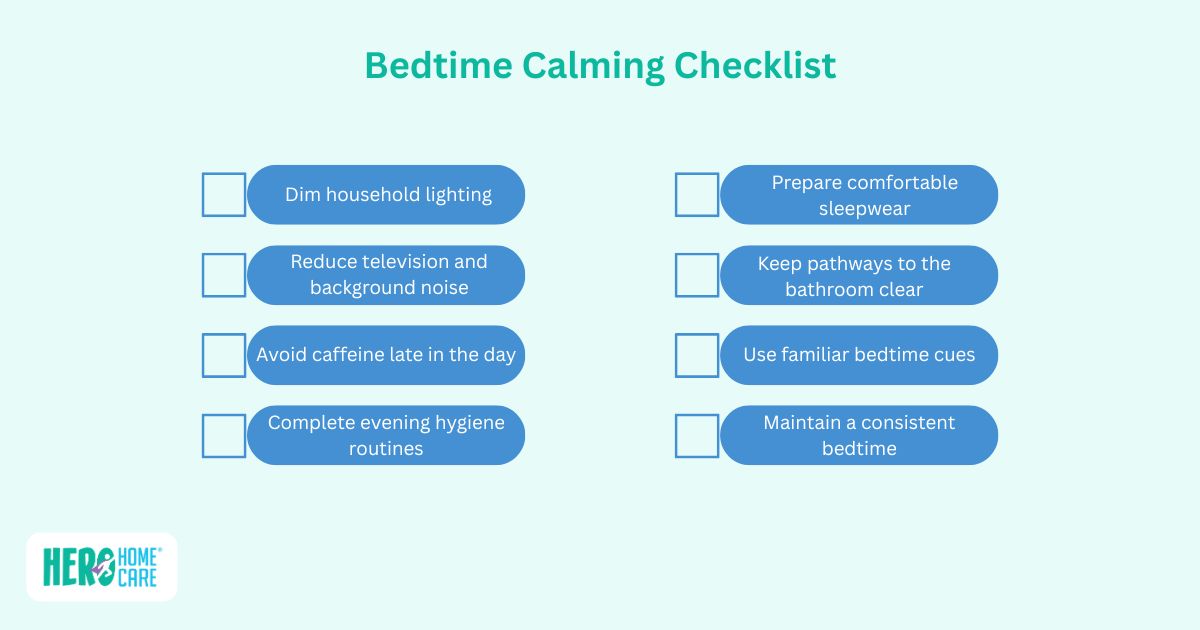
Example of a Simple Evening Routine
An evening flow might begin with dinner around the same time each night, followed by a lower-stimulation activity such as listening to music or watching a familiar television program.
Bedtime hygiene, softer lighting throughout the house, and a slower progression toward bed can reduce late-night restlessness before sleep.
How a Visual Schedule for Dementia Patients Can Help
Visual schedules help reduce the amount of information a person must remember independently throughout the day. When memory and task sequencing become harder to manage internally, written prompts, pictures, labels, and clocks can reduce reliance on active recall.
What Visual Schedules Do
A visual schedule shows what is happening now and what comes next. Instead of relying entirely on verbal reminders, the environment itself provides cues through posted schedules, labeled spaces, or visible task prompts.
This reduces the need for repeated verbal prompting between meals, hygiene tasks, medications, or rest periods.
Common Visual Tools Used at Home
Simple tools usually work better than complicated systems. Printed daily schedules placed in a kitchen, whiteboards with meal timing, labeled drawers, large clocks, reminder notes near the bathroom, or medication charts on the refrigerator can all help reinforce orientation throughout the day.
Some households also use color-coded labels or picture-based prompts to make movement through the home and daily tasks more intuitive.
Adapting Visual Cues for Different Dementia Stages
Earlier-stage dementia may respond well to calendars, written checklists, and simple reminder boards that preserve a sense of independence. Later-stage cognitive decline may require fewer visual choices, larger lettering, pictures instead of written instructions, or highly simplified cue placement focused on one task at a time.
How to Create a Care Plan for a Dementia Patient at Home
A care plan for a dementia patient at home helps households organize recurring needs, behavioral observations, and day-to-day caregiving decisions in one place. Rather than relying on memory alone, written documentation helps relatives notice trends, adjust pacing, and respond more consistently as cognitive decline changes over time.
Why a Care Plan Helps at Home
Without a clear system, small details are easy to overlook. Meal timing may shift unintentionally, hydration may become inconsistent, or overstimulation triggers may go unnoticed until behaviors escalate.
A written plan gives relatives and outside helpers a clearer operational reference throughout the week.
What a Dementia Care Plan Should Include
Most plans include recurring needs such as meal timing, medication organization, bathroom reminders, hydration intake, physical movement, and preferred social interaction. Safety information, emergency contacts, walking concerns, and known behavioral triggers are also commonly documented. Some households keep notes about preferred seating arrangements, such as using the same chair during meals to reduce disorientation.
Tracking Behavioral and Physical Changes
Observation becomes more useful when patterns are recorded over time instead of remembered loosely.
Appetite shifts, increased irritability later in the day, resistance around bathing, reduced walking stability, disrupted sleep, or withdrawal from activities may indicate the day has become too demanding or overstimulating. Short notes about timing, environment, and preceding events often reveal behavioral trends more clearly over several weeks.
Adjusting the Day Based on Patterns
Care plans are most useful when they remain flexible rather than rigid. Someone who becomes exhausted after large family visits may tolerate shorter interactions better, while worsening confusion in the evening may require reduced activity demands later in the day.
Shifting meal timing, reducing late-day noise, or shortening activities after visible frustration can make the day more workable.
Practical Ways to Make Daily Care More Workable
Simple environmental habits are usually more sustainable than complicated systems. Keeping bedtime timing relatively steady, limiting excessive evening stimulation, tracking fluid intake on a kitchen notepad, or placing frequently used items in reliable locations can reduce unnecessary disruption.
Over time, these observations create a clearer picture of which daily conditions lead to calmer days and which situations repeatedly create strain. Many families also find it helpful to use a simple dementia routine checklist to keep meals, medications, hydration, activities, and bedtime routines easier to follow.
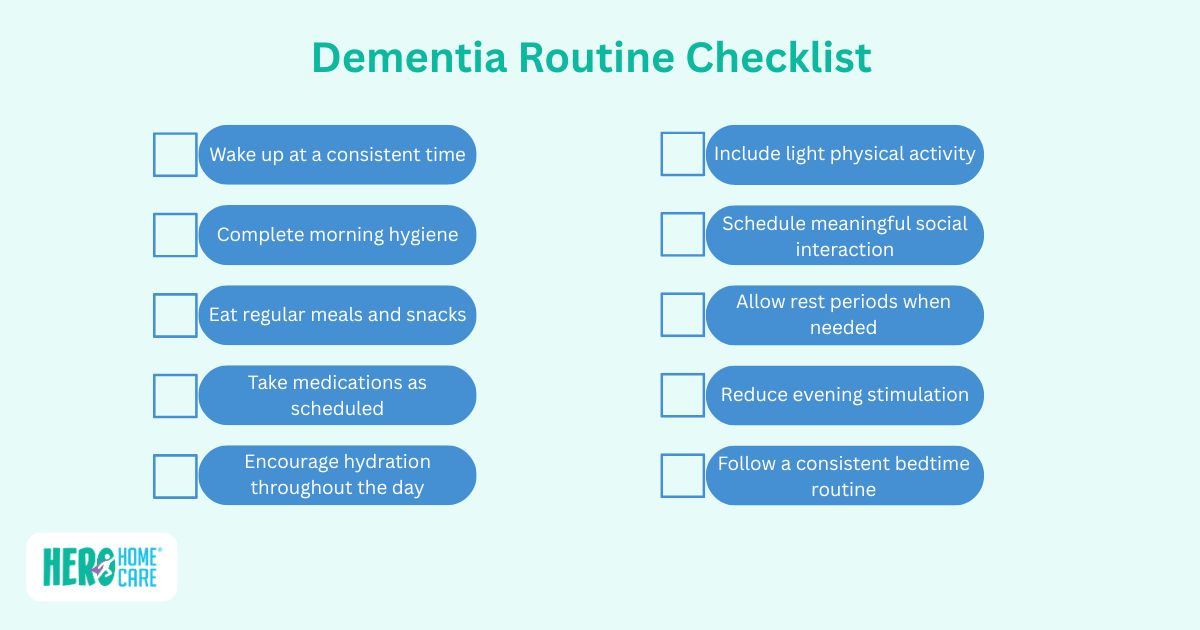
Sample Daily Schedule for Dementia Patients
An elderly dementia daily routine usually works best when it remains flexible rather than overly rigid. The goal is not to fill every hour, but to create a steadier flow with lower-pressure activity periods and enough room for adjustment.
| Time | Example Focus |
| 7:00–8:00 AM | Gradual wake-up, bathroom use, washing face, and getting dressed |
| 8:00–9:00 AM | Breakfast and morning medications |
| 9:00–10:00 AM | Calmer activity such as music, photographs, or sitting near natural light |
| 10:00–11:30 AM | Short walk, light movement, or simple household participation |
| 12:00–1:00 PM | Lunch and fluids |
| 1:00–2:00 PM | Reduced activity period or time away from busier household areas |
| 2:00–4:00 PM | Puzzles, gardening, folding towels, or brief social interaction |
| 5:00–6:00 PM | Dinner in a lower-distraction setting |
| 6:00–7:30 PM | Quieter evening activity such as television, music, or conversation |
| 7:30–9:00 PM | Bedtime preparation, softer lighting, changing into sleepwear, and settling into bed |
Dementia Daily Routine by Stage of Dementia
Daily expectations gradually change as dementia advances. Abilities that seem manageable early on may later require closer supervision, more direct guidance, or greater physical involvement.
The goal is not to preserve the exact same level of independence indefinitely, but to adapt realistically as cognitive and physical demands change over time.
Early-Stage Dementia
Early-stage dementia can still allow meaningful involvement in many everyday responsibilities with only minimal oversight. Mild forgetfulness, slower task completion, or occasional disorganization may appear, while participation in meals, hobbies, and household responsibilities can remain possible.
During this phase, caregiving usually centers more on gentle prompting and observation than substantial hands-on assistance.
Middle-Stage Dementia
Middle-stage dementia usually brings a more noticeable increase in cue dependency and supervision needs.
Multi-step tasks may become harder to complete independently, decision-making may slow further, and tolerance for frustration can narrow significantly. Many households begin adjusting expectations more frequently during this phase as endurance declines and direct involvement becomes necessary across more parts of the day.
Late-Stage Dementia
Later-stage dementia may require substantial hands-on involvement with everyday functioning. Verbal processing can become very limited, physical weakness may increase, and tolerance for longer or more demanding tasks frequently declines.
At this stage, caregiving demands generally shift toward simplified expectations, closer observation, and greater physical assistance with eating, hygiene, repositioning, and movement.
View Hero Home Care Dementia Care in Burnaby Service.
Activities to Include in a Dementia Daily Routine
Meaningful engagement tends to work best when it reflects the person’s physical ability, attention span, and cognitive tolerance. The goal is rarely constant stimulation, but steady involvement that reduces long inactive periods without creating unnecessary mental or physical strain.
Why Meaningful Activities Matter
Purposeful involvement helps maintain engagement, reduce boredom-related restlessness, and encourage participation in everyday life. Even simple tasks may help reinforce familiarity and maintain a sense of contribution, particularly when activities reflect long-standing interests or previous habits.

Physical and Sensory Activities
Gentle movement can reduce restlessness and prolonged inactivity, especially for people spending large portions of the day seated indoors. Brief walking, light stretching, or chair-based movement is usually more tolerable than longer exercise sessions.
Sensory-based engagement such as textured fabrics, gardening soil, recognizable scents, or handling everyday objects can hold attention without requiring complex thinking.
Memory-Based and Household Participation
Old photographs, recipe cards, recognizable tools, or memory-based prompts can encourage conversation and recognition more naturally than direct questioning. Household participation can also remain meaningful when expectations stay realistic. Folding towels, watering plants, or organizing utensils can provide involvement without placing pressure on performance.
Families looking for additional ideas can also review fun activities for seniors at home that can be adapted for cognitive decline.
Music and Social Interaction
Music is often less demanding to process than conversation during cognitive decline, particularly when songs are personally meaningful. Short one-on-one conversations, shared meals, or limited group interaction can maintain connection without becoming overwhelming.
Larger gatherings or excessive background noise can sometimes increase withdrawal or irritability, especially later in the day.
Adapting Activities to Ability and Tolerance
Not every activity remains appropriate as dementia progresses. Someone with stronger physical functioning might tolerate longer walks or more independent participation, while later-stage cognitive decline may respond better to shorter sensory experiences or simplified hands-on tasks.
Signs of overstimulation can include irritability, withdrawal, pacing, or loss of attention, which suggests the level of engagement has exceeded the person’s current tolerance.

Communication Tips During Dementia Care Routines
Communication often becomes more difficult as dementia affects memory, sequencing, attention, and processing speed. Interactions that once felt simple can eventually require slower pacing, shorter verbal instructions, and more time for responses.
Why Communication Changes With Dementia
Cognitive decline can make it harder to process multiple pieces of information at once. Long explanations, rapid questioning, or frequent corrections may increase frustration because the brain requires more time to interpret language and formulate a reply. A delayed answer does not always mean the person failed to understand what was said.
Giving One Instruction at a Time
Breaking tasks into single steps is more workable than giving several directions together. Saying “please sit down” first and waiting before introducing the next instruction usually works better than combining multiple requests into one sentence.
Verbal overload can quickly interrupt cooperation with everyday tasks, particularly during dressing, hygiene, or meals.
Slowing Down Verbal Pace
Dementia frequently slows processing speed, even when the person still appears attentive. In some situations, it may take up to 90 seconds to process a question, organize thoughts, and respond verbally. Repeating instructions too quickly or rushing to fill silence can increase overload and make communication less effective.
Avoiding Correction and Confrontation
Direct correction can create resistance, especially when memory problems are involved. Arguing over dates, repeated questions, or inaccurate statements may escalate irritation without improving understanding.
Redirecting the conversation or acknowledging emotion instead of insisting on accuracy usually works better during tense moments.
Using Tone, Eye Contact, and Reassurance
A steady voice, relaxed facial expression, and direct eye contact may help maintain attention more effectively than louder speech or repeated prompting. Approaching from the front, speaking clearly, and limiting background noise can also reduce distraction during conversation.
Brief reassurance such as “you’re okay” or “we’ll do this together” is usually more useful than lengthy explanations.

Common Mistakes Caregivers Make With Dementia Routines
Many caregiving difficulties develop gradually through small patterns rather than intentional mistakes. Small shifts in timing, household demands, or daily expectations can sometimes increase resistance, irritability, or withdrawal over time.
- Overstimulation: Too much noise, activity, or conversation may increase restlessness. Reducing competing distractions and shortening interactions may place less strain on attention.
- Changing schedules too often: Frequent timing shifts can make meals, sleep, and daily tasks harder to follow. More predictable timing generally improves participation.
- Arguing or correcting aggressively: Repeated correction may increase defensiveness or distress. Redirection and brief acknowledgment typically work better than prolonged disagreement.
- Expecting independence beyond ability: Tasks that are too complex may create frustration or refusal. Simplifying steps and lowering demands can improve cooperation.
- Skipping meals or hydration: Long gaps without food or fluids may worsen irritability, weakness, or disorientation. Smaller reminders spaced across the day are usually more sustainable.
- Irregular sleep timing: Late evenings, inconsistent bedtimes, or excessive daytime sleeping may increase nighttime wakefulness. More predictable sleep timing may reduce nighttime wakefulness over time.

When to Get Professional Home Care for Dementia Patients
Dementia caregiving usually expands gradually rather than all at once.
What begins as occasional reminders or supervision may eventually involve nighttime wakefulness, repeated redirection, missed medications, wandering concerns, or increasing physical strain inside the home. In many households, the workload becomes difficult to sustain long before relatives recognize how much responsibility has accumulated.
Exhaustion is frequently one of the earliest signs that outside involvement may be necessary. Interrupted sleep, constant vigilance, difficulty balancing employment with caregiving responsibilities, or growing frustration around repetitive tasks can gradually affect both physical and emotional endurance.
In some households, concerns become more serious once aggression increases, movement becomes less stable, or someone can no longer remain alone safely for extended periods.
In-home dementia assistance is usually introduced gradually rather than as a full replacement for relatives. A few hours of companionship, meal preparation, medication reminders, mobility assistance, or respite time can stabilize household workload and reduce gaps in supervision.
Outside involvement may also reduce the likelihood of missed meals, disrupted sleep timing, or inconsistent hygiene during periods of heavier supervision demand.
For some North Vancouver families, Hero Home Care becomes part of that transition when dementia-related demands require more coordination than relatives can realistically maintain independently. In-home dementia care may include flexible hour adjustments, ongoing observation, assistance with everyday tasks, and relief periods for exhausted spouses or adult children while preserving the person’s existing home setting.
One North Vancouver family began working with Vanessa after evening caregiving responsibilities became difficult to coordinate between several relatives. Nighttime wandering, repeated waking, and late-evening supervision had started disrupting work schedules and leaving family members exhausted the following day. Her visits focused on dinner preparation, evening pacing, medication reminders, and remaining present during the hours when confusion and restlessness typically increased.
Over several weeks, the household developed a more workable evening pattern while reducing the need for relatives to rotate overnight responsibilities unexpectedly.
Final Thoughts on Building a Dementia Daily Routine
Dementia caregiving rarely remains static for long.
Energy levels, sleep patterns, supervision demands, and tolerance for stimulation often shift gradually over time, which means household systems usually need ongoing adjustment rather than one fixed approach. Smaller adjustments introduced earlier are usually more sustainable than reacting only after exhaustion or behavioral escalation becomes severe.
Many North Vancouver households eventually reach a point where additional in-home involvement becomes more realistic than managing every responsibility alone. Professional guidance can help families reassess changing caregiving demands, adapt daily rhythms more effectively, and determine when outside involvement could reduce long-term strain.