
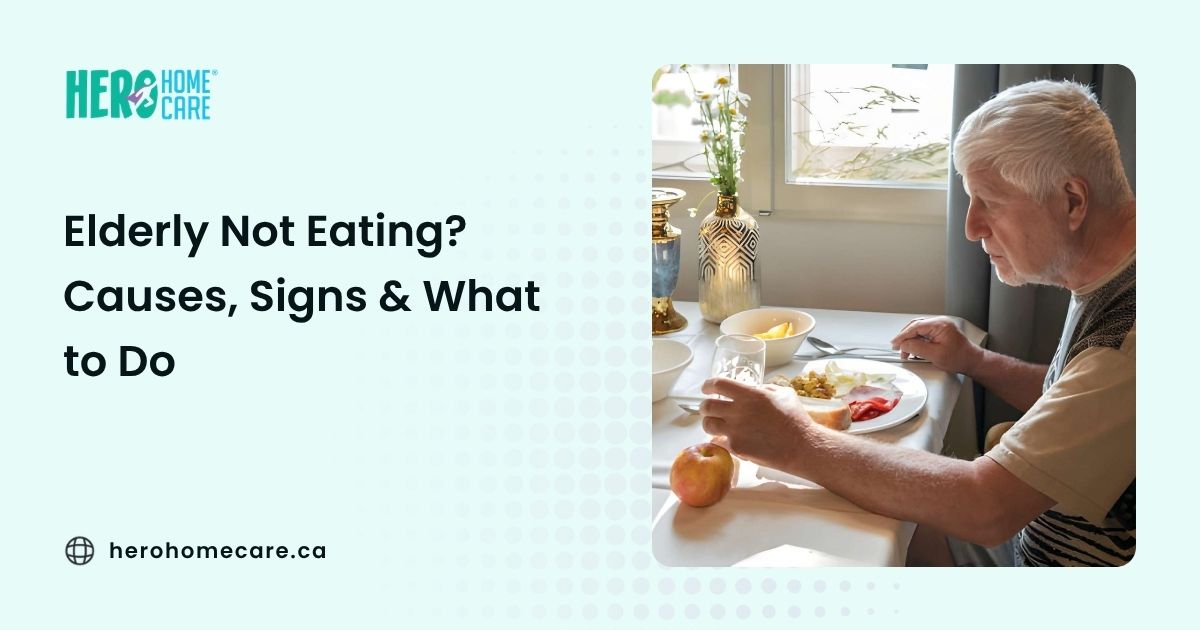
It can be worrying when a senior begins to eat less or loses interest in food altogether. Sometimes it happens gradually. Other times, it feels sudden and unexpected.
For many families, the first reaction is uncertainty. Is this just part of aging, or is something wrong?
Loss of appetite in older adults is common, but it should never be ignored. It can be linked to a range of physical, emotional, or practical challenges. Understanding what is behind the change is the first step toward helping your parent regain strength, stability, and routine.
When a senior stops eating, first check their alertness, ability to swallow, and fluid intake, then arrange help according to the symptoms. Do not force food or wait for visible weight loss before responding to a sudden change.
- Check for an emergency: Call 911 for choking with difficulty breathing, inability to wake normally, sudden severe confusion, or stroke symptoms.
- Check fluids and swallowing: Seek same-day medical advice if your parent is refusing fluids, cannot keep them down, or develops swallowing difficulty.
- Record what changed: Note recent food and fluid intake, symptoms, medication changes, and weight changes to share with their healthcare provider. 1 2
Here is the Quick Answer:
Loss of appetite in seniors is common, but it can signal underlying physical, emotional, or practical challenges.
It may be caused by medical conditions, medication side effects, loneliness, cognitive changes, or difficulty preparing meals. Early signs include skipping meals, smaller portions, weight loss, and low energy.
If not addressed, poor nutrition can lead to weakness, increased fall risk, slower recovery, and worsening cognitive function.
Simple steps such as offering smaller meals, improving food texture and taste, creating consistent routines, and encouraging social interaction can help. If appetite loss continues or affects health, medical support or in-home care may be needed to ensure safety and proper nutrition.
Anorexia of aging, an age-related reduction in appetite, and dysphagia, or difficulty swallowing, are two additional causes families may encounter.
There is no single timeline for how long an older person can live with very little food, and reduced appetite can also occur near the end of life; both situations need to be understood in the context of the person’s health and care plan.
Sudden vs Gradual Appetite Loss: What the Difference Tells You
Sudden appetite loss raises concern about a recent illness, symptom, or medication change, while gradual loss may reflect longer-standing health or daily-living difficulties. The pattern helps guide assessment but cannot identify the cause or determine urgency by itself.
Comparing Sudden and Gradual Appetite Loss | |
|---|---|
| Sudden onset | Gradual onset |
| Typical Timeframe: A Noticeable Change from the Person’s Usual Eating Over a Short Period | Typical timeframe: A Progressive Reduction Noticed Across Repeated Meals and Routines |
| Possible Contributors: Acute Illness, Infection Including a Symptomatic UTI, Medication Changes, Pain, or Constipation; a Depressive Episode Can Also Affect Intake | Possible contributors: Anorexia of Aging, Sensory Loss, Dementia-Related Difficulties, Social Isolation, or Functional Decline |
| Accompanying Signs: Nausea, Fever, Pain, Bowel Changes, Reduced Drinking, or Altered Alertness | Accompanying Signs: Smaller Meals, Difficulty Shopping or Cooking, Reduced Interest in Food, or Unintentional Weight Loss |
| Urgency: Seek Same-Day Advice for a Marked Unexplained Change; Emergency Symptoms Require Immediate Help | Urgency: Arrange Assessment Promptly; Dehydration, Swallowing Problems, or Rapid Deterioration Increase Urgency |
| First Step: Check Alertness, Swallowing, Fluid Intake, and Recent Changes | First Step: Record Intake and Weight Trends and Review Practical, Dental, Medical, and Emotional Barriers |
A UTI should not be diagnosed from appetite loss or confusion alone; other symptoms and clinical assessment matter.

Why Elderly People Stop Eating: Common Causes of Loss of Appetite in the Elderly
Reduced appetite rarely has a single cause. In most cases, it is the result of overlapping factors that affect how a senior feels about food, prepares meals, or follows daily routines.
Anorexia of Aging
Anorexia of aging describes an age-related reduction in appetite and food intake that can occur even without an obvious illness. Changes in hunger, fullness, taste, and smell may contribute, but the term does not make weight loss harmless.
- It may develop gradually rather than following a distinct episode of illness.
- It can coexist with treatable problems such as depression, dental pain, or medication effects.
- It is different from anorexia nervosa and should not be used to explain away a sudden decline.4
Physical and Medical Causes
Chronic conditions, pain, and digestive issues can make eating uncomfortable or unappealing. A senior dealing with arthritis, for example, may find it difficult to sit comfortably at the table or use utensils. Others may experience swallowing difficulties or nausea, which makes meals feel like a challenge rather than something to enjoy.
- Dysphagia: Difficulty swallowing may appear as coughing, choking, a wet-sounding voice, or food remaining in the mouth.
- Xerostomia: Dry mouth can make chewing and moving food through the mouth uncomfortable.
- Ill-fitting dentures: Pain or movement of dentures may lead someone to avoid foods that need chewing.
- Oral thrush and poor dentition: Mouth soreness, damaged teeth, or dental infection can make eating painful.
- Constipation: Bloating, discomfort, and nausea may reduce interest in meals.
- Gastroesophageal reflux disease (GERD): Heartburn or regurgitation may make eating uncomfortable.
- Gastroparesis: Delayed stomach emptying can cause early fullness, nausea, or vomiting.
- Chronic pain: Pain may distract from eating or make sitting and using utensils difficult.
- Chronic obstructive pulmonary disease (COPD): Breathlessness and fatigue can make finishing a meal demanding.
- Cancer: The illness or its treatment may affect appetite, taste, swallowing, or tolerance of food.
- Urinary tract infection (UTI): A symptomatic infection may reduce intake through illness or discomfort, but appetite loss alone does not confirm it.2
Emotional and Psychological Causes
Appetite is closely connected to emotional well-being.
Loneliness, grief, or depression can reduce interest in food. A parent who once enjoyed cooking may no longer feel motivated to prepare meals if they are eating alone. Over time, meals may become smaller, less frequent, or skipped entirely.
Medication-Related Causes
Some medications can affect appetite directly.
They may cause nausea, dry mouth, or changes in taste. Others may lead to fatigue or confusion, which can disrupt meal routines. In some cases, seniors may avoid eating because they associate it with discomfort caused by medication.
Medication Effects to Discuss With the Prescriber | ||
|---|---|---|
| Drug Class | Effect on Eating | What to Raise with the Prescriber |
| Anticholinergic Medicines, Including Some Bladder Medicines and Sedating Antihistamines | Dry Mouth, Constipation, or Drowsiness May Interfere with Meals | New Mouth Dryness, Bowel Changes, or Reduced Alertness |
| Opioid Pain Medicines | Nausea, Constipation, and Sedation Can Reduce Intake | Whether Pain Relief and Side Effects Are Adequately Balanced |
| Antibiotics | Some Cause Nausea, Diarrhoea, or Altered Taste | Symptoms Beginning During Treatment and Whether Fluids Are Being Maintained |
| Cholinesterase Inhibitors Used for Dementia | Some Cause Nausea, Diarrhoea, Reduced Appetite, or Weight Loss | Changes in Intake or Weight After Starting Treatment or Increasing a Dose |
| GLP-1 Receptor Agonists | Reduced appetite, early fullness, nausea, or vomiting may occur | Intake Becoming Inadequate, Unintended Weight Loss, or Difficulty Staying Hydrated |
| Benzodiazepines and Other Sedative Medicines | Drowsiness May Cause Missed Meals or Make Eating Less Safe | Sleepiness During Meals or Difficulty Remaining Alert |
Effects differ between medicines and individuals. Ask the prescriber or pharmacist to review prescriptions, non-prescription products, and supplements; do not stop medicines or change doses independently.
For related patterns around medication routines, see Signs Your Senior Parent Is Forgetting Medication, And What to Do.
Cognitive Decline
Memory changes can affect eating habits in subtle ways.
A senior may forget to eat, lose track of time, or feel unsure about when meals should happen. In more advanced cases, they may forget how to prepare food or lose interest in eating altogether.
- Apraxia of eating: Difficulty planning or carrying out familiar movements may make using utensils or bringing food to the mouth challenging.
- Food agnosia: A person may not recognize food or understand its purpose, even when hungry.
- Reduced visual contrast: Food that blends into the plate, or a plate that blends into the table, may be harder to identify.
- “Forgetting to swallow”: Holding food in the mouth or repeatedly chewing may reflect impaired coordination or dysphagia and needs assessment rather than repeated prompting alone.5
Difficulty Preparing Food
Even when appetite is present, practical barriers can interfere.
Mobility limitations, fatigue, or safety concerns in the kitchen can make cooking feel overwhelming. Grocery shopping may also become more difficult, leading to fewer available meal options at home.
Sensory Changes (Taste and Smell)
Taste and smell often change with age.
Food may begin to feel bland or less enjoyable, which naturally reduces appetite. A senior may start avoiding certain foods or lose interest in meals they once enjoyed.
Hypogeusia means reduced taste sensitivity, while anosmia means loss of smell; a new or substantial sensory change should not automatically be attributed to ageing.
Warning Signs and Symptoms of Loss of Appetite in the Elderly
Appetite loss is often visible through small, everyday changes.
- Prepared meals or leftovers remain untouched.
- Groceries spoil before being used.
- Clothing or rings become noticeably looser.
- Meals are skipped more often.
- Portions are consistently smaller than usual.
- Weight loss is visible or recorded on the scale.
- Fatigue makes eating or preparing food harder.
- Hard-to-chew foods are avoided or left on the plate.
Weight-loss reference: Unplanned loss of approximately 5% of usual body weight in one month or 10% in six months is a significant warning pattern used in nutrition assessment; smaller ongoing losses also warrant attention.6
These figures are not a reason to wait: swallowing problems, dehydration, or a sudden change require attention regardless of weight.

What Happens to the Body When Seniors Stop Eating Properly
When the body does not receive enough nutrition, the effects build over time.
- Protein-energy malnutrition: Inadequate energy and protein can lead to weight loss, weakness, and reduced ability to manage daily activities.
- Sarcopenia: Insufficient intake can contribute to loss of muscle strength and mass, alongside ageing, illness, and inactivity.
- Dehydration: Low fluid intake can cause dizziness, reduced urine output, and, when severe, altered alertness.
- Delayed wound healing: Inadequate nutrition can make repairing damaged tissue more difficult.
- Immune suppression: Significant malnutrition can impair immune defences and complicate recovery from illness.1 7
For related safety risks, see How to Reduce Fall Risk for Seniors Living Alone in Greater Vancouver.
How long can an elderly person go without eating?
There is no reliable number of days that predicts how long an individual older adult can survive without food, and serious complications can develop before death. Whether they are drinking, receiving any calories, or living with an acute or advanced illness matters more than a general survival estimate.
Reduced Intake: Risks and When to Act | ||
|---|---|---|
| What Typically Happens | Over What Timeframe | What Families Should Do |
| Not Eating but Drinking Fluids: Fluids alone do not provide enough energy or protein, increasing the risk of weakness and nutritional decline. | No reliable survival timeframe; the risks increase as inadequate intake continues. | Contact the healthcare team when eating stops; do not wait for prolonged intake loss. |
| Not Eating or Drinking: Dehydration can increase health risks quickly. | Decline can happen rapidly and varies by individual. | Seek same-day medical advice; get urgent help for confusion, collapse, or reduced responsiveness. |
| Minimal Intake: Small amounts may not meet nutritional needs | Risk depends on intake, health, and duration. | Track intake and arrange assessment if weakness or dehydration worsens. |
Once urgent medical needs have been addressed, a Care Consult with Hero Home Care can help your family explore practical support with meals, shopping, and daily routines.
- Hydration status: Fever, vomiting, diarrhoea, and inadequate drinking can accelerate deterioration.
- Body reserves: Existing malnutrition, low muscle mass, and frailty affect how well someone tolerates reduced intake.
- Underlying illness: Infection, diabetes, kidney disease, and advanced illness can change the risks and the appropriate response.
After more than five days of little or no intake, restarting nutrition may require a gradual, clinically monitored approach. Seek medical guidance before substantially increasing food intake, and do not wait for this point to ask for help.8
If reduced intake is occurring in someone with an advanced life-limiting illness, see the Appetite Loss at the End of Life section below for guidance on how this situation differs.
How to Help When an Elderly Parent Is Not Eating
Supporting a parent through appetite loss requires a calm and practical approach. The goal is not to force eating, but to make it easier and more natural again.
Start by Understanding the Cause
Before making changes, take time to observe patterns.
Notice when your parent eats, how much they eat, and whether certain foods are avoided. Gentle conversations can also help uncover underlying issues, especially when approached without pressure.
Record what your parent eats and drinks and any associated symptoms.
Ask gently about mouth pain, nausea, constipation, low mood, or feeling full quickly.
Note recent medication changes and request dental, swallowing, or dietetic assessment when relevant.
Make Meals More Appealing
Large meals can feel overwhelming. Smaller, more frequent portions are often easier to manage.
Familiar foods, preferred flavors, and simple presentations can help bring back interest. Foods that are comfortable to chew and appropriate for your parent’s swallowing ability may also make eating easier.
Offer preferred foods in modest portions, with calorie-dense snacks between meals when appropriate.
Use food fortification, such as adding oil, cream, cheese, or milk powder where suitable; aging in place support with meals and daily routines can help families put an agreed meal plan into practice.
Offer the protein-containing part early in the meal if your parent tires quickly, without turning eating into a rigid sequence.
Manage Texture and Taste
If chewing is difficult, adjusting food texture can make a significant difference.
Soft foods, blended meals, or moist dishes can reduce effort. Adding herbs, mild spices, or flavor enhancers can help compensate for reduced taste sensitivity.
Support oral care before meals and arrange help for painful teeth, mouth sores, or poorly fitting dentures.
Follow the prescribed International Dysphagia Diet Standardisation Initiative (IDDSI) level, such as Level 4 Puréed, Level 5 Minced & Moist, or Level 6 Soft & Bite-Sized, when a clinician recommends texture modification.
Use preferred seasonings where tolerated, but do not assume blending food or thickening drinks makes them safe.
The IDDSI framework standardizes descriptions of food texture and drink thickness; it does not determine which level a person needs.
Support Hydration and Nutrition
Hydration plays a major role in appetite.
Seniors who are dehydrated often feel less hungry and more fatigued. Offering water regularly, along with options like herbal tea, soups, or fruit with high water content, can support both hydration and nutrition.
Keep suitable drinks accessible and offer them regularly while your parent is alert and able to swallow safely.
Ask a dietitian whether fortified foods or oral nutritional supplements would help when portions remain small.
Follow prescribed fluid restrictions and seek clinical guidance before substantially increasing intake after prolonged poor eating.
Create a Routine Around Meals
Consistency helps rebuild habits.
Regular meal times, gentle reminders, and a predictable daily structure can make eating feel more automatic. Over time, this reduces reliance on memory or motivation.
Schedule the main meal during your parent’s best-energy window.
Use a plain plate that contrasts with the food and table, with good lighting and limited visual clutter.
Reduce television noise and other distractions while allowing enough time to eat comfortably.
Address Social Isolation
Eating alone can reduce appetite more than many families realize.
Sharing meals, even occasionally, can increase both food intake and enjoyment. Conversation and companionship often make meals feel meaningful again.
Learn More: Minimize Seniors’ Social Isolation
Sit together for a familiar meal or snack when possible.
Ask about favourite foods and involve your parent in manageable choices.
Arrange regular company when eating alone is a recurring barrier, and seek help for persistent low mood.

Nutrition Tips for Seniors with Loss of Appetite
When appetite is low, the focus should shift to nutrient-dense, easy-to-consume foods.
The following daily reference amounts support planning; they are not individualized treatment targets for someone with malnutrition, kidney disease, swallowing difficulties, or an end-of-life care plan.
Nutrients to Consider When Portions Are Small | ||
|---|---|---|
| Nutrient | Why it matters with age | Easy sources |
| Protein | Supports muscle and tissue repair; 1.0–1.2 g/kg body weight daily is commonly suggested for healthy older adults, with individual adjustment | Eggs, yogurt, fish, tofu, and well-cooked legumes in suitable textures |
| Calcium | Supports bones; adults aged 51–70 generally need 1,000 mg for men and 1,200 mg for women, rising to 1,200 mg for everyone aged 71+ | Milk, yogurt, calcium-fortified alternatives, and calcium-set tofu |
| Vitamin D | Supports calcium absorption and bone health; 600 IU (15 micrograms) daily through age 70, and 800 IU (20 micrograms) at 71+ | Oily fish and fortified foods; discuss supplements when food intake is insufficient |
| Vitamin B12 | Supports blood cells and neurological function; the adult reference intake is 2.4 micrograms daily, although absorption problems may require treatment | Fish, meat, eggs, dairy, and fortified foods |
| Fibre | Supports bowel function; approximately 21 g daily for women and 30 g for men over 50 | Oats, cooked vegetables, fruit, and legumes, adjusted to tolerance and swallowing needs |
| Fluids | Supports hydration; ESPEN recommends offering at least 1.6 L of drinks daily to older women and 2.0 L to older men, unless clinical circumstances require a different approach | Water, milk, and other suitable drinks at the prescribed consistency |
Meals should remain simple, familiar, and easy to prepare. The goal is consistency, not perfection.
When should you worry about sudden loss of appetite in elderly?
A short-term decrease in appetite may not always be concerning. However, if the change is sudden, lasts more than a few days, or is accompanied by weight loss, fatigue, or confusion, it should be taken seriously.
- Refusing fluids or unable to keep them down: Seek same-day medical advice.
- Dark urine or reduced urine output: These may indicate dehydration and need prompt attention.
- Dry mouth with worsening weakness or dizziness: Seek same-day advice rather than relying on appetite tips.
- New confusion, collapse, or difficulty waking: Seek emergency help; call 911 for severe symptoms.
- Coughing, choking, or a wet voice during meals: Stop the meal and seek swallowing assessment; call 911 for airway obstruction.
- Sudden poor intake with fever, persistent vomiting, or significant pain: Arrange urgent medical assessment.1 2
Is loss of appetite in the elderly a sign of serious health problems?
Sometimes it is, and sometimes it is not.
Appetite loss can be linked to chronic conditions, medication effects, emotional well-being, or cognitive changes.
In some cases, it reflects a temporary issue; in others, it may indicate a deeper concern that requires medical attention.

When to Seek Medical Help for Loss of Appetite in the Elderly
Medical assessment is appropriate when appetite loss persists, causes weight loss, or interferes with hydration and daily function. The non-urgent column applies only when your parent is otherwise stable, drinking adequately, and has no swallowing or emergency symptoms.
When to Arrange Assessment | |
|---|---|
| Within the Week | Same Day |
| Persistent Smaller Portions or Reduced Appetite Without Acute Symptoms | A Sudden Marked Reduction or Complete Refusal of Food |
| Mild but Ongoing Unintentional Weight Loss While Otherwise Stable | Refusal of Fluids, Inability to Retain Them, or Signs of Dehydration |
| Recurring Chewing Discomfort, Denture Problems, or Practical Barriers to Eating | New Swallowing Difficulty or Coughing During Meals |
| Persistent Appetite Loss That Is Beginning to Interfere With Usual Meals or Daily Routines | Rapid Weight Loss, Marked Weakness, or Poor Intake Accompanied by Fever or Significant Pain |
Call 911 for choking with difficulty breathing, collapse, inability to wake normally, or sudden severe confusion.
For same-day concerns, contact the appropriate medical service first. Once immediate needs have been assessed, in-home nursing care may support an agreed clinical care plan at home; it is not a substitute for urgent assessment.
Appetite Loss at the End of Life
During a recognized dying process, reduced interest in food and drink can occur as the body’s needs and abilities change. Appetite loss alone does not establish that someone is dying, and potentially reversible discomfort or illness still deserves consideration.
- Offer comfort feeding: Provide small amounts of preferred food or drink when wanted and tolerated, following the individualized swallowing and comfort plan.
- Avoid force: Pressure can cause distress, while feeding someone who cannot swallow safely can cause choking or aspiration.
- Provide mouth care: Moistening and cleaning the mouth can support comfort when intake is limited.
- Discuss decisions with the care team: Assisted nutrition or hydration should reflect the person’s wishes, likely benefits, and possible burdens.
Reversible Appetite Loss and End-of-Life Changes | |
|---|---|
| Potentially Reversible Appetite Loss | Appetite Loss During the Dying Process |
| Context: May Follow Pain, Constipation, Dental Problems, Medication Effects, or Acute Illness | Context: Occurs Within an Advanced Illness and a Clinically Recognized Dying Process |
| Goal: Address the Cause and Support Nutritional Recovery Where Possible | Goal: Prioritize Comfort, Preferences, and Relief of Distress |
| Response: Intake May Improve When the Contributing Problem Is Treated | Response: Intake May Remain Low Despite Attentive Care |
| Approach: Individualized Meal Support, Treatment, and Nutrition Assessment | Approach: Offer Tolerated Food and Drink Without Pressure and Follow the Comfort Plan |
These approaches can overlap: someone receiving palliative care may still benefit from treatment of a painful mouth or constipation.16
Families considering end-of-life care at home can discuss practical assistance and family support that complement the person’s medical and palliative care plan.
How In-Home Care Can Help Seniors Who Are Not Eating Properly
In-home care can provide structured, consistent support that helps encourage regular eating routines.
Caregivers can assist with meal preparation, ensure food is accessible and appropriate, and monitor changes in appetite over time. They also provide companionship, which can make a meaningful difference in whether a senior chooses to eat.
In one situation supported by Hero Home Care, a caregiver noticed that a client was regularly skipping lunch, even though food was available. By introducing a simple routine and sharing meals together, the client gradually returned to more consistent eating patterns.
This type of support helps families move from uncertainty to clarity.
Depending on the agreed Care Plan, mealtime support may include:
- Grocery shopping so suitable, preferred foods are available.
- Preparing meals around the customer’s tastes and agreed dietary needs.
- Following clinician-prescribed texture instructions when included in the Care Plan.
- Sitting with the customer through the meal and offering appropriate assistance.
- Noticing changes in food and fluid intake during scheduled care.
- Sharing relevant concerns with the family and care team so they can be followed up appropriately.
A Care Consult with Hero Home Care offers space to discuss those concerns and explore a personalized Care Plan with Nurse Care Manager oversight.
Final Thoughts: Supporting Seniors with Appetite Loss
Changes in appetite are common, but they should not be overlooked.
Early attention can help identify concerns sooner and support strength, safety, and independence. Small adjustments, consistent routines, and the right support can make a meaningful difference.
For families, the goal is not to control the situation, but to respond in a way that preserves dignity while ensuring well-being.
Sources:
- NHS — Dehydration
- NHS — Swallowing Problems (Dysphagia)
- American Academy of Family Physicians — Delirium in Older Persons: Prevention, Evaluation, and Management
- Anorexia of Aging: A Modifiable Risk Factor for Frailty and Mortality
- Alzheimer’s Society — Eating and Drinking Difficulties in Dementia
- Academy/ASPEN Consensus Malnutrition Characteristics
- Clinical Nutrition — ESPEN guideline / Nutrition in older adults and disease-related malnutrition
- NICE — Nutrition Support for Adults (CG32)
- International Dysphagia Diet Standardisation Initiative (IDDSI) Framework
- Marie Curie — Eating and Drinking Problems at the End of Life
- Clinical Nutrition — Protein and Nutritional Requirements in Older Adults
- NIH Office of Dietary Supplements — Calcium Fact Sheet for Health Professionals
- NIH Office of Dietary Supplements — Vitamin D Fact Sheet for Health Professionals
- NIH Office of Dietary Supplements — Vitamin B12 Fact Sheet for Health Professionals
- Health Canada — Do Canadian Adults Meet Their Nutrient Requirements Through Food Intake Alone?
- Marie Curie — Eating and Drinking Problems Near the End of Life