
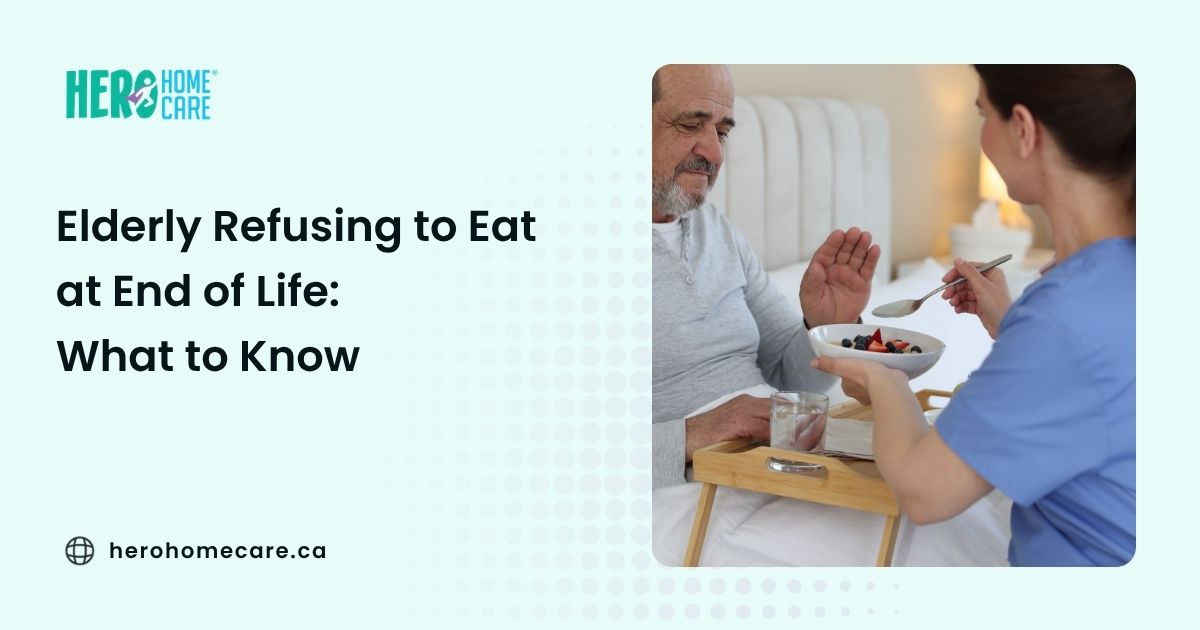
Watching an older adult lose interest in food during serious illness can feel unsettling, especially when long-standing eating habits begin to change. Relatives frequently worry they are missing something critical or not doing enough. In many situations, though, eating and drinking less can be part of the body’s natural changes during advanced illness rather than a deliberate decision to avoid nourishment.
A declining appetite does not usually mean the family has failed or that the person is deliberately giving up. Near the end of life, the body often needs and can tolerate less nourishment, and comfort may become more important than maintaining previous eating patterns.
Lower interest in meals and fluids is commonly seen during advanced or terminal illness, advanced frailty, and later stages of dementia. The shift can happen gradually or become more noticeable over several days, creating uncertainty around what is expected and what may signal a larger transition in health.
At Hero Home Care in North Vancouver, these concerns are part of many conversations with relatives trying to understand what changes are common, when medical guidance becomes necessary, and how daily caregiving approaches sometimes need to adjust.
The sections below explain why appetite changes happen, which signs families may notice over time, and how lower-pressure caregiving approaches are commonly used as illness progresses.
Here is the Quick Answer:
Reduced interest in food and fluids is common during advanced illness and can occur for several biological, neurological, and disease-related reasons. Changes in metabolism, digestion, fatigue, medication effects, and dementia can all influence intake patterns. Rather than focusing solely on calories, caregiving often shifts toward comfort, dignity, safe eating and drinking, and symptom management.
Understanding what these changes mean and when professional guidance may be appropriate can help families navigate this period with greater clarity and confidence.
Is it normal for elderly people to stop eating at the end of life?
Yes. Reduced oral intake commonly develops during serious illness and later phases of frailty. Many older adults gradually show less interest in meals or begin tolerating only small amounts as health conditions progress. For relatives, the shift can feel sudden even when the change has been developing quietly over time.
During prolonged illness, the body generally uses less energy than it did earlier in life. Eating patterns may become irregular, larger portions can feel less manageable, and long-established food preferences sometimes change. Lower energy needs can also emerge as movement decreases and more time is spent resting.
Digestion tends to slow over time, which can make heavier meals feel uncomfortable. Some older adults begin preferring softer foods, lighter portions, or shorter eating periods throughout the day. Others may eat very little for a day or two, then show interest again later in small amounts.
These shifts are influenced by several physical and medical factors that gradually affect how the body responds to food, fluids, and activity during serious illness.
Appetite loss may be part of the natural dying process, but a sudden or unexpected change should still be reported to the healthcare team. Pain, mouth problems, constipation, nausea, infection, medication effects, depression, or delirium may also reduce eating and may require assessment or treatment.
Related: What To Do When Seniors Stop Eating Properly
Why Appetite Changes Happen Near the End of Life
Changes in eating patterns near the end of life are usually influenced by several overlapping medical and neurological factors rather than a single cause. As health conditions progress, the body may respond differently to food, digestion, activity, and energy use over time.
The Body Needs Less Energy
During prolonged medical decline, the body gradually requires less fuel than it did earlier in life. Metabolism slows, organ systems work less efficiently, and calorie needs decrease as the body’s overall energy needs change.
Because of this shift, large portions may no longer feel necessary or appealing. Smaller amounts are sometimes tolerated more comfortably, particularly when strength and activity levels have declined significantly.
Digestion and Swallowing Become More Difficult
Digestive function can become less efficient during later-stage frailty. Food may remain in the stomach longer, bowel activity may slow, and nausea or constipation can interfere with interest in meals. Heavier foods sometimes become harder to tolerate, especially later in the day.
Swallowing can also become less coordinated. Some older adults begin coughing during meals, holding food in the mouth longer, or needing extra time between bites. In more advanced cases, liquids or small food particles may enter the airway instead of the esophagus, increasing choking or aspiration risk. Because of this, eating can become uncomfortable or stressful even when hunger is still present.
Fatigue Makes Eating Exhausting
For frail older adults, finishing a meal can require more effort than relatives realize. Sitting upright for extended periods, chewing, lifting utensils, and swallowing repeatedly may become physically draining during serious disease progression or severe weakness.
Reduced stamina sometimes leads to unfinished plates, long pauses between bites, or shorter eating periods. A person who previously ate regular meals may tolerate only a few spoonfuls before becoming too tired to continue.

Medications and Illness Can Reduce Appetite
Many conditions associated with worsening physical function affect interest in food directly. Chronic infections, organ failure, cancer, and inflammatory diseases can alter taste, create nausea, or reduce desire for meals over time.
Certain medications can contribute as well. Opioid pain medications, chemotherapy drugs, sedatives, and some antibiotics are known to affect appetite, digestion, or alertness. Changes in eating patterns sometimes become more noticeable after medication adjustments or worsening illness.
Dementia and Cognitive Decline Affect Eating Habits
Neurological decline can interfere with eating behaviour in several ways. Some people forget meals entirely, lose track of whether they have eaten, or become distracted before finishing food placed in front of them. Others no longer recognize hunger signals clearly.
With advancing cognitive decline, familiar foods may no longer look recognizable, utensils can become confusing to use, and busy dining environments may make mealtimes harder to follow. In later stages, a person may turn away from food or keep the mouth closed without being able to explain the reason clearly. These patterns are frequently observed in dementia care and often require adjustments to routine, pacing, and mealtime expectations.

Related: What Should Seniors Eat to Stay Healthy at Home? A Complete Guide to Healthy Meals for Seniors
Signs Appetite Loss May Be Part of the Dying Process
Reduced interest in nourishment can appear alongside other visible shifts during prolonged medical decline. These changes do not follow a fixed sequence, and their timing can vary considerably between individuals.
- Sleeping longer or spending more time resting between periods of wakefulness
- Lower interest in drinking throughout the day
- Pulling away from social interaction or previously familiar activities
- Slower responses to questions, touch, or surrounding activity
- Gradual weight reduction and looser-fitting clothing over time
- Longer quiet periods and reduced engagement with nearby activity
- Increasing weakness or needing full assistance
- Changes in breathing
- Cooler hands and feet or altered circulation
- Reduced urine output
- Greater confusion or restlessness

How long can an elderly person live without eating?
There is no exact timeline for how long someone can live with very limited nourishment during advanced illness. Some people decline over several days, while others continue for weeks with small amounts of food or fluids. Progression depends heavily on the underlying condition, overall frailty, and remaining organ function.
Fluid intake can influence timelines differently than reduced food consumption alone. A person still drinking small amounts may remain stable longer than someone taking in almost nothing by mouth. Reduced thirst, however, commonly develops during prolonged medical decline, which can make intake patterns difficult to interpret without clinical guidance.
Neurological disease, advanced cancer, severe infection, and late-stage dementia can each affect progression differently. Certain conditions lead to rapid physical weakening, while others involve a slower reduction in strength and responsiveness over time. Temporary fluctuations are also possible, including brief periods of renewed interest in meals or conversation.
Because these situations are medically unpredictable, supervision from hospice, palliative care, or in-home clinical teams becomes increasingly valuable. In many cases, symptom-focused care gradually takes priority over calorie targets, particularly when eating causes visible fatigue, discomfort, or distress.
Families should not use food or fluid intake alone to estimate how much time remains. Only the healthcare team, considering the person’s illness, alertness, breathing, circulation, urine output, and other changes, can offer a cautious clinical assessment—and even then, exact timing is rarely possible.
Should you force an elderly person to eat?
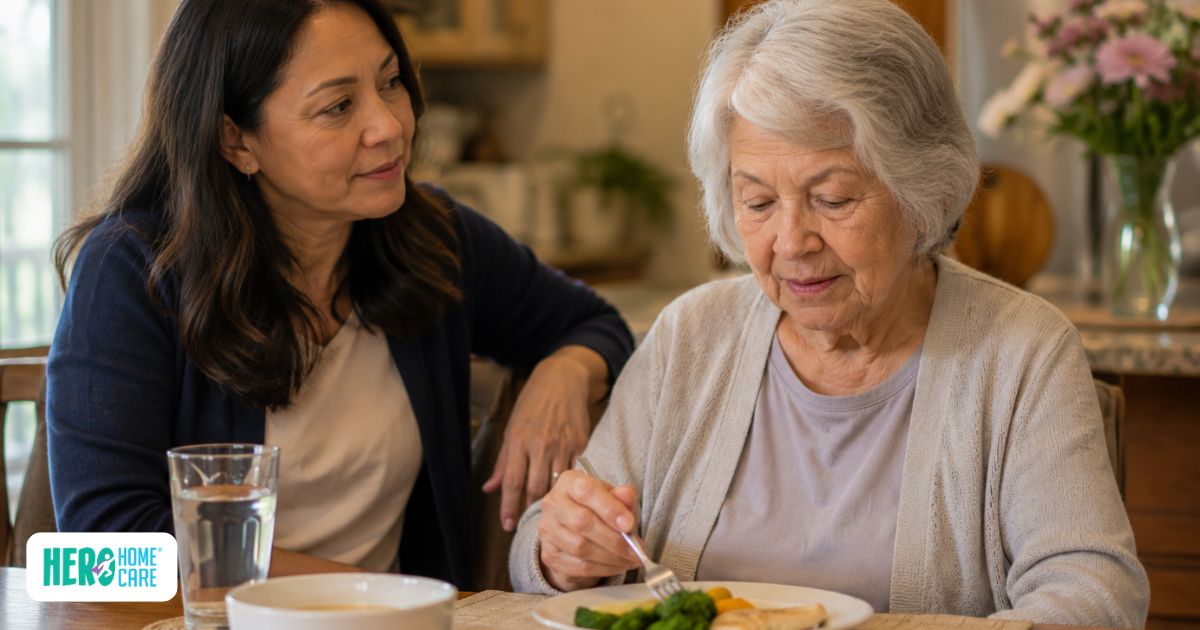
Pressure around nourishment often creates distress when someone is already experiencing lower tolerance for food or fluids. In many situations, pushing larger amounts or insisting on finishing full portions does not improve intake and instead adds strain.
As swallowing grows weaker or less coordinated, forced feeding attempts raise the risk of coughing, choking, or aspiration. Nausea, abdominal discomfort, and resistance around food are also more likely when oral intake requires substantial effort. Smaller amounts are frequently accepted more readily than repeated insistence on continuing.
Meal-related tension often alters responses to food. Repeated encouragement, rushed pacing, or visible frustration can lead to withdrawal altogether. Patient-centered care generally focuses on what the person is willing and able to accept rather than trying to maintain previous habits at all costs.
Comfort feeding takes a different approach from force-feeding. Instead of emphasizing volume, it prioritizes ease, small portions, preferred foods, and lower-pressure interaction. Dignity-focused care in later-stage illness frequently centers on minimizing strain while continuing to offer food and fluids in forms that remain manageable.
How to Comfort an Elderly Loved One Who Refuses Food
As physical tolerance changes during prolonged medical decline, meal-related care frequently becomes less focused on volume and more focused on reducing strain. Small adjustments in pacing, portion size, and interaction style are sometimes more effective than encouraging larger amounts of nourishment.
Lower-pressure assistance can also make eating feel more manageable when fatigue, discomfort, or reduced interest in meals becomes more noticeable.
Offer Small Portions and Favourite Foods
Large meals can feel overwhelming when strength and eating tolerance decline. Smaller servings presented more casually are sometimes accepted more easily than full plates placed on a strict schedule.
Familiar foods, softer textures, and preferred flavours may encourage occasional interest in nourishment without creating additional pressure. In some situations, a few bites spread throughout the day feel more manageable than trying to complete a full meal at once.
Where appetite is reduced but not gone, cooking and meal support can keep familiar foods available in small, low-pressure portions.

Focus on Hydration and Mouth Care
Reduced fluid intake can leave the mouth dry or uncomfortable, even when the person no longer wants to drink. If swallowing remains safe and the care team agrees, small sips, ice chips, or other preferred fluids may be offered without pressure. Stop if coughing, choking, a wet-sounding voice, breathlessness, or visible distress occurs.
When drinking is no longer comfortable or safe, mouth care may provide more relief. A damp cloth or oral swab, gentle mouth cleaning, and lip moisturizer can help ease dryness. Ask the nurse or palliative team which products and techniques are appropriate.
The care team may suggest suitable flavours, temperatures, or textures based on the person’s preferences and swallowing ability.
Mouth care, hydration comfort, and symptom changes are easier to manage with nursing care at home guided by a Nurse Care Manager.
Create a Calm, Pressure-Free Environment
Meal-related tension sometimes increases resistance more than the food itself. Repeated prompting, rushed pacing, or visible frustration can make eating feel stressful, particularly when concentration and physical endurance are already limited.
Quieter surroundings, fewer distractions, and slower interaction around meals may improve participation without turning nourishment into a negotiation. Sitting together casually for short periods can feel less demanding than repeated encouragement to continue eating.
Prioritize Comfort Over Calories
During prolonged medical decline, maintaining previous calorie levels may become less realistic than preserving physical ease during meals. In many situations, the focus gradually shifts toward what the person can comfortably tolerate instead of how much is consumed.
Dignity-centered care generally places greater emphasis on reducing strain, respecting physical limits, and avoiding unnecessary distress around nourishment. Smaller tolerated amounts, rest periods, and lower-pressure interaction frequently become more practical than pursuing strict intake goals.

What happens to the body when eating stops?
Near the end of life, reduced eating usually occurs because the underlying illness is progressing and the body is slowing down. Energy needs decrease, digestion becomes less efficient, and weakness or sleepiness may make eating difficult or uncomfortable.
As the dying process advances, people commonly sleep more, communicate less, and have less interest in food or fluids. Circulation, kidney function, breathing, and alertness may also change, although these signs do not appear in the same order or at the same pace for everyone.
Reduced intake is therefore usually one part of a broader physical decline—not the sole cause of it. A nurse, physician, or palliative care professional can help families understand whether observed changes are expected and how comfort can be maintained.
When to Contact Hospice or Home Care Professionals
Certain symptom shifts suggest that additional medical or in-home involvement is needed. Persistent pain, repeated coughing after swallowing, long sleeping periods, or sudden drops in responsiveness can grow harder to manage without professional guidance. Uncertainty around new symptoms is also a common reason people seek clinical input.
Palliative care becomes relevant when symptom control grows more complicated. This can include worsening pain, nausea, breathing discomfort, or swallowing-related distress that requires medical adjustment. The emphasis is placed on easing day-to-day symptoms and improving physical tolerance as conditions progress.
Palliative or hospice support may be introduced when comfort and quality of life become the main priorities, or when symptoms and caregiving needs require more coordinated professional help. In British Columbia, support may involve a physician, home and community care nurses, a palliative care team, hospice services, or other local providers, depending on eligibility and availability.
In-home caregivers serve a separate, non-clinical role by assisting with personal care, repositioning, companionship, respite, and everyday comfort routines. They can also report observed changes to the family or clinical team, while medical professionals remain responsible for symptom assessment and treatment.
At this stage the goal shifts from intake to comfort, which is the focus of compassionate end-of-life care at home.

How Home Care Can Support Families During End-of-Life Care
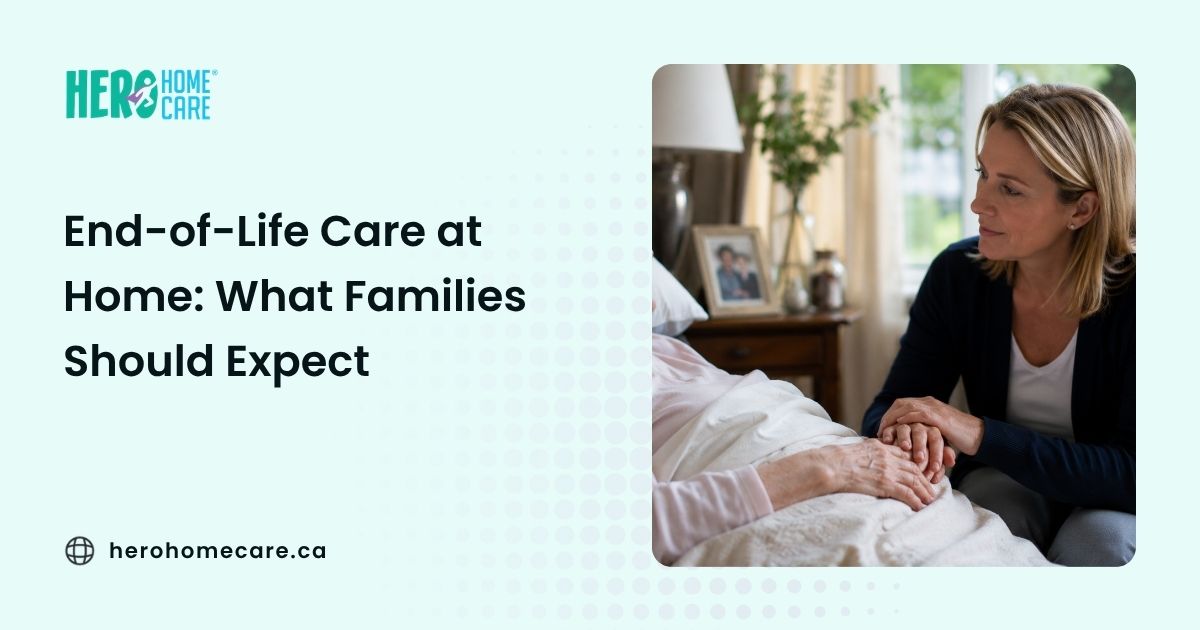
As end-of-life needs increase, family members may find it difficult to manage personal care, repositioning, toileting, companionship, and household responsibilities without additional help.
Related: What Happens During End-of-Life Care at Home?
Home care can provide practical assistance alongside the medical guidance of physicians, nurses, and palliative or hospice professionals. Depending on the family’s needs, support may include personal care, comfort-focused routines, respite care, overnight presence, or round-the-clock assistance.
Heroes can observe day-to-day changes and share concerns with the family or clinical team, but they do not replace medical professionals responsible for symptom treatment, medication decisions, or swallowing assessments.
North Vancouver home care services can reduce caregiving pressure while helping a loved one remain in familiar surroundings with dignity and comfort.
Emotional Challenges Families Face When a Loved One Stops Eating
Lower food and fluid intake often creates intense uncertainty at the bedside. Relatives frequently question whether enough encouragement is being given, whether additional medical intervention should be pursued, or whether a loved one is suffering silently. Even when clinicians explain that these patterns commonly appear during prolonged illness, the emotional conflict rarely disappears immediately.
Food also carries emotional meaning far beyond nutrition. Preparing meals, offering drinks, and encouraging another bite are deeply tied to caregiving identity in many households. When those efforts stop working, people often feel as though connection itself is fading.
The loss of familiar routines, conversation, and everyday interaction can feel just as significant, which is one reason senior companionship often remains meaningful even when interest in food becomes less consistent. Tension may develop between continuing encouragement and recognizing that repeated prompting is creating visible strain or resistance.
Ongoing uncertainty can also become emotionally exhausting and contribute to caregiver burnout. Families may spend days watching for small changes, questioning every decision, and wondering whether they are providing enough comfort. Fluctuating appetite and alertness can intensify that strain because the pattern rarely feels predictable.

Common Myths About Appetite at the End of Life
Misunderstandings around food, fluids, and later-stage illness are extremely common. Many assumptions come from earlier caregiving experiences or fear that something critical is being missed. In reality, intake patterns near the end of life rarely follow standard nutrition expectations.
Myth: “They are starving.”
Lower interest in food near the end of life is usually linked to the body’s changing energy needs, not deliberate starvation. Larger portions may feel intolerable even when small amounts are still accepted periodically.
Myth: “You must force fluids.”
Aggressive fluid encouragement is not always tolerated well in later-stage illness. Medical teams in palliative care settings frequently focus more on symptom relief and oral moisture than achieving standard hydration targets.
Myth: “Stopping eating means giving up.”
Reduced oral intake is commonly tied to illness-related changes inside the body, not a conscious decision to stop fighting. Alertness, strength, and appetite do not always decline at the same pace.
Myth: “Tube feeding always improves comfort.”
Tube feeding may be appropriate in some circumstances, but it does not automatically improve comfort or quality of life near the end of life. Decisions about artificial nutrition and hydration should be made with the healthcare team and should reflect the person’s diagnosis, prognosis, wishes, and care goals.
Supporting Comfort When Appetite Declines
Watching a loved one eat and drink less can bring fear, guilt, and uncertainty. Near the end of life, however, appetite decline is often a natural part of the body slowing down—not a sign that the family has failed or that the person is being deliberately deprived.
Comfort may come from small, pressure-free offers of food or drink when swallowing is safe, gentle mouth care, a calm environment, and simply remaining present. Families should contact the clinical team when changes are sudden, swallowing becomes difficult, symptoms worsen, or they are unsure what their loved one needs.
Hero Home Care supports North Vancouver families with compassionate personal care, companionship, respite, and practical assistance alongside palliative or hospice professionals. Families do not have to manage this difficult transition alone.
Source:
- Marie Curie — What Happens in the Last Weeks of Life
- Marie Curie — What to Expect in the Last Days and Hours of Life
- NHS — Changes in the Last Hours and Days of Life
- NHS — What End-of-Life Care Involves
- Province of British Columbia — End-of-Life Care
- Province of British Columbia — How to Arrange Home and Community Care
- Alzheimer’s Society — Eating and Drinking with Dementia
- Imperial College Healthcare NHS Trust — Eating and Drinking in the Last Months and Weeks of Life
- VITAS Healthcare — When a Hospice Patient Stops Eating or Drinking
- VNS Health — Eating Patterns at the End of Life
- Crossroads Hospice — When a Loved One Has Little or No Food or Water