
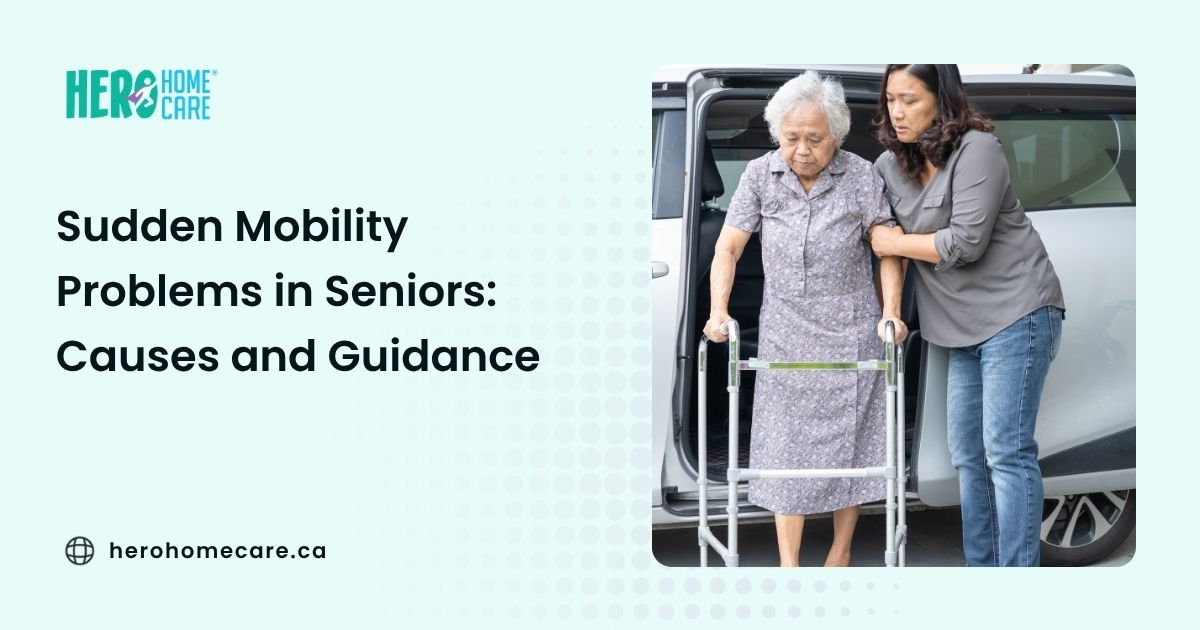
Sudden mobility problems in an older adult can occur when a new illness, neurological event, injury, medication-related effect, or another health problem abruptly affects the ability to stand, walk, balance, bear weight, or move as usual. Because many different problems can produce this kind of sudden change, determining the cause requires medical assessment.
Mobility can also decline gradually because of chronic conditions, reduced strength, longstanding balance difficulties, or other ongoing factors. A marked change over a short period is different and should not automatically be attributed to ageing or an existing condition, particularly when someone who was previously mobile suddenly struggles to stand or walk.
The appropriate response depends on the circumstances and accompanying symptoms. Call 9-1-1 for recognized stroke signs, loss of consciousness, chest pain suggestive of a heart attack, or another clear medical emergency. Sudden, unexplained inability to stand or walk, particularly with new balance or coordination problems, can also indicate a stroke or another serious condition. Call 9-1-1 if a stroke is possible rather than waiting for additional symptoms.
Here is the Quick Answer:
Sudden mobility loss differs from gradual decline and should not automatically be attributed to ageing. A new inability to stand or walk can have many causes and does not reveal the underlying diagnosis. Recognized emergency signs require immediate action, while unexplained sudden mobility loss still warrants prompt medical assessment. Recovery depends on the cause, severity, previous function, treatment, and rehabilitation needs.
What is sudden loss of mobility in elderly adults?
Sudden loss of mobility means a new or marked decline in the ability to stand, walk, bear weight, maintain balance, coordinate movement, or move around as usual over minutes, hours, or another short period. It describes a change in function rather than a diagnosis.
A person may suddenly:
- Struggle to rise from a chair or bed
- Become unable to stand or bear weight
- Walk with a noticeably different gait
- Develop weakness in one or both legs
- Lose balance or coordination
- Fall or experience repeated near-falls
- Require substantially more help to move around
- Find activities of daily living much harder to complete
The first noticeable change varies. Some people first struggle to stand, while others develop leg weakness, an unsteady gait, coordination difficulty, or a sudden fall.
A sudden mobility problem may emerge within minutes or hours, develop during a day, or become clearly noticeable over a short period. Gradual mobility decline generally becomes apparent across weeks, months, or longer.
The informal expression “off legs” may be used to describe someone who has become unable, or much less able, to stand or walk as usual. It is nonspecific: it describes the functional change without identifying its cause and is not a diagnosis.
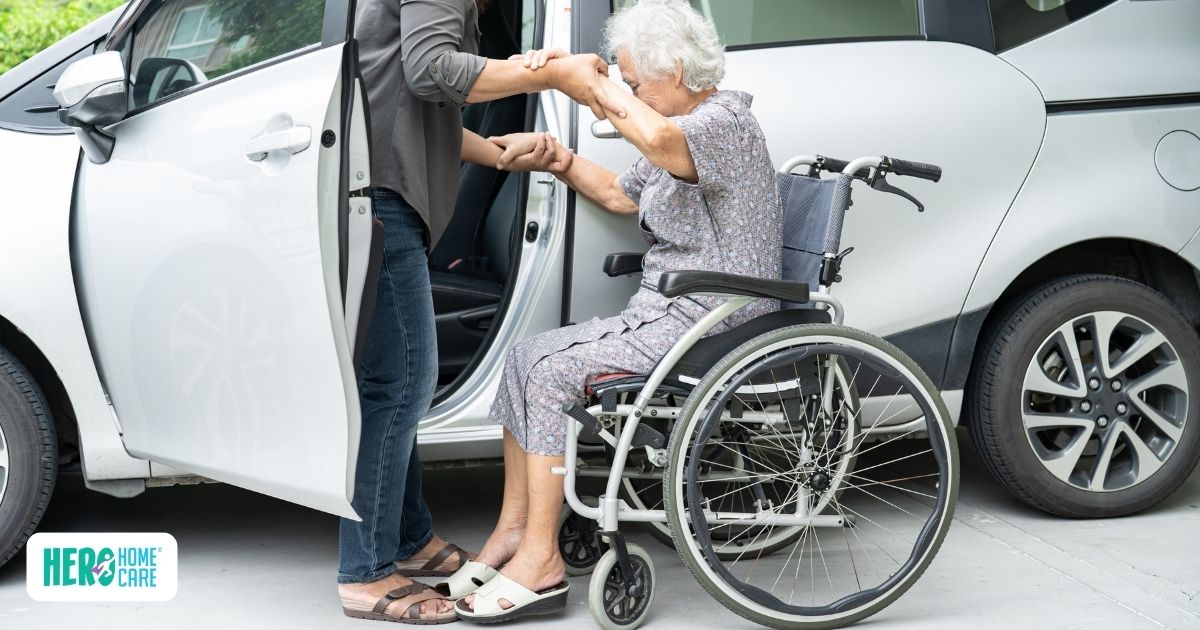
Why do seniors experience sudden mobility issues?
An older adult may suddenly develop mobility problems because of an acute neurological event, serious infection, significant injury, medication-related effect, severe dehydration, metabolic problem, cardiovascular condition, or another new health issue.
These contributors do not follow the same pattern or carry the same urgency. In someone with an existing chronic condition, an abrupt deterioration should not automatically be assumed to reflect expected progression.
Possible Contributors to Sudden Mobility Problems | ||
|---|---|---|
| Cause | Typical Speed of Onset | Emergency Level |
| Stroke or TIA | Usually Sudden | Emergency. Call 9-1-1 for Possible Stroke or TIA Symptoms. |
| Serious Infection or Sepsis | Acute or Rapidly Worsening | Urgent Assessment; Emergency Services for Severe Illness or Other Emergency Signs. |
| Fall or Significant Injury | Often Sudden After an Incident | Urgent Assessment; Emergency Services for Suspected Major Injury or When Safe Transport Is Not Possible. |
| Acute Spinal Cord or Nerve Compression | Sudden or Rapidly Worsening | Emergency Assessment for New Leg Weakness With Bladder or Bowel Changes or Saddle Numbness. |
| Medication-Related Effects | Variable | Prompt Review by a Prescriber or Pharmacist; Emergency Care for Severe Symptoms. |
| Severe Dehydration or Certain Metabolic Problems | Variable | Urgent Assessment for Marked Weakness or Altered Alertness. |
| Chronic Neurological or Circulatory Conditions With New Deterioration | Often Gradual or Variable | Prompt Assessment for Sudden Changes; Emergency Care if Emergency Signs Appear. |
This table describes possible patterns, not diagnoses. Urgency depends on the person’s symptoms and circumstances. Sudden or unexplained inability to stand or walk should be medically assessed.
The timing of the decline, associated symptoms, recent illness or falls, medication changes, and the person’s usual level of function can give healthcare professionals useful context.
What causes sudden loss of mobility in elderly Adults?
The underlying cause of sudden mobility loss differs from one person to another. Some problems cause an abrupt change, while others usually affect walking gradually and become relevant when a new deterioration occurs.
Stroke and Transient Ischemic Attacks (TIAs)
Stroke and transient ischemic attacks are among the most urgent neurological possibilities when mobility changes suddenly. New one-sided weakness, facial drooping, difficulty speaking, loss of balance or coordination, or sudden difficulty standing or walking can occur with stroke.
For additional guidance, see the Heart & Stroke Foundation’s stroke warning signs.
Mobility loss alone does not prove that a stroke has occurred, and not every recognized stroke sign needs to be present. If possible stroke or TIA symptoms appear, call 9-1-1.
Infections That Cause Sudden Mobility Issues in Elderly People
Serious infection can leave an older adult acutely unwell, sometimes with marked weakness, fatigue, confusion, or reduced walking ability. Pneumonia and sepsis are important examples, and sepsis requires urgent medical care.
A urinary tract infection is one possible source of infection, but sudden confusion, weakness, or inability to walk should not automatically be attributed to a UTI. These nonspecific changes can occur with many other conditions, so clinical assessment is needed to determine whether infection is responsible.
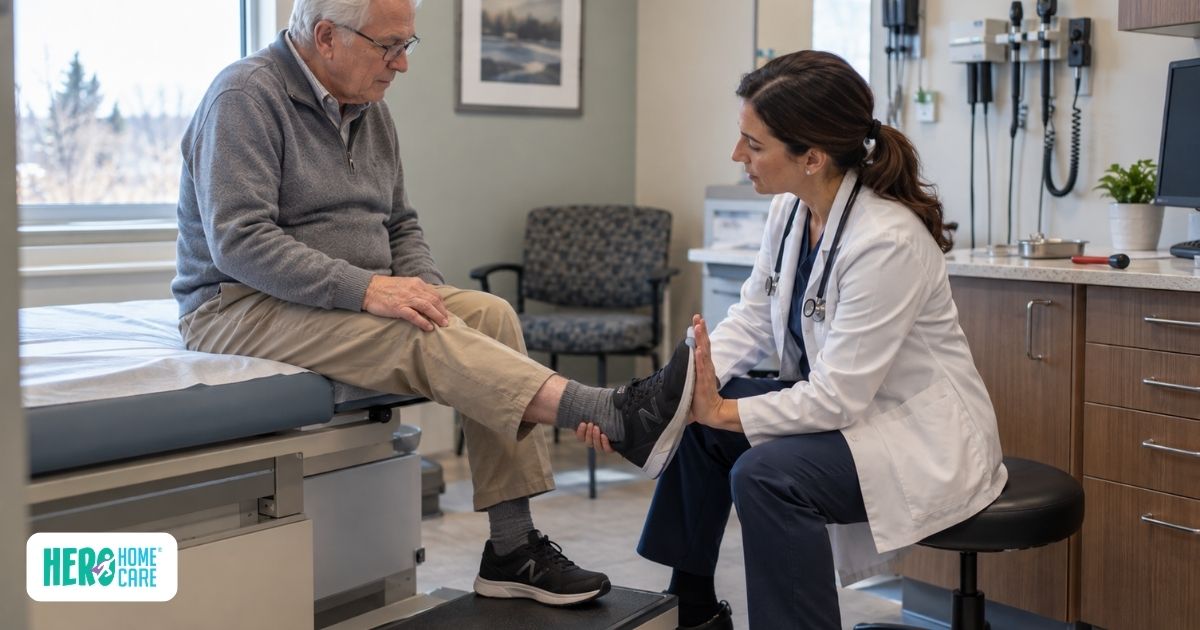
Sudden Loss of Mobility in Legs in Elderly Adults From Neurological Disorders
Movement depends on communication between the brain, spinal cord, peripheral nerves, and muscles. Problems affecting these systems can contribute to weakness, altered gait, balance changes, or difficulty controlling movement.
Acute spinal cord or nerve compression is an urgent possibility when new leg weakness occurs with severe back pain, numbness around the groin or saddle area, or new loss of bladder or bowel control. These can be warning signs of Cauda Equina Syndrome, which requires emergency medical assessment.
Some other neurological problems are usually more gradual or variable. Parkinson’s disease and peripheral neuropathy generally fit the latter pattern, while multiple sclerosis can follow different courses.
Dementia, including Alzheimer’s disease, should not automatically be used to explain an abrupt functional decline. If someone with an established neurological or cognitive condition suddenly cannot walk as usual, a separate acute problem may be responsible and should be assessed.
After an acute cause has been assessed, persistent cognitive or mobility changes may affect familiar routines and personal activities. Hero Home Care’s Dementia Support & Alzheimer’s Care may complement ongoing medical care for established cognitive needs, while Personal Care Services may assist with bathing, dressing, grooming, or toileting when appropriate.
Falls, Fractures, and Musculoskeletal Injuries
A fall or significant musculoskeletal injury can abruptly interfere with standing, walking, or bearing weight. Hip or pelvic fractures and other substantial bone or joint injuries may produce pain, instability, or an inability to use the affected leg normally. Knee injuries or muscle tears may also make weight-bearing difficult.

Related: How to Reduce Fall Risk for Seniors Living Alone in Greater Vancouver
When a significant injury is suspected, decisions about standing, walking, weight-bearing, or transfers should follow medical guidance. Do not repeatedly test whether the person can walk.
After an acute injury has been assessed, measures intended to reduce fall risk may become relevant to longer-term household planning.
Medication Side Effects and Drug Interactions
Some medications or combinations can contribute to dizziness, drowsiness, confusion, weakness, or impaired balance. Sedating medicines, sleeping medicines, some blood-pressure medicines, and some pain medicines may be relevant depending on the person and prescription.
Medication review and changes belong to the prescriber, pharmacist, or another regulated professional. Hero Home Care’s Medication Management may support established medication routines and reminders, but it does not replace professional medication review or prescribing decisions.
Do not stop or change a prescribed medication solely because it appears on a list of medicines that can affect balance. Contact the prescriber or pharmacist for individual guidance.
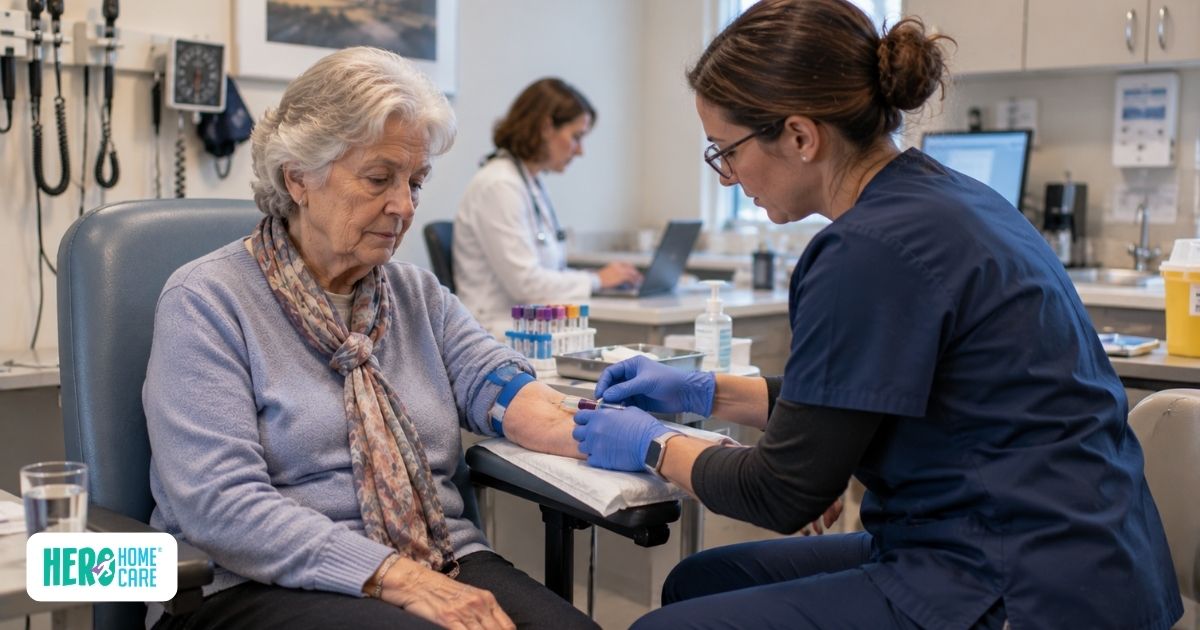
Severe Dehydration and Nutritional Deficiencies
Severe dehydration can cause substantial weakness or dizziness and may make standing difficult. Electrolyte or metabolic abnormalities can also contribute to weakness, although their presentation and urgency vary and usually require clinical testing to identify.
Vitamin B12 or vitamin D deficiency may affect strength or neurological or musculoskeletal function, but deficiencies are generally longer-term contributors rather than acute equivalents to stroke or injury.
These conditions should not be grouped together as interchangeable causes. Unexplained sudden immobility should not be treated with supplements, special diets, or hydration strategies without appropriate assessment.
Heart Conditions and Poor Circulation
Cardiovascular and circulatory problems can affect mobility through weakness, dizziness, light-headedness, fainting, fatigue, or reduced tolerance for walking.
Arrhythmias may occur episodically and can be associated with dizziness or fainting. Low blood pressure may contribute to weakness or light-headedness.
Heart failure more often makes activity difficult because of fatigue, breathlessness, or reduced energy rather than simply causing the legs to “give out.” Peripheral arterial disease typically causes exertional leg discomfort or walking limitations and is not a usual explanation for abrupt unexplained immobility.
Mobility symptoms alone cannot determine whether a cardiovascular condition is responsible.
What symptoms should never be ignored when a senior suddenly loses mobility?
A sudden inability to stand or walk should not simply be attributed to ageing. Recognized stroke signs, loss of consciousness, chest pain, severe new neurological symptoms, or symptoms of serious spinal nerve compression require emergency attention.
Even when classic emergency signs are absent, a new and unexplained loss of standing or walking ability warrants prompt medical assessment.
Canadian FAST guidance identifies facial drooping, one-sided arm or leg weakness, and speech difficulty as key stroke warning signs. Not every FAST sign needs to occur. If a recognized stroke sign appears, call 9-1-1 rather than waiting for additional symptoms.
Sudden Mobility Symptoms and Recommended Urgency | ||
|---|---|---|
| What You Notice | Why It Matters | What to Do |
| New Facial Drooping, One-Sided Weakness, or Speech Difficulty | These are recognized FAST stroke signs. | Call 9-1-1. |
| Unconsciousness or Unresponsiveness | A person who is currently unconscious or unresponsive needs emergency care. | Call 9-1-1. |
| Chest Pain, Pressure, or Discomfort Suggesting a Heart Attack | These may be signs of a heart attack. | Call 9-1-1. |
| Sudden Marked Confusion or Altered Alertness | This can accompany several serious medical problems and should not automatically be blamed on dementia, infection, or ageing. | Seek prompt assessment; call 9-1-1 when stroke signs, unconsciousness, suspected sepsis, or another clear emergency is present. |
| New Inability to Stand or Bear Weight After a Fall or Injury | A significant bone or joint injury is possible. | Seek urgent medical assessment. Call 9-1-1 if a serious injury is suspected or the person cannot be moved safely. |
| New Weakness in Both Legs with Bladder, Bowel, or Saddle-Sensation Changes | This pattern can occur with serious spinal nerve compression. | Seek emergency medical assessment. |
| Severe or Sudden Dizziness with Weakness, Speech Difficulty, Fainting, or Other Neurological or Cardiac Symptoms | Dizziness has many possible causes, but associated neurological or cardiac symptoms may indicate a medical emergency. | Follow the emergency pathway for the accompanying signs. |
| Sudden Unexplained Inability to Stand or Walk without an Obvious Emergency Sign | An abrupt functional change can have several causes requiring clinical evaluation. | Arrange urgent medical assessment. Call 9-1-1 if stroke is possible or other emergency signs are present. Do not try to make the person walk or drive them yourself if a stroke is possible. |
Symptoms can overlap across many conditions. This table helps identify when assessment is required; it cannot establish a diagnosis.
When arranging medical help, relatives can note when the change began and any accompanying symptoms, falls, illnesses, hospitalizations, or medication changes. If stroke is suspected, calling 9-1-1 takes priority over gathering additional information.
Do not force someone to walk or repeatedly test weight-bearing when they suddenly cannot stand, bear weight, or use a limb normally.
Why would an elderly person suddenly become unable to walk?
An older adult’s walking ability can appear to change within hours or overnight. “Overnight” describes when the family noticed the change, not why it happened.
A parent may go to bed moving close to their usual level and then struggle the next morning to rise from bed or reach the bathroom. The fact that the person appeared well the previous day does not make the change less significant.
Someone who has already been walking less because of an established condition may suddenly require much more assistance after an illness, fall, hospitalization, or medication change. An acute problem can occur on top of an existing limitation, so relatives should not automatically assume that a chronic condition has simply progressed.
Sometimes the clearest sign is that a familiar task has suddenly become impossible. Families may describe this as “their legs gave out,” “they were fine yesterday,” or “they suddenly need help standing.” These are useful observations, but they do not identify the cause.

Related: How to Create a Safe Home Environment for Aging Parents
The most useful comparison is with the person’s usual mobility: what they could do before the change and what they can no longer do now.
If limitations continue after the acute cause has been assessed and recommended treatment or rehabilitation is underway, Thriving at Home support may become one part of a broader plan involving healthcare, rehabilitation, family support, and other appropriate resources.
How Doctors Diagnose Sudden Mobility Issues in Elderly Adults
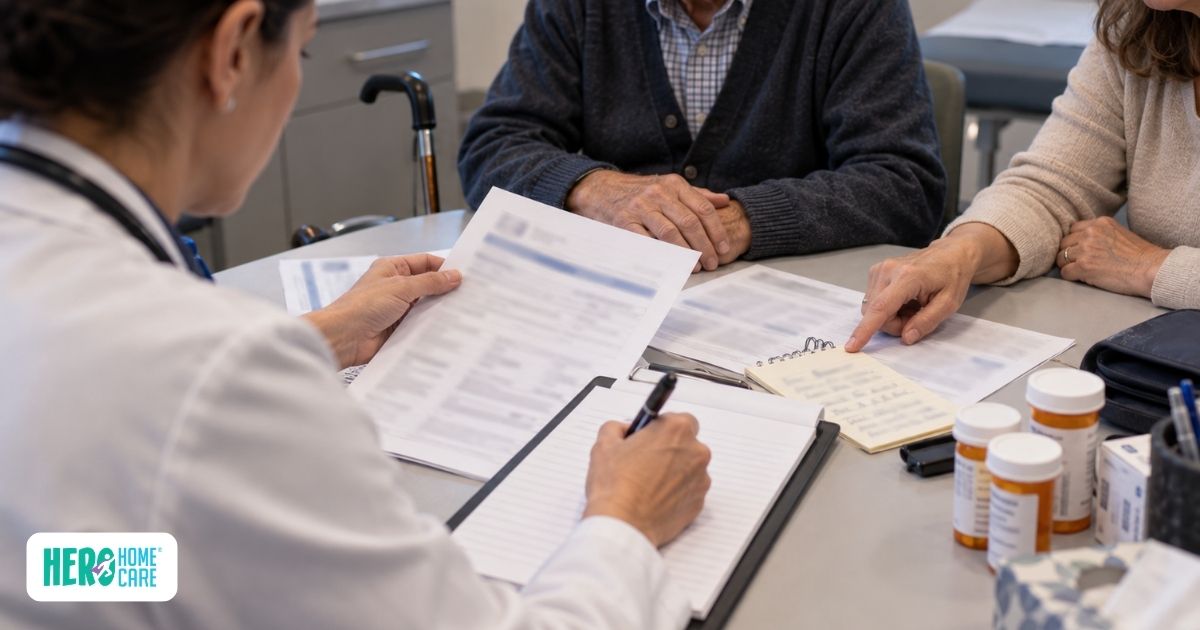
Healthcare professionals evaluate sudden mobility loss to determine what is causing the functional change. There is no single test used in every case.
Medical History and Timing
Clinicians establish when the change began, how it differs from the person’s usual mobility, and whether a recent illness, fall, hospitalization, injury, or medication change may provide relevant context.
Physical Examination
The examination is guided by the person’s presentation and what can be assessed safely. A clinician may look for pain, tenderness, injury, weakness, or other findings relevant to the change.
Standing or walking may be observed when clinically appropriate. If injury or another problem makes weight-bearing unsafe, mobility does not need to be tested simply to prove that it has declined.
Neurological Assessment
When weakness, altered sensation, coordination difficulty, balance problems, speech changes, or other neurological findings are present, assessment may include strength, sensation, reflexes, coordination, gait, or balance when appropriate.
Individual findings must be interpreted within the broader clinical picture and do not independently establish a diagnosis.
Medication Review
Prescription and relevant over-the-counter medicines may be reviewed, particularly when medicines have recently been added, stopped, changed, or combined.

Related: How to Tell If Your Parent Is Hiding Health Problems (Signs of Health Issues in Seniors)
Any medication changes must be determined by the appropriate regulated healthcare professional.
Blood Tests and Other Laboratory Investigations
Testing is selected according to the clinical presentation. It may help investigate infection, dehydration, metabolic abnormalities, blood-related or nutritional problems, or other suspected contributors.
Imaging
Brain imaging may be used when clinicians are investigating certain neurological problems. X-rays or other imaging may be considered after a suspected fracture or significant injury. Other imaging may be selected when findings suggest a spinal, structural, or neurological concern.
No single scan is routinely required for every sudden mobility problem.
Functional Mobility Assessment
The healthcare team may also assess what the change means for transfers, walking, self-care, equipment, and the amount of assistance required. Physiotherapists or occupational therapists may contribute detailed functional and rehabilitation assessments.
Families can help by providing:
- A current medication list
- A description of the person’s usual mobility
- What has changed
- When the change began
- Details of any recent illness, fall, hospitalization, injury, or medication change
Some sudden mobility problems improve substantially, while others leave temporary or lasting limitations. Recovery cannot be predicted from the mobility change alone.
Can sudden mobility problems in seniors be reversed?
Some sudden mobility problems may improve substantially, while others can leave temporary or lasting limitations, depending on the underlying cause and individual circumstances. Recovery cannot be predicted from the mobility change alone; severity, previous health and mobility, complications, treatment, and rehabilitation needs may all influence the outcome.
Factors That May Influence Mobility Recovery | |
|---|---|
| Situation or Contributor | What Recovery May Depend On |
| Stroke or TIA | Type and severity, resulting impairments, previous function, treatment, and rehabilitation needs |
| Serious Infection or Severe Dehydration | Severity of illness, complications, baseline health, and function lost during the episode |
| Fall, Fracture, or Significant Injury | Nature of the injury, treatment, pain, restrictions, previous mobility, and rehabilitation |
| Medication-Related Effects | Whether the medication-related problem is identified and clinically addressed, alongside other health factors |
| Acute Neurological or Spinal/Nerve Problem | Diagnosis, severity, neurological impairment, treatment, and rehabilitation needs |
| Chronic Neurological or Circulatory Condition with a New Acute Decline | Whether the superimposed problem improves and how the underlying condition continues to affect mobility |
Recovery may change over time as the diagnosis and remaining limitations become clearer. Healthcare and rehabilitation professionals can give more individualized expectations than a general recovery timeline.
Treatment Options for Sudden Mobility Issues in Elderly Adults
Treatment depends on the cause identified during medical assessment. Medical care addresses the illness, injury, medication-related problem, or other condition; rehabilitation addresses functional limitations; and home care supports established routines while clinical care continues.

Related: How Home Care Supports Seniors With Limited Mobility
Medical Treatment
Medical treatment is directed at the underlying condition. An infection may require clinician-directed treatment, while a significant injury may require medical or surgical management. Neurological and cardiovascular conditions require condition-specific care.
If medication is suspected, an appropriate regulated professional reviews the regimen and determines whether changes are warranted.
Physical Therapy
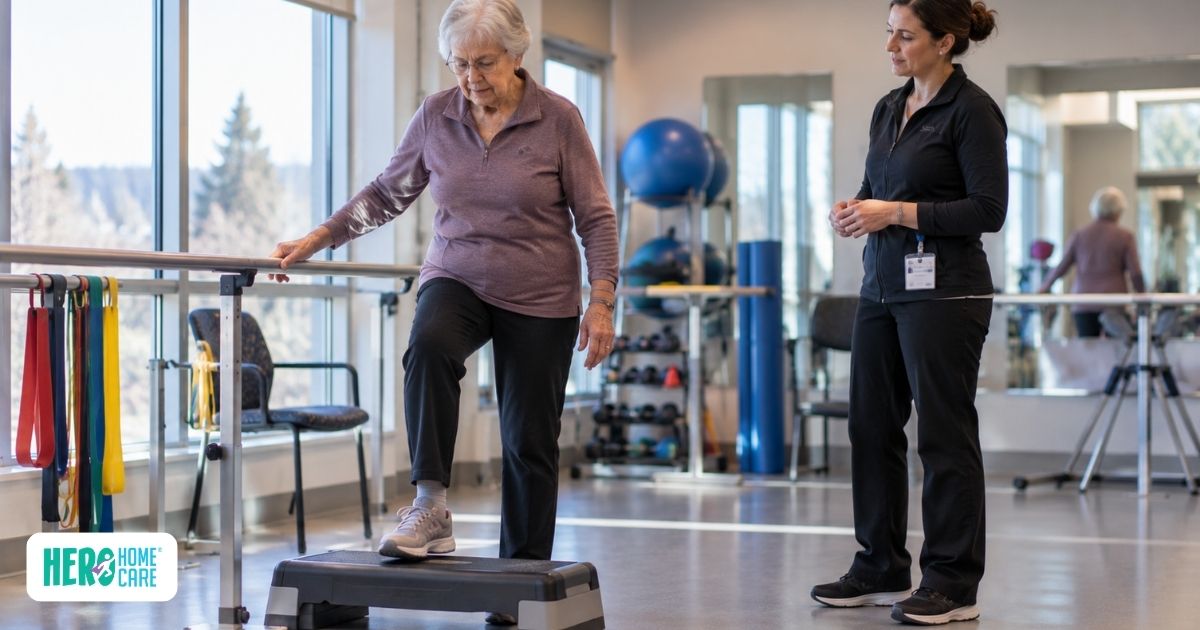
A physiotherapist may assess walking, transfers, balance, strength, gait, and other aspects of movement. When indicated, the physiotherapist establishes mobility goals and prescribes individualized therapeutic activities.
Physical therapy is not automatically required after every mobility event. Its role depends on the diagnosis, restrictions, and functional needs.
Rehabilitation
Rehabilitation may involve several regulated professionals. Physiotherapy can address movement and mobility, while occupational therapy may address everyday activities, transfers, equipment, and practical adaptations.
Strength or balance training belongs within an established rehabilitation plan when clinically appropriate. A return to previous mobility cannot be assumed.
Home Care Support
After the acute problem has been assessed, home care may support day-to-day routines while medical treatment or rehabilitation continues.
Hero Home Care’s Recovery and Rehabilitation Care can provide practical assistance around an existing recovery plan without replacing physiotherapy, occupational therapy, or other clinical rehabilitation.
Personal Care Services may help with bathing, dressing, grooming, and toileting. Transportation for Seniors may assist with travel to medical or rehabilitation appointments.

How can Hero Home Care help seniors recover after sudden mobility loss?
Hero Home Care may provide practical or nursing support after the immediate cause of sudden mobility loss has been medically assessed. Hero Home Care does not diagnose the cause or replace emergency, medical, or rehabilitation care.
Health Navigation
Hero Home Care’s Health Navigation can help families understand and organize appointments, referrals, and care arrangements as recovery continues. Medical decisions and clinical coordination remain with the appropriate healthcare professionals.
Recovery and Rehabilitation
Hero Home Care’s Recovery and Rehabilitation Care can provide practical support as a customer returns to everyday life after illness, injury, surgery, or hospitalization.
Heroes may reinforce an established routine or professionally prescribed exercise plan when this is documented in the Care Plan. They do not assess mobility or prescribe rehabilitation exercises.
Round-the-Clock Home Care
Hero Home Care’s Round-the-Clock Home Care may provide scheduled caregiver assistance across the day and night when a customer needs a more consistent presence.
Depending on the Care Plan, this may include personal routines, toileting, meals, companionship, and appropriate mobility support. It does not mean that a nurse provides continuous bedside clinical monitoring.
Personal Care Services
Hero Home Care’s Personal Care Services can assist when mobility limitations make bathing, dressing, grooming, toileting, ambulation, or transfers more difficult.
Transfer or ambulation assistance must follow the customer’s Care Plan and the assigned Hero’s training and responsibilities.
Nursing Care
Hero Home Care’s Nursing Care provides regulated clinical support when a customer has nursing needs during recovery.
Depending on the customer’s needs and Care Plan, this may include health checks, wound care, and medication-related nursing support within the nurse’s professional scope. Diagnosis and treatment decisions remain with the appropriate prescribing or treating professional.
Medication Management
Hero Home Care’s Medication Management may provide reminders, organized routines, and nurse-guided support for current instructions. It does not determine whether a medicine caused the mobility change or independently alter a prescription.
Can sudden mobility problems in seniors be prevented?
Not every sudden mobility problem can be prevented. Stroke, serious illness, injury, and other acute health events may occur despite preventive measures. However, some long-term strategies can reduce modifiable risks and support mobility.
- Stay physically active: Appropriate movement, strength, and balance activities can help maintain function. Exercise should reflect the person’s abilities and professional guidance when needed.
- Review medications and chronic conditions: Regular follow-up can identify health or medication-related factors affecting balance or mobility.
- Reduce fall hazards: Clear walkways, adequate lighting, suitable footwear, and appropriate safety features can reduce environmental risks.
- Maintain adequate nutrition and hydration: Regular food and fluid intake supports general health but does not replace assessment of sudden mobility loss.
- Report new changes: New weakness, falls, balance problems, or walking changes should be discussed with an appropriate healthcare professional.
- Follow recommended rehabilitation: Professionally directed rehabilitation may address remaining limitations after illness or injury.
Source:
- Heart and Stroke Foundation of Canada – FAST Signs of Stroke
- HealthLink BC – Hip Injuries
- HealthLink BC – Confusion, Memory Loss, and Altered Alertness
- HealthLink BC – Dizziness: Light-Headedness and Vertigo
- HealthLink BC – Loss of Consciousness (Unconsciousness)
- Heart and Stroke Foundation of Canada – Heart attack
- HealthLink BC – Atrial Fibrillation
- HealthLink BC – Heart Failure
- HealthLink BC – Peripheral Arterial Disease
- Canadian Stroke Best Practices — Initial Stroke Rehabilitation Screening and Assessment
- HealthLink BC — Severe Dehydration in Older Children and Adults
- HealthLink BC — Vitamin B12 Deficiency Anemia
- HealthLink BC — Getting Enough Calcium and Vitamin D
- HealthLink BC — Anterior Cruciate Ligament Injuries
- HealthLink BC — Back Problems and Injuries
- HealthLink BC — Parkinson’s Disease reference via Nervous System Problems
- HealthLink BC — Alzheimer’s Disease
- HealthLink BC — Weakness and Fatigue
- HealthLink BC — Nervous System Problems
- Freiberger et al. — Mobility in Older Community-Dwelling Persons: A Narrative Review
- WebMD – What Causes Balance Issues in Older Adults
- National Institute on Aging – Older Adults and Balance Problems