
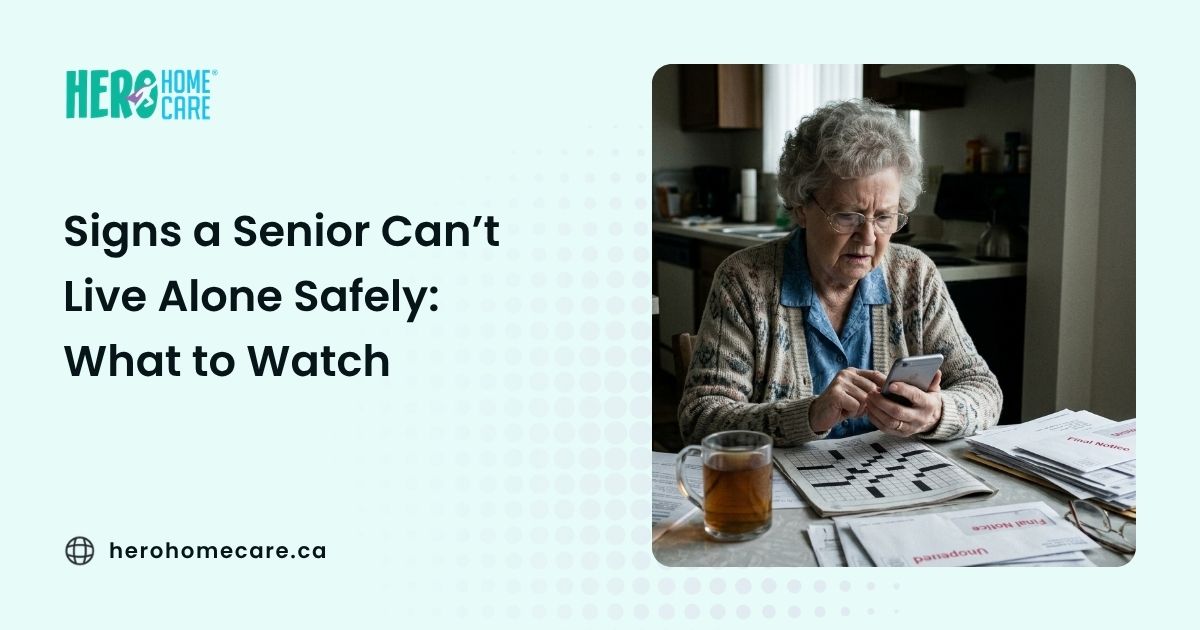
Realizing a parent may no longer be safe living alone is rarely a single moment. It usually begins with small changes, such as a missed call, a forgotten bill, spoiled food in the fridge, or a story that no longer quite makes sense. Each moment on its own can be easy to explain. Over time, they begin to form a pattern that is harder to ignore.
This is also what makes the decision difficult. You may not know if you are overreacting, or if you are seeing early warning signs that something needs to change.
Living alone safely is not defined by age. It depends on whether someone can manage daily life reliably, make safe decisions, and respond appropriately when something goes wrong.
This guide explains the early signs that a senior may no longer be safe living alone, how to distinguish between minor changes and meaningful risk, and what families can do next to protect both safety and independence.
Here is the Quick Answer:
A senior may no longer be safe living alone when daily tasks, judgment, or mobility become inconsistent and create ongoing risk.
Warning signs include frequent falls, medication mistakes, poor hygiene, memory issues that affect safety, missed meals, confusion, or difficulty managing basic routines.
What matters most is not one isolated issue, but a pattern. If problems are becoming more frequent, affecting safety, or requiring constant check-ins, additional support is likely needed. Home care can help reduce risk and allow seniors to remain at home more safely, but in some cases, more supervision or a change in living arrangement may be necessary.
What does it mean when a senior is no longer safe living alone?
A senior is not unsafe simply because they need help. Many older adults live independently while receiving support with specific tasks. The concern begins when daily life can no longer be managed reliably or safely without supervision.
This often shows up when risk is no longer contained to predictable situations. A fall risk that exists at any hour, confusion that affects judgment, or an inability to respond properly in an emergency all change the equation. The issue is not whether help is needed, but whether that help can safely wait.
What matters most is consistency. One missed bill or forgotten appointment may not signal a serious issue. But when those moments repeat, or begin to affect safety, they become something different. Living alone becomes unsafe when the gaps between support carry real risk.

Related: Hero Home Care was recently featured in North Shore News for sharing early signs families should watch for when a senior may be struggling at home. These signs can start subtly, from missed meals and medications to isolation or household tasks becoming harder to manage, which makes early planning especially important.
Early Signs a Senior Cannot Live Alone Safely
The signs below rarely appear all at once. More often, they build gradually across different areas of daily life. What families notice is not just one issue, but a shift in how reliably things are being managed.
Frequent Falls, Balance Problems, or Trouble Moving Around the Home
Mobility changes are often one of the earliest and most visible concerns. A parent who once moved confidently may begin hesitating on stairs, holding onto furniture, or taking longer to stand up. You might notice unexplained bruises or hear about near-falls that did not result in injury.
The real concern is not just the fall itself, but what happens if one occurs when no one is there. Everyday actions such as walking to the bathroom at night or carrying a plate from the kitchen can become high-risk situations when balance is no longer stable.

Medication Mistakes or Confusion About Prescriptions
Medication routines can quietly become unsafe. A parent may begin missing doses, taking medication twice, or confusing which prescription is for what purpose. You might find duplicate pill bottles, expired medications, or signs that refills are not being managed properly.
These issues matter because medication errors can have immediate and serious consequences. Even if everything else appears stable, difficulty managing medications alone can be enough to make living alone unsafe.
Learn More: Signs Your Senior Parent Is Forgetting Medication
Memory Problems That Affect Daily Safety
Some memory changes are part of normal aging. The concern begins when memory lapses interfere with safety.
This may include forgetting to turn off the stove, leaving doors unlocked, or repeatedly asking the same questions without recalling the answer. You may also notice confusion about time, dates, or recent events.
The key difference is not whether something is forgotten, but whether that forgetfulness creates risk or disrupts daily life in a consistent way.
Poor Personal Hygiene or Signs of Self-Neglect
Changes in hygiene often reflect deeper challenges. A parent may begin wearing the same clothes repeatedly, skipping bathing, or neglecting basic grooming. Over time, the home environment may also show signs of neglect, such as clutter, unwashed dishes, or laundry piling up.
This can be linked to physical difficulty, fatigue, depression, or confusion about routines. When self-care becomes inconsistent, it raises broader concerns about what else may be going unmanaged.
Unopened Mail, Unpaid Bills, or Trouble Managing Routine Tasks
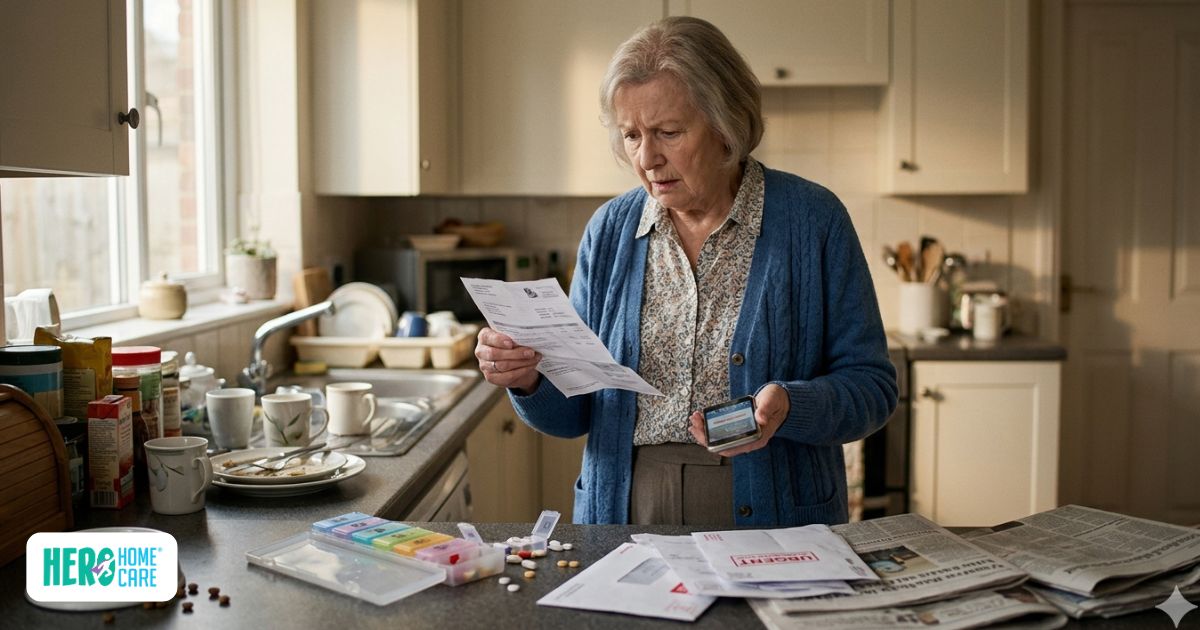
Daily responsibilities often provide some of the clearest signals. You may notice stacks of unopened mail, missed payments, or confusion about finances. Appointments may be forgotten, and routine tasks such as grocery shopping or housekeeping may start to fall behind.
These are not simply signs of disorganization. They reflect a growing difficulty in managing everyday life independently.
Weight Loss, Dehydration, or Poor Eating Habits
Nutrition is often overlooked, but it plays a critical role in safety and overall health.
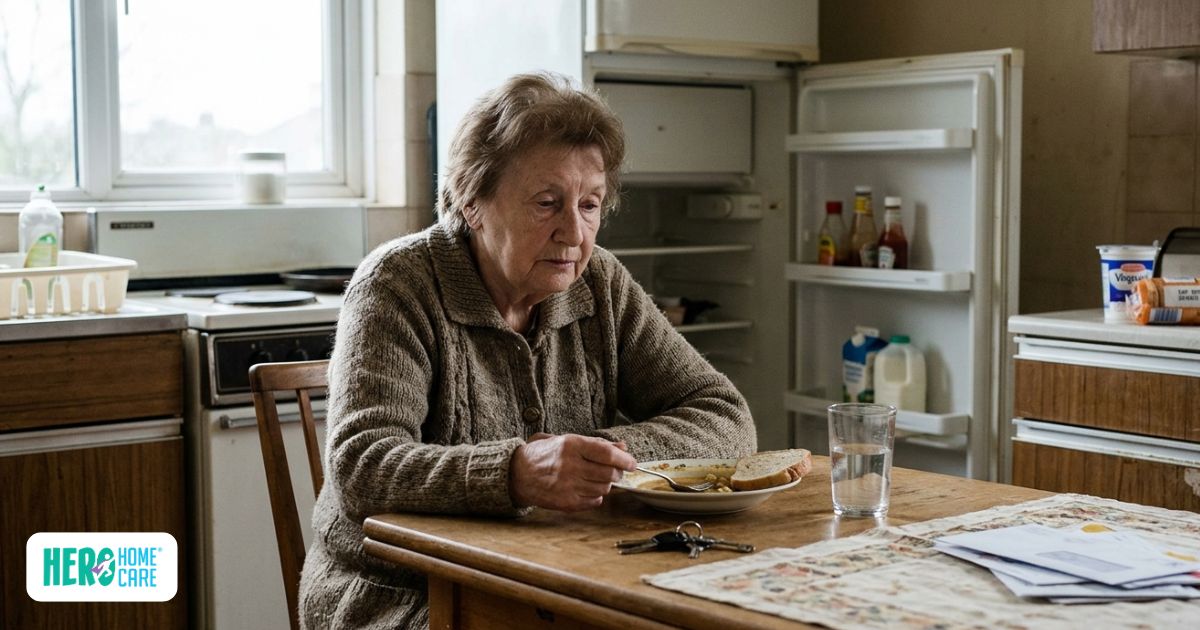
A parent may begin skipping meals, relying on limited or expired food, or losing weight without explanation. In some cases, the issue is not appetite but the ability to plan, shop, or prepare meals safely.
Over time, poor nutrition and dehydration can increase weakness, confusion, and fall risk, creating a cycle that makes independent living more difficult.
Changes in Mood, Behaviour, or Judgment
Emotional and behavioural changes can be subtle at first. A parent may become more withdrawn, irritable, anxious, or suspicious. You might notice decisions that feel out of character or a reduced ability to handle familiar situations calmly.
These changes matter because judgment is closely tied to safety. When decision-making shifts, even routine situations can become risky.
Wandering, Getting Lost, or Confusion in Familiar Places
Disorientation is one of the more serious warning signs. A parent may become confused in familiar areas, struggle to find their way home, or appear unsure of their surroundings.
Even in early stages, this type of confusion can create unpredictable risk, especially when the person is alone and unable to seek help effectively.
Where the risk is concentrated at night or the person cannot be left alone at all, continuous in-home care is the alternative to a facility move.
Social Withdrawal, Loneliness, or Isolation
Isolation often develops gradually and can be easy to miss. A parent may stop engaging in activities, reduce contact with others, or spend long periods alone without regular check-ins.
In one situation observed by Hero Home Care, David had been checking in on his mother regularly, but something felt slightly off. She was missing calls more often, and their conversations had become shorter.
When a caregiver visited one afternoon, they noticed groceries left untouched on the counter and a calendar filled with missed appointments. Nothing urgent had happened, but the pattern was clear. Daily routines were starting to slip in ways that would have been easy to miss without consistent presence.
Isolation is not only emotional. It reduces visibility, meaning problems can develop unnoticed and emergencies may go unanswered.
Learn More: How to Reduce Social Isolation in Elderly
Several of these signs together do not automatically mean a move; they usually mean the gaps need filling, which is what in-home support for daily living is designed to do.
Normal Aging vs. Signs a Senior Cannot Live Alone Safely
It is natural to question whether these changes are serious or simply part of aging. The distinction often comes down to pattern and impact.
| Normal Aging | Possible Safety Concern |
| Occasionally forgetting names or appointments | Repeatedly forgetting essential routines |
| Slower movement but stable balance | Frequent near-falls or unsafe mobility |
| Asking for help with complex tasks | Unable to manage basic daily needs |
| Mild disorganization | Ongoing neglect of home or hygiene |
| Isolated incidents | Repeated and increasing patterns |
Normal aging involves occasional lapses. Safety concerns begin when those lapses become consistent and start affecting independence.
How Family Members Can Assess Whether a Senior Is Safe at Home
Understanding safety requires more than a quick visit. It involves observing how daily life is functioning over time.
When visiting, pay attention to:
- Condition of the home and overall cleanliness
- Food availability and whether meals are being eaten
- Medication organization and routine
- Mobility, balance, and movement around the home
- Hygiene and personal care
- Mental alertness and orientation
- Mood and level of engagement
- Ability to respond if something unexpected happens
It can also help to ask open-ended questions rather than direct ones. Instead of asking whether everything is fine, ask how certain routines are being managed. Often, the answers reveal more than the question itself.
Most importantly, look for patterns. One observation rarely tells the full story. Repeated observations, especially when shared among family members, provide a clearer picture.
What to Do If You Notice the Signs a Senior Cannot Live Alone
Recognizing the signs is often easier than deciding what to do next. Many families hesitate, unsure whether it is too early to act or too late to wait.
How to Talk to a Parent About Safety Concerns
Approach the conversation with specific examples rather than general concerns. Focus on what you have observed rather than what you fear. This helps keep the discussion grounded and reduces defensiveness.
These conversations are rarely resolved in one sitting. They tend to unfold over time, as trust and understanding build.
Learn More: How to Talk to Elderly About Home Care
What Changes to Track Before Asking for Help
Keeping simple notes can make a significant difference when concerns need to be shared with others or discussed with a professional.
Focus on patterns such as:
- Repeated memory lapses
- Missed tasks or responsibilities
- Changes in eating or hygiene
- Mobility issues or near-falls
- Behavioural or mood changes
The goal is not to document everything, but to capture enough detail to show what is changing over time.
When to Seek a Care Assessment or Medical Evaluation
It may be time to seek professional input when changes are becoming frequent, safety concerns are increasing, or daily routines are no longer consistent.
Early assessment does not mean committing to a major change. It provides clarity, helping families understand what level of support may be appropriate.
Learn More: When Is 24-Hour Home Care Necessary for Seniors
Can Home Care Help a Senior Stay at Home More Safely?
In many situations, home care can help bridge the gap between independence and safety.
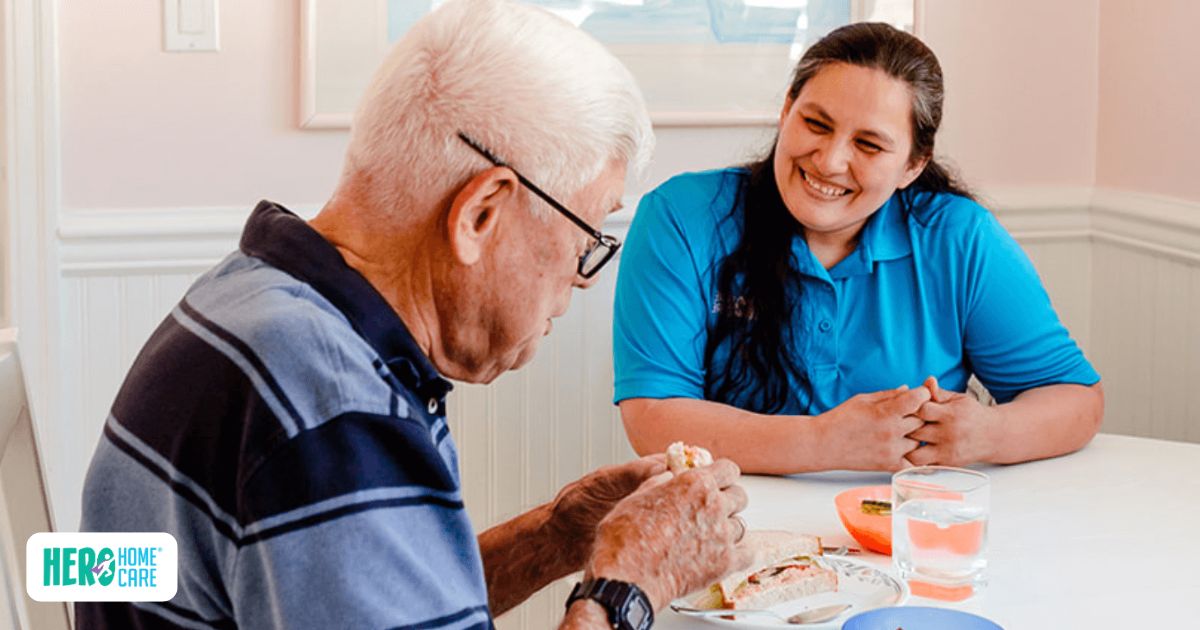
Support can be introduced in practical ways. Assistance with meals can address nutrition concerns. Regular visits can reduce isolation. Help with routines can make medication schedules more reliable. Mobility support can lower fall risk.
Rather than replacing independence, the goal is to support it in a way that reflects current needs.
Senior Home Care Support in North Vancouver
When safety concerns begin to increase, having access to local support can make decisions feel more manageable.
In North Vancouver, Hero Home Care works with families to understand what is actually happening day to day and help create care plans that adjust as needs change. Support can begin gradually and evolve over time, rather than requiring an immediate, all-or-nothing decision.
When Living Alone Is No Longer the Right Option
There is rarely a single moment that defines this transition. More often, it becomes clear through repeated patterns.
When risks are increasing, supervision is needed more often, and safety depends on constant oversight, living alone may no longer be sustainable.
This is not a failure. It is a shift in what the situation now requires.
Planning earlier allows families to make thoughtful decisions, rather than reacting to a crisis.