

Dementia wandering at night is when a person wakes up confused and moves around without clear awareness of time, place, or safety. It often happens because dementia disrupts sleep patterns, increases nighttime confusion, and affects how the brain processes routine.
Not every nighttime wake-up is wandering. Getting up briefly is normal. Wandering involves disorientation, searching, or moving toward unsafe areas like doors or unfamiliar spaces.
If you’re seeing this, you’re not alone. Wandering is common in dementia and can happen during the day or night. When it happens at night, it can feel unsettling, but the right approach can help reduce risks and make these episodes easier to respond to.
Here is the Quick Answer:
Start by checking what your parent needs, making their immediate surroundings safer, and deciding whether someone needs to remain awake with them.
- Look beyond wandering: Nighttime dementia behaviours can include calling out, repeated toileting, hallucinations, or getting dressed because the person thinks it is morning.
- Check for a cause: Confusion, disrupted sleep, pain, or an unmet need may be involved; sudden changes need medical attention.
- Respond calmly: Offer reassurance, check comfort and toileting needs, and guide movement away from hazards without arguing or forcing.
- Review overnight coverage: Alarms cannot provide supervision; arrange an awake, available caregiver when your parent needs repeated or immediate assistance.
The most effective way to manage it is through small, consistent actions, steady routines, a calm environment, and gentle responses in the moment. You don’t have to handle it perfectly or alone. With the right approach and support, nights can become more manageable and less stressful for both you and your parent.
What stage of dementia causes wandering at night?
Nighttime wandering can happen at different stages, although it often becomes more noticeable during the middle stage when disorientation increases and walking remains possible. The patterns below are a guide, not a way to determine dementia stage or predict how often someone will wander.1
How Wandering Can Change Across Dementia Stages | |||
|---|---|---|---|
| Stage | What Wandering Looks Like | How Frequent | Main Safety Risk |
| Early Stage | Restlessness, Difficulty Settling, or Confusion After Waking | May Be Occasional; Not Everyone Wanders | Becoming Disoriented or Leaving a Familiar Place |
| Middle Stage | Walking Around, Searching for Someone, or Trying to Leave Home | May Become More Frequent as Disorientation Increases | Unnoticed Exits, Getting Lost, and Falls |
| Late Stage | Walking May Decline; Attempts to Leave Bed or Move Without Assistance Can Continue | Depends on Mobility and Individual Symptoms | Falls During Bed Exits or Unsupported Movement |
If nighttime movement is becoming difficult to manage, book a Free Care Consult to discuss routines, safety concerns, and overnight support with Hero Home Care.
Learn More: What Are the Early Warning Signs of Dementia in Seniors

Types of Wandering in Dementia Patients
Wandering at night doesn’t always look the same. The way your parent moves or behaves often reflects a specific feeling, need, or type of confusion. Recognizing the pattern can make it easier to understand what’s behind it.
Aimless Wandering
This type of wandering has no clear direction or goal. Your parent may move through the house without settling anywhere, entering spaces without a clear reason or forgetting why they went there.
It often reflects general confusion or a sense of being unsettled. For example, they might walk into the kitchen, then the living room, then back again without stopping.

Exit-Seeking Wandering
This happens when your parent tries to leave the home or go somewhere specific. They may check doors, look for keys, or say they need to “go to work” or “go home,” even when they are already in a familiar place.
This often comes from a strong feeling of urgency combined with confusion about time or place. For example, they might insist it’s time to leave for an appointment that doesn’t exist.
Goal-Oriented Wandering
In this case, the movement is purposeful, even if the goal doesn’t match reality. Your parent may be searching for a person, a place, or something familiar from the past. This is often tied to memory gaps or emotional needs. For example, they might walk through the house looking for a family member who isn’t actually present in the home.
Repetitive Walking or Pacing
This involves repeated movement in the same pattern, such as walking up and down a hallway or circling a room. It can reflect restlessness or a need for something familiar and predictable when everything else feels uncertain.
For example, they might walk the same short path over and over without stopping.
Why does dementia wandering at night happen?
Dementia wandering at night can feel sudden and unpredictable, but it’s usually not random. In most cases, there’s an underlying reason driving the behavior, even if it’s not clear at first. Understanding what’s behind it can make the situation feel less confusing and more manageable.
Sundowning and Dementia Night Behavior
As the day moves into evening, some people with dementia experience a shift in mood and awareness often called “sundowning.” They may become more confused, restless, or unsettled as light fades and routines change. This increased confusion can create discomfort, and wandering often becomes a way of responding to that discomfort.
For example, a parent who seemed calm during the day may start moving around more as evening turns into night.
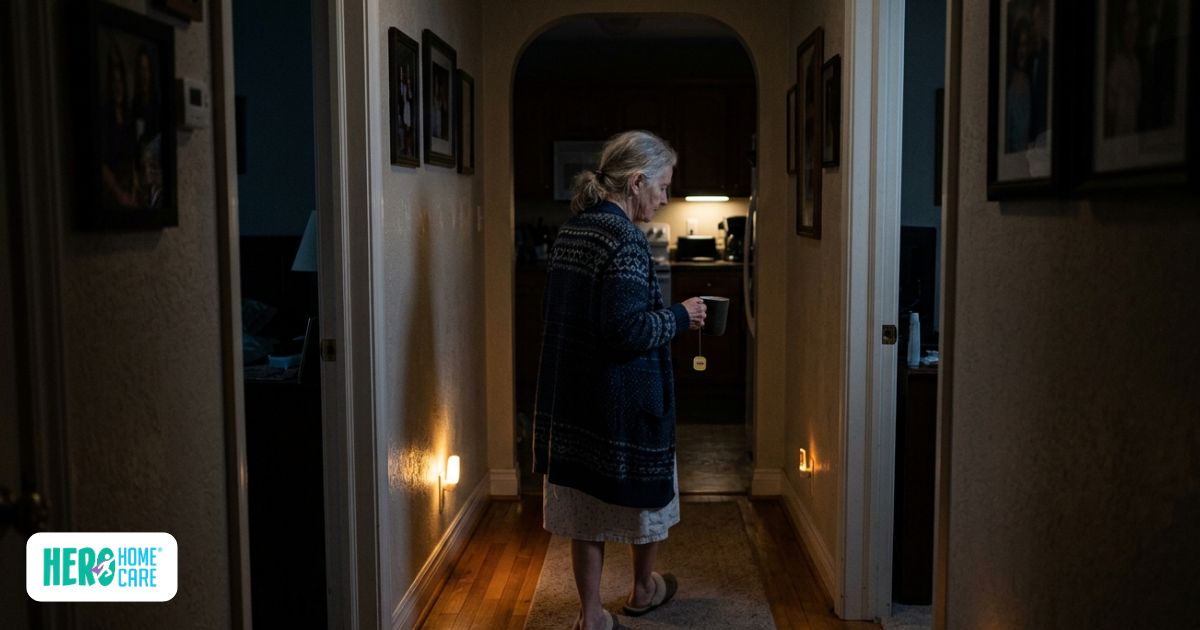
Sleep Disruptions and Circadian Rhythm Changes
Dementia can affect the body’s natural sense of time, making it harder to follow a regular sleep pattern. Your parent may wake up at night thinking it’s morning or feel ready to start the day when the house is still quiet and dark. This mismatch between body and environment can lead to disorientation, and moving around can feel like the only logical response in that moment.
Several changes can affect sleep timing or produce nighttime movements that need a different assessment.
- Suprachiasmatic Nucleus Changes: The suprachiasmatic nucleus is the brain’s central body clock. Changes affecting this region can weaken the coordination of sleep, wakefulness, and the day–night cycle.
- Reduced Melatonin Production: Melatonin helps signal biological night, and its production or timing may be altered in dementia. This does not mean that melatonin supplements will reliably prevent wandering.
- Sleep Fragmentation: Repeated awakenings break sleep into shorter periods. Each awakening creates another opportunity for confusion or getting out of bed.2
- REM Sleep Behaviour Disorder: This condition involves acting out dreams during REM sleep and is particularly associated with Lewy body disorders. Shouting, kicking, or striking out while asleep needs medical assessment and should not automatically be treated as awake wandering.3
Confusion, Anxiety, and Memory Loss
At night, when surroundings are quieter and less familiar, confusion can feel stronger. Your parent may not recognize where they are or may feel like something is missing. That emotional discomfort often leads to action, like searching or moving through the space to make sense of it.
Unmet Needs (Hunger, Bathroom, Pain)
In some cases, wandering is a form of communication when a basic need can’t be expressed clearly.
If they feel hungry, need the bathroom, or are in discomfort, they may not be able to explain it clearly. Instead, they move or become restless as a way of responding to that feeling. When the need isn’t understood right away, the wandering may continue until it is addressed.

Related: Daily Routine for Dementia Patients (Caregiver Guide)
Common Triggers for Dementia Wandering at Night
It helps to understand the difference between a cause and a trigger in dementia wandering at night. A cause is the underlying reason, such as confusion or disrupted sleep. A trigger is the immediate event that leads to wandering in that moment. Recognizing these triggers makes it easier to understand why some nights feel more difficult than others.
Common Triggers for Nighttime Wandering and Adjustments to Try | ||
|---|---|---|
| Trigger Type | Example | Adjustment to Try |
| Environmental | Shadows or a Dark Hallway Make Familiar Surroundings Look Unfamiliar | Reduce Confusing Shadows and Keep Routes Clearly Lit |
| Emotional | Waking Alone and Feeling Unsure of Where They Are | Offer Reassurance and a Familiar Point of Reference |
| Physical | Hunger, Discomfort, or Needing the Bathroom Interrupts Sleep | Check Comfort, Offer Toileting Assistance, and Address Unmet Needs |
| Routine Disruption | A Late Bedtime or Interrupted Evening Routine Creates Uncertainty | Return to Familiar Evening Steps and Consistent Timing |
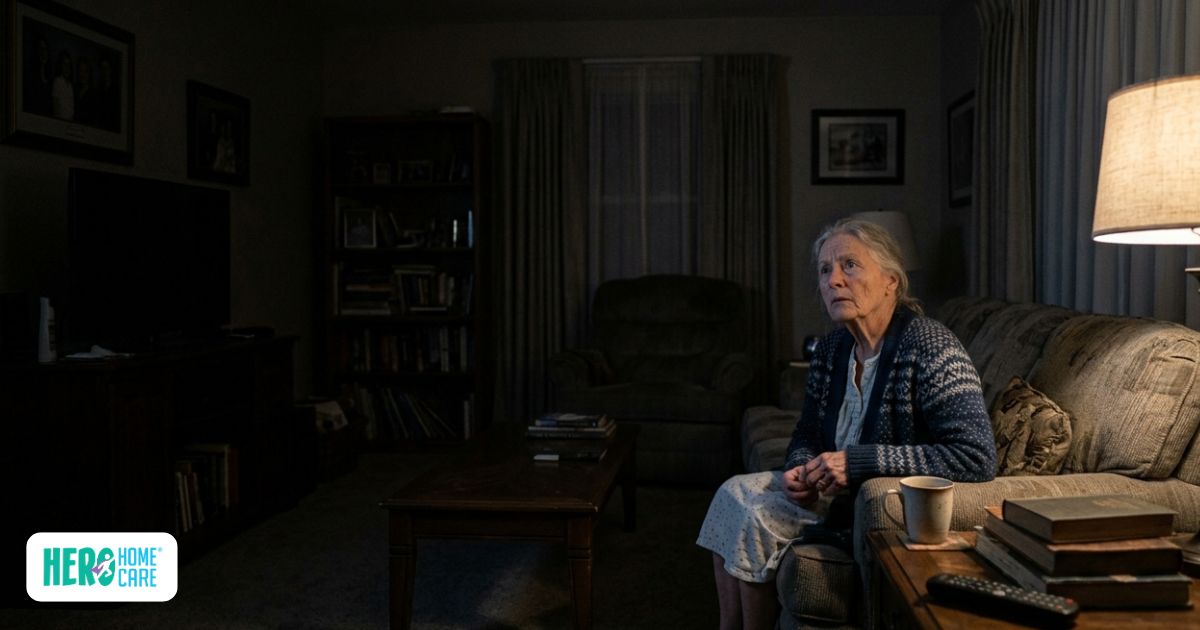
Other Nighttime Dementia Behaviours (Not Just Wandering)
Dementia at night can involve changes in sleep, perception, and behaviour as well as walking around. These behaviours can have several explanations, so use the pattern to guide your first response rather than assuming every episode is dementia progression.
- Confusion on waking or getting dressed: Your parent may believe the day has started; offer simple reassurance and a clock that clearly distinguishes morning from night.4
- Calling out or shouting: This may express fear, pain, or a need for company; approach calmly and check comfort before trying to stop the noise.
- Repeated toileting trips: Urinary symptoms or difficulty finding the bathroom may be involved; offer assistance and report new pain, urgency, or incontinence.
- Hallucinations at night: Perceptual changes or poor lighting may contribute; reassure them, check the surroundings, and seek prompt assessment for new symptoms.
- Refusing to stay in bed: Discomfort, restlessness, or lack of sleepiness may be involved; check needs and offer a calm, supervised activity without forcing bed rest.
- Day–night reversal: Sleeping by day and remaining awake at night can reflect a disrupted body clock; record both sleep periods and discuss the pattern with their clinician, particularly if your elderly parent is sleeping all day.5
When these behaviours lead to unsafe movement or exit attempts, use the wandering safety and response steps below.
How to Stop Dementia Patients Wandering at Night (Step-by-Step Solutions)
Nighttime wandering can wear you down, especially when it keeps happening and interrupts sleep. Start with immediate safety, check for unmet needs, and make consistent adjustments to the daily routine. If your family needs help putting those steps into practice, dementia and Alzheimer’s care at home can support familiar routines and an individualized care plan.
Create a Consistent Daily Routine
You can try keeping the day structured in a predictable way. A steady rhythm makes the night feel more familiar and easier to settle into. For example, waking up, meals, and rest times happening at similar times each day can help reduce nighttime restlessness.

Create a Safe Sleep Environment
It can help to make the bedroom feel calm, comfortable, and easy to recognize. A familiar, supportive space reduces the urge to get up and reorient. For example, keeping a soft light on or placing familiar objects nearby can make the room feel less confusing when waking up.
Learn More: How to Create a Safe Home Environment for Aging Parents
Establish a Consistent Night Routine
One helpful adjustment is to create a simple, repeatable bedtime routine. This works because the brain begins to associate certain actions with winding down. For example, following the same steps each night (like changing into sleepwear, a quiet activity, then lights dimming) can make the transition to sleep smoother.
Manage Triggers That Cause Night Wandering
It can help to notice what tends to happen before wandering starts. Patterns often repeat, and small changes can reduce those moments. For example, if wandering follows a late dinner or a change in lighting, adjusting those earlier in the evening can make a difference.
When wandering requires repeated assistance or creates an immediate exit risk, discuss overnight and round-the-clock home care and confirm that the arrangement includes someone awake and available during the hours of risk.

Related: How to Calm an Agitated Dementia Patient at Home
Reduce Evening Stimulation
You can try keeping evenings quieter and more predictable. Too much activity or noise later in the day can make it harder to settle at night. For example, limiting loud TV, busy conversations, or bright lighting in the evening can help create a calmer transition.
Use Safety Measures to Prevent Leaving the House
Safety measures can help detect movement, reduce hazards, or support a search, but none guarantees safety or replaces a person who can respond. Choose measures around your parent’s abilities, consent where possible, and a safe emergency escape plan.6
Safety Measures for Nighttime Wandering: Benefits and Limitations | ||
|---|---|---|
| Measure | What It Prevents | Trade-Off or Limitation |
| Door and Window Alarms | May Reduce Unnoticed Exits by Alerting a Caregiver | Do Not Stop an Exit; Someone Must Respond Promptly |
| Motion-Sensor Night Lights | May Reduce Trips Caused by Darkness | Sudden Light or Shadows May Confuse; Test Placement |
| Bed and Floor Pressure Sensors | May Reduce Unnoticed Bed Exits by Detecting Movement | Can Miss Movement or Give False Alerts; Floor Mats Can Add Trip Hazards |
| GPS Trackers and Wearable Locators | May Reduce Search Delays After Someone Leaves | Do Not Prevent Wandering; Depend on Wear, Charge, Signal, and Response |
| Secured or Disguised Exits | May Reduce Exit Attempts or Access to Unsafe Areas | Must Not Trap the Person Alone or Obstruct Emergency Escape |
| Keypad Locks | May Reduce Unsupervised Opening of an Exterior Door | Require Individual Safety Review and Immediate Emergency Release |
| Removal of Trip Hazards | May Reduce Falls Caused by Rugs, Cords, or Clutter | Does Not Address Disorientation or the Need for Walking Assistance |
| Clear Pathway Lighting to the Bathroom | May Reduce Wrong Turns and Trips During Toileting | Avoid Glare and Keep the Route Clear; Assistance May Still Be Needed |
Tracking devices require an agreed response plan, and changes to lighting should make the home easier to navigate rather than introduce new confusion.7 8
These measures should support safety while still respecting your parent’s sense of independence.
Improve Sleep Quality Naturally
You can try supporting better sleep through small daytime and evening habits. Better rest at night often starts earlier in the day. For example, gentle daytime activity and limiting long naps can help your parent feel more ready to sleep at night.

When Medication Might Be Needed
Speak with a clinician if nighttime behaviour is new, worsening, or continuing despite practical changes. The assessment may identify pain, a sleep disorder, medication effects, or another treatable problem. Medication should target an assessed condition; it should not be used simply to sedate someone or prevent them from moving.5
How to Calm a Dementia Patient Who Wanders at Night
When dementia wandering at night happens in the middle of the night, it can feel disorienting and urgent. You’re tired, they’re confused, and it’s not always clear what to do first. In these moments, staying calm matters more than trying to fix everything right away.
How to Respond in the Moment
Start by slowing yourself down. Approach gently, keep your voice soft, and avoid sudden movements. It helps to use simple reassurance like “You’re okay, I’m here,” rather than asking too many questions or trying to correct what they’re saying.
Techniques to Reduce Anxiety
Focus on lowering the emotional tension in the moment. A calm tone, a light touch if they’re comfortable with it, or guiding their attention to something familiar can help. For example, handing them a familiar item or gently shifting the conversation can make the situation feel less overwhelming.

Related: Vancouver Dementia Resources: A Complete Guide to Dementia Support
How to Guide Them Back to Bed Safely
Take it one step at a time. Stand beside them rather than in front, and gently guide them back without rushing. It can help to keep your words simple and steady, offering reassurance while moving slowly toward the bedroom and settling them back into bed.
What NOT to Do
Some reactions can unintentionally make the situation harder:
- Don’t confront or argue → It can increase confusion and resistance
- Don’t force movement → It may create fear or agitation
- Don’t give long explanations → Too much information can overwhelm them
Keeping things simple and calm usually works better than trying to convince or control the situation.

Is dementia wandering at night dangerous?
Nighttime walking is not automatically dangerous, but disorientation, reduced visibility, and unnoticed exits can create serious risks. Assess what your parent is doing and whether someone can respond, rather than judging safety only by how long an episode lasts.
Repeated waking also affects caregiver safety: exhaustion can make it harder to notice movement or assist steadily. If you cannot get adequate rest while covering the night, discuss shared coverage or overnight respite for family caregivers, confirming whether awake supervision is needed.
The main risks to plan for are:
- Falls: Darkness, clutter, stairs, and unsteady movement can increase the chance of injury.
- Unnoticed exits: Your parent may leave quietly and become lost before anyone realizes.
- In-home disorientation: Confusion can lead them toward stairs, kitchens, or other unsafe areas.
- Cold-weather exposure: Leaving without suitable clothing can become dangerous, especially if they cannot find their way back.
- Caregiver exhaustion: Repeated interruptions can reduce your ability to respond safely.
Learn More: How to Reduce Fall Risk for Seniors
When to Call 911
If your parent is missing, call 911 immediately rather than waiting to see whether they return. Sudden marked confusion, serious injury, or immediate danger also requires urgent action.7 10
When to Call the Doctor or 911 | |
|---|---|
| Call the Doctor | Call 911 Now |
| Recurring Nighttime Wandering Without an Immediate Safety Emergency | Your Parent Is Missing from Home or Their Whereabouts Are Unknown |
| New Pain, Urinary Symptoms, or Medication-Related Concerns Without Severe Confusion | Sudden Marked Confusion or Severe Agitation with Immediate Risk of Harm |
| Increasing Sleep Disruption or Caregiver Exhaustion | A Head Injury with New Confusion, Vomiting, Loss of Consciousness, or Difficulty Staying Awake |
| A Fall Without Apparent Major Injury Still Needs Assessment; Seek Urgent Advice After Any Head Impact | Serious Injury, Inability to Move Safely, or Dangerous Cold Exposure with Reduced Alertness |
After a head impact, seek prompt medical advice even if symptoms seem mild, particularly if your parent takes blood-thinning medication.11
Wandering-Response Programs and Registration
A prepared identification and response plan can help others recognize your parent and contact the right people if they go missing. Complete these steps before an incident, while remembering that registration does not prevent wandering or replace an immediate call to 911.
- Check the current MedicAlert enrolment route: Older resources may refer to MedicAlert Safely Home, developed with the Alzheimer Society of Canada; the current Canadian dementia program is Safe & Found, with enrolment information available online or at 1-877-217-7449.12 13
- Ask local police about available registration: Contact your municipal police service or RCMP detachment through its non-emergency channel to ask about vulnerable-person registration or MedicAlert information access; do not assume every BC community has a separate registry.
- Arrange recognizable ID jewellery: Keep identification and emergency contact information current, including the subscriber profile if using a registered service.
- Prepare a recent photo and description: Include usual clothing, mobility needs, likely destinations, familiar names, and approaches that help your parent feel calm.
- Inform immediate neighbours where appropriate: With your parent’s involvement where possible, explain whom to contact and ask neighbours to call 911 if they encounter an unsafe or missing-person situation.
When to Seek Professional Help for Nighttime Wandering
Many families try to manage nighttime wandering on their own at first. That’s completely natural. There often comes a point, though, where the situation starts to demand more attention than one person can reasonably give and recognizing that point matters.
One clear sign is when you can’t predict the night anymore. Some nights may be quiet, while others suddenly require your full attention, with no clear pattern. When you go to bed unsure of what the night will bring, it can feel like you’re always bracing for the next interruption.
Another signal is when small risks start to feel constant. A door left slightly open, a light turned on in the middle of the night, or your parent being somewhere unexpected can begin to feel less like isolated moments and more like something you have to watch for all the time.
It may also reach a point where you feel like you have to stay alert even when nothing is happening. Instead of resting, part of your mind stays “on,” listening for movement or anticipating what might happen next. That ongoing awareness can be just as exhausting as the wandering itself.
Over time, this kind of strain can lead to caregiver burnout, even if it doesn’t feel obvious at first. Feeling worn down, stretched thin, or constantly on edge is often a sign that it may be time to bring in additional support, not because you can’t handle it, but because you shouldn’t have to do it alone.
Consistent daytime structure may support a steadier sleep–wake pattern, so dementia and Alzheimer’s care should consider daytime routines as well as overnight needs.
The Ceiling on Environmental Fixes
Alarms, locks, and routine changes have a limit: they cannot assist with walking, assess distress, or respond to an exit attempt. When your parent needs immediate or repeated help throughout the night, the next step is an individualized plan for continuous awake overnight presence alongside medical assessment of changing symptoms.
Signs that environmental measures are no longer enough include:
- Your parent reaches an exit or unsafe area before someone can respond to an alarm.
- Repeated waking requires hands-on assistance or supervision that the current arrangement cannot provide.
- The person covering nights is too exhausted to remain alert or assist safely.
Discuss overnight support as part of your family member’s Care Plan. Book a Free Care Consult to talk through their nighttime routines and support needs, including whether 24-hour home care in North Vancouver may be appropriate. A Nurse Care Manager can help shape and oversee the Care Plan, including the level of overnight coverage that best fits your family member’s needs.
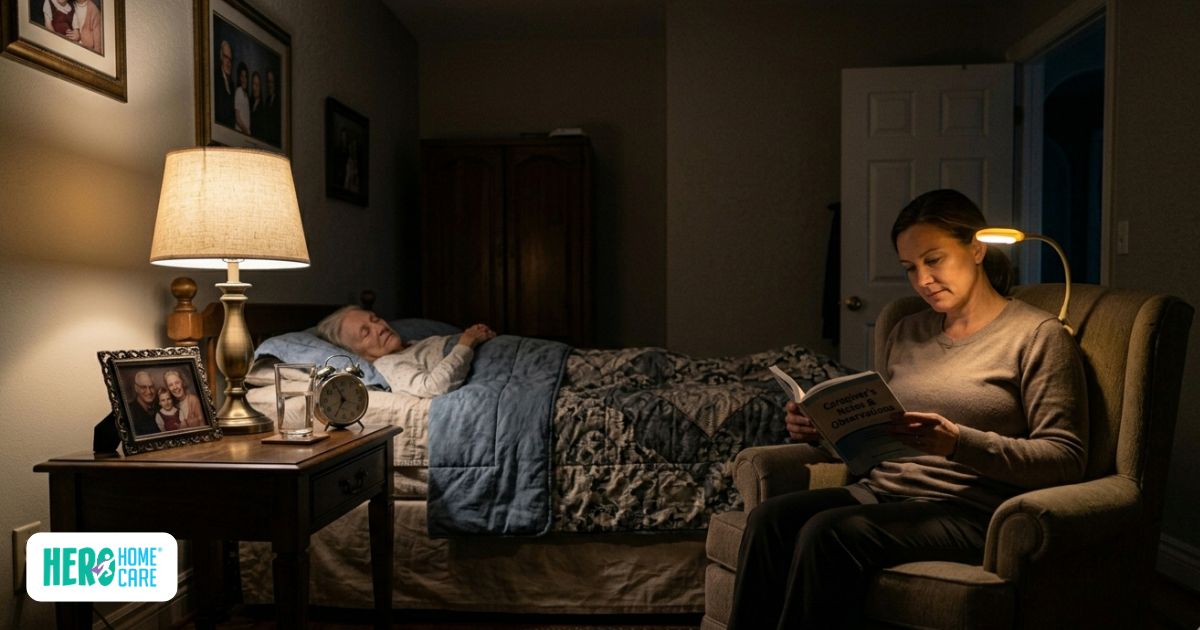
How In-Home Care Can Help with Dementia Wandering at Night
Managing nighttime wandering on your own can become overwhelming, especially when it affects your ability to rest and stay alert. In-home care can provide additional support, helping share the responsibility without taking away your role as a caregiver.
One of the most practical forms of support is planned awake overnight supervision. When this is included in the care arrangement, a caregiver can respond to waking, check immediate needs, and stay nearby during movement. This may involve calm reassurance, toileting assistance, or redirecting your parent away from a doorway, according to the agreed care plan.
In-home care also supports more consistent routines. A caregiver can help guide your parent through the same calming steps each night, gently reinforcing familiar patterns. If restlessness starts earlier in the evening, they can notice it and adjust the pace, helping the night feel more settled before wandering begins.
There is also an emotional layer to this support. When your parent wakes up confused, having someone present who responds with a calm voice and steady reassurance can make a noticeable difference. For many families, knowing that someone is there to handle these moments allows them to rest more fully, without feeling like they have to be constantly on alert.

Related: How to Create a Safe Home Environment for Aging Parents

Dementia Care in North Vancouver: How Hero Home Care Supports Families
In North Vancouver, many families are caring for a parent with dementia at home, and nighttime wandering can make those nights harder to manage. Hero Home Care provides local, in-home support in North Vancouver that helps bring more consistency and reassurance to these moments.
With an agreed awake overnight care arrangement, a caregiver can respond when your parent wakes and offer assistance. This might mean speaking calmly, redirecting movement, or staying close until things settle. The level of supervision should reflect your parent’s assessed needs and the coverage arranged with the care team.
Caregivers are trained to work with dementia-related behaviors and focus on building familiarity and trust. That steady presence can make a noticeable difference when your parent wakes up confused and needs reassurance in the moment.
Sally woke and found her father sitting at the edge of the bed, trying to get dressed as if it were morning. Antora, a Hero from Hero Home Care, stepped in, sat beside him, and gently guided him back under the blanket, speaking in a calm, steady voice. Within a few minutes, he relaxed, and the room felt settled again.
For families in North Vancouver, having someone who can step in calmly and consistently can make nights feel more manageable and less overwhelming.
If nights are becoming harder to manage, having someone there overnight can make a meaningful difference for both safety and rest.
Book a Free Care Consult to discuss overnight dementia support in North Vancouver with Hero Home Care.
Final Thoughts: Keeping Your Loved One Safe at Night
Nighttime wandering is something many families face with dementia, even if it feels unexpected at first. It can be unsettling to experience, especially when it happens in the quiet of the night, but it can occur as part of dementia. A sudden or marked change should still be medically assessed.
What matters most is not having a perfect system, but finding small ways to make nights feel more steady. Simple, consistent actions can reduce avoidable risks and make these moments easier to respond to when they happen.
Support can make a meaningful difference. With appropriate help in place, families can share overnight responsibility and respond more consistently to safety needs.
Sources:
- Alzheimer’s Association — Stages of Alzheimer’s
- Practical Neurology — Sleep Disorders in Dementia
- Alzheimer’s Society — Is It Typical for People With Dementia to Sleep a Lot During the Day?
- Alzheimer’s Society — Walking About and Dementia
- Alzheimer’s Society — Sleep Problems and Treatments in Dementia
- Alzheimer’s Association — Wandering Safety
- Alzheimer Society of Canada — Tracking Devices and Dementia Safety
- NHS — Making the Home Dementia-Friendly
- NHS — Sudden Confusion (Delirium)
- MedlinePlus — Head Injury First Aid
- MedicAlert Canada — Safe & Found
- Alzheimer Society — Programs and Services