
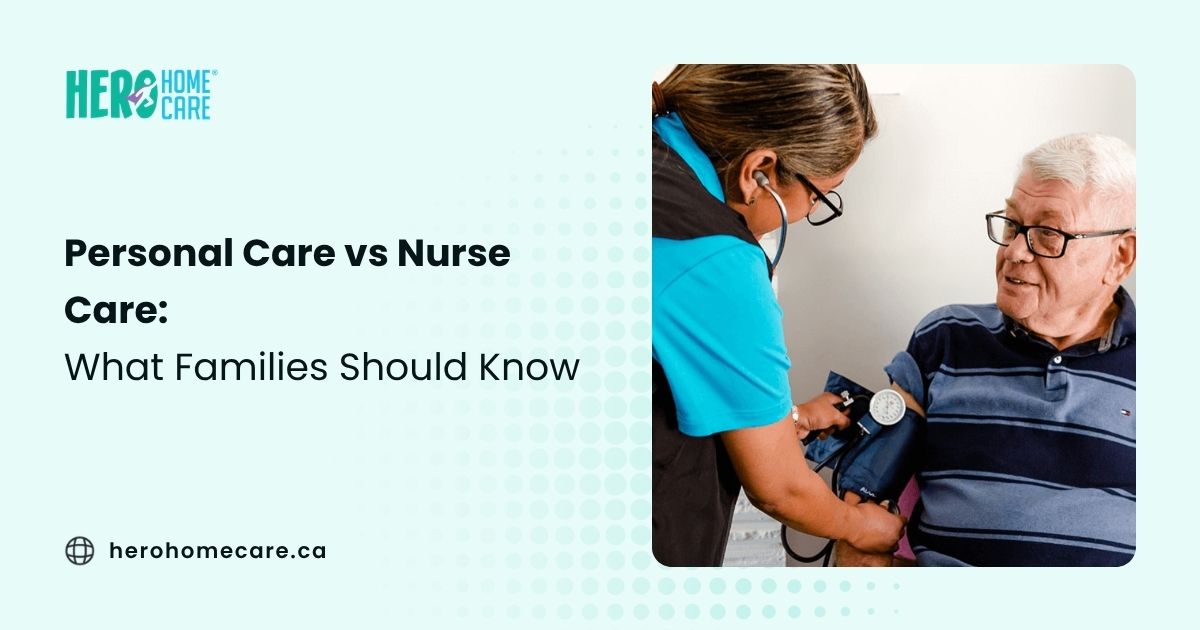
When families begin exploring support at home, one of the first questions is whether personal care or nurse care is needed. The terms are often used interchangeably, yet they refer to different types of assistance. Understanding that difference can prevent confusion and help families make decisions that feel measured rather than reactive.
This article clarifies what personal care includes, what nursing care involves, and how to determine which level of support fits your situation. The goal is not to position one as better than the other, but to explain how each serves a distinct role in helping seniors remain safe and supported at home.
Choosing the right type of care isn’t about escalation. It’s about alignment, matching the level of support to what is actually needed.
When families understand the distinction, decisions tend to feel steadier and more grounded.
Here is the Quick Answer:
Personal care and nursing care both support seniors at home, but they serve different purposes. Personal care helps with daily living activities such as bathing, dressing, meals, and mobility. Nursing care provides medical oversight, including medication management, wound care, and clinical monitoring.
The right choice depends on your loved one’s current needs, not on assumptions about what sounds more comprehensive. Some families require only daily assistance, others need medical supervision, and some benefit from combining both. Matching the level of care to the level of need helps keep support clear, steady, and appropriate.
Personal Care vs Nursing Care: Key Differences You Need to Know
When deciding between personal care and nursing care, clarity often comes from understanding what each service is designed to do. Both can be delivered at home, but they differ in training, scope, and purpose. Below is a side-by-side comparison to help you see where each fits.
| Category | Personal Care | Nursing Care |
| Service Type | Assistance with Daily Activities | Clinical and Medical Support |
| Level Of Expertise | Trained Caregiver | Licensed Nurse |
| Duration And Frequency | Flexible, Ongoing or Part-Time | Scheduled Based on Medical Needs |
| Cost | Generally Lower per Hour | Higher Due to Clinical Scope |
| Delivered By | Professional Caregiver | Registered or Licensed Nurse |
| Main Focus | Comfort, Safety, and Routine | Health Monitoring and Medical Tasks |
| Best For | Bathing, Dressing, Meals, Companionship | Wound Care, Injections, Chronic Condition Management |
Personal care typically supports activities of daily living, helping someone bathe safely, prepare meals, move around the home, or maintain routines. Nursing care becomes necessary when medical oversight or procedures are required, such as managing complex medications, monitoring health conditions, or providing post-surgical care.
In some situations, families may need both. For example, personal care may provide daytime assistance with routines and mobility. In contrast, nursing care may be scheduled periodically to monitor a condition or manage specific treatments. Combining both types of support can create continuity without overextending one service beyond its role.
Understanding these differences helps families choose support based on actual needs rather than assumptions. The right support level depends on health status, daily functioning, and the kind of stability required at home.

What is personal care in home support services?
Personal care refers to non-medical support delivered at home to help seniors manage daily life safely and comfortably. It focuses on supporting routine activities that may have become physically difficult or tiring, while allowing the person to remain in familiar surroundings.
In a home support setting, personal care typically includes help with bathing, dressing, grooming, toileting, mobility, meal preparation, light housekeeping, and companionship. The goal is to maintain dignity, reduce the risk of falls or injury, and preserve daily structure without taking over tasks the senior can still manage independently.
Personal care is delivered by trained caregivers, often referred to as care providers or home support workers, who are experienced in assisting with activities of daily living. While they are skilled in observation and communication, they do not perform medical procedures or clinical tasks.
The limitations of personal care are important to understand. It does not include administering injections, performing wound care, managing complex medical equipment, or making clinical assessments. When medical intervention or monitoring is required, nursing care becomes the appropriate level of support.
Personal care is most appropriate for seniors who need help with physical routines or household tasks but do not require medical oversight. It is often chosen when the priority is safety, comfort, and maintaining independence at home rather than managing a specific medical condition.
Learn More: How to Find a Caregiver
What is nursing care in a home setting?
Nursing care in the home refers to medical support provided by a licensed nurse. Unlike personal care, which focuses on daily living assistance, nursing care addresses health conditions that require clinical knowledge, assessment, or treatment.
Typical nursing tasks may include medication administration and monitoring, wound care, injections, chronic disease management, post-surgical support, catheter care, and health assessments. Nursing care can also involve coordinating with physicians, adjusting care plans based on symptoms, and monitoring changes in health status.
Nursing care is delivered by registered nurses or licensed practical nurses who are trained to perform medical procedures and evaluate health conditions. Their role is clinical rather than custodial, meaning they are responsible for medical oversight rather than routine household support.
There are also limitations to nursing care. While nurses can provide skilled medical services, they are not typically scheduled for continuous daily companionship or assistance with all routine activities unless specifically arranged. Nursing care is often task-focused and may be provided at intervals based on medical necessity.
Nursing care is most appropriate for individuals who require medical supervision at home, such as those recovering from surgery, managing complex medications, living with chronic illness, or experiencing health changes that need professional monitoring. It becomes essential when medical expertise is required beyond what non-medical personal care can safely provide.
How to Decide Between Personal Care and Nursing Care
Deciding between personal care and nursing care often begins with observing what is actually happening day to day. The question isn’t which service sounds more comprehensive; it’s which type of support matches the senior’s current needs.
Health condition is one of the clearest indicators. If a senior is recovering from surgery, managing a complex medication schedule, or living with a condition that requires monitoring or clinical oversight, nursing care may be appropriate. If the primary challenges involve mobility, hygiene, meals, or maintaining routines safely, personal care may be the better fit.
Daily living needs also provide guidance. Assistance with bathing, dressing, toileting, or preparing meals points toward personal care. Medical procedures, wound management, or symptom monitoring point toward nursing care. Sometimes the distinction becomes clearer when families list the specific tasks that are becoming difficult rather than trying to label the situation broadly.
Caregiver availability also plays a role. If family members are able to handle medical coordination but need consistent help with physical support during the day, personal care may relieve the strain. If family members are comfortable assisting with daily routines but feel uncertain about managing medications or health changes, nursing care may offer the reassurance they need.
One daughter, Maya, noticed the difference gradually. Her father was steady during the day but struggled with a new medication routine after a hospital stay. At first, she assumed “more care” meant daily, full-time help. After speaking with our Care Manager, she realized that periodic nursing visits combined with light personal support covered exactly what was needed, no more, no less. The clarity reduced her anxiety and helped her choose support based on function rather than fear.
Sometimes the right decision is one service. In other situations, both can work together. The goal is alignment, choosing support that reflects the senior’s health status, daily functioning, and the family’s capacity to participate in care.
When should you choose personal care over nursing care?
Personal care is generally appropriate when the primary need is support with everyday routines rather than medical intervention. If a senior is physically stable but finding it harder to bathe safely, prepare meals, manage household tasks, or move confidently around the home, personal care provides structured assistance without introducing clinical oversight. It supports independence by reinforcing daily rhythm and reducing safety risks.
For example, a senior with arthritis who struggles with dressing in the morning, or someone experiencing mild balance issues who needs supervision while showering, would likely benefit from personal care. The focus remains on comfort, routine, and preserving dignity within the home environment.
Nursing care becomes necessary when health conditions require professional medical judgment or procedures. If a senior needs wound care after surgery, medication adjustments that must be monitored, injections, or ongoing assessment of a chronic condition, nursing care provides the clinical oversight required to manage those responsibilities safely.
A helpful distinction is this: when tasks involve physical assistance with daily living, personal care is often sufficient. When tasks involve medical assessment, treatment, or risk management, nursing care is the appropriate level of support. In some cases, families may begin with one and later introduce the other as needs evolve.
The decision is less about severity and more about scope. Matching care to the type of need, daily support or medical management, helps ensure the right level of attention without adding unnecessary complexity.

How Hero Home Care Can Help with Personal Care and Nursing Care
In North Vancouver, care decisions rarely arrive neatly defined. Families often begin with a simple question: What kind of help do we actually need? The answer sometimes shifts over time. What starts as assistance with routines may later include medical oversight. Or a short period of nursing support may reveal the need for steady daily presence.
Hero Home Care approaches care as something that can grow and adjust, rather than something fixed from the start. Personal care and nursing care are not competing services. When needed, they can work alongside one another. One supports daily living. The other supports health stability. Together, they help a senior remain safely at home without overcomplicating support.
Care plans are built around real life, not just diagnoses. Some seniors need help getting ready in the morning and reassurance that medications are on track. Others need periodic clinical visits but prefer to manage most daily tasks independently. The structure reflects those nuances.
One evening, Arjun stood in his mother’s kitchen, looking at a new medication chart taped to the fridge. He wasn’t sure whether they needed a nurse full-time or just more help in the mornings. After meeting with Akshita, one of our Heroes, the plan felt less overwhelming. A nurse would visit to monitor her medications, while a caregiver supported her daily routine. The next week, the chart was still there, but Arjun wasn’t staring at it each night. The house felt steady again. Not different. Just steadier.
That steadiness is often what families are looking for, not more care than necessary, but the right level at the right time. Support that fits into the home naturally, and adapts as needs evolve.
Final Thoughts: Choosing the Right Care for Your Loved One
Personal care and nursing care serve different purposes, even though both are delivered at home. Personal care supports daily living routines, mobility, hygiene, and the steady rhythm of everyday life. Nursing care addresses medical needs, clinical monitoring, treatments, and health management that require licensed expertise.
The distinction is not about which is more significant, but about what kind of support is truly needed.
The clearest starting point is often observation. Are the challenges primarily physical and routine-based? Or do they involve medical oversight and clinical decision-making? In some cases, one service is sufficient. In others, a thoughtful combination provides balance without overcomplicating care.
Families don’t need to have every answer before beginning a conversation. Assessing your loved one’s daily functioning and health condition, and your own capacity to participate in care, can bring clarity.
If you’re weighing these options and would like guidance grounded in your family’s situation, Hero Home Care can help you think through what level of support fits best at a pace that feels steady and considered.