
A safe home environment plays a quiet but important role in how comfortably someone can move through their day. When a space supports ease of movement and reduces small obstacles, it helps aging parents maintain independence and confidence in their routines. Safety, in this sense, is not just about preventing problems, but about making everyday life feel steady and manageable.
Many of the risks that exist at home are not fixed or unavoidable. They often come from details that can be adjusted with a bit of attention. Small, practical changes over time can make a home easier to move through and reduce everyday risks.
This guide is designed to walk through that process step by step. It will help you understand what to look for, what areas to focus on, and how to approach home safety in a practical, structured way so you can make informed changes with confidence.
Here is the Quick Answer:
Creating a safe home for aging parents is often about noticing small risks and making gradual, practical changes. Many common hazards are part of everyday routines, but they can be reduced by improving how spaces are organized and how daily movement happens.
By looking at the home step by step and building consistent habits, safety becomes more manageable over time. Families don’t need to get everything perfect; small adjustments and ongoing awareness can make a meaningful difference, with support available when needed.
Why Home Safety for Seniors Is So Important
Many accidents happen at home, simply because it’s where most time is spent.
Falls, minor injuries, or small incidents can occur during everyday activities, especially when the environment doesn’t fully support safe and easy movement.
The encouraging part is that many of these risks are preventable. With a few thoughtful adjustments, the home can better match a person’s needs and reduce the chances of these situations happening in the first place.
A safer home also supports independence. When the environment feels easier to navigate, seniors can continue their daily routines with more confidence and stay in their own space longer, without relying heavily on others.
Common Home Safety Risks for Seniors
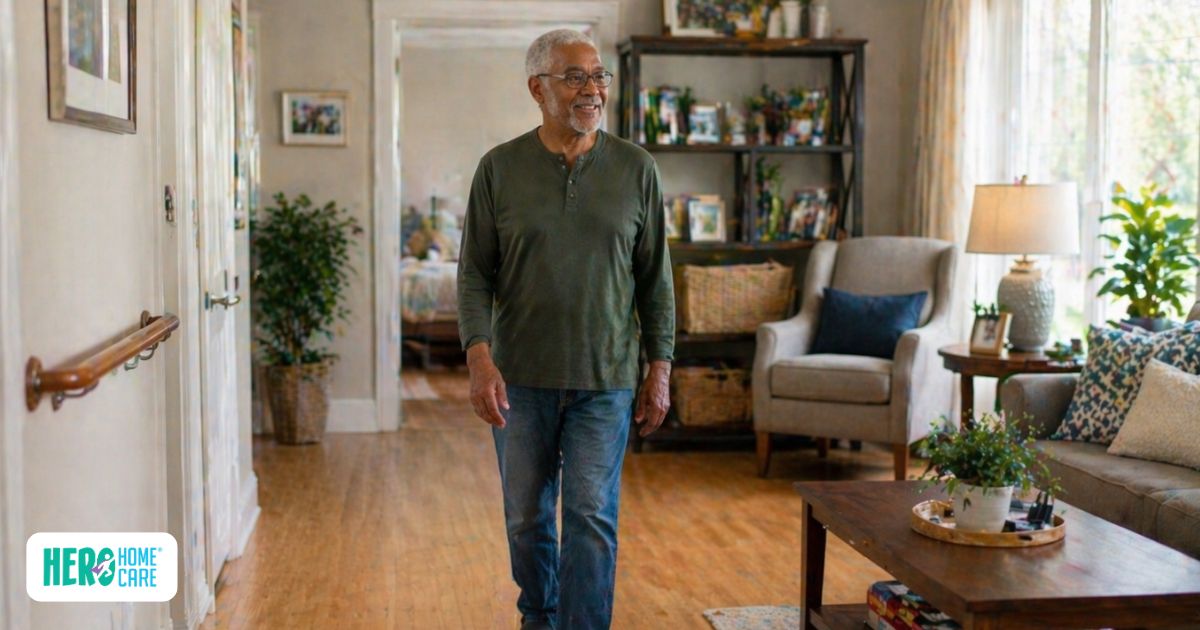
Many safety risks at home come from everyday features that don’t seem problematic at first. Because they’re part of daily routines, they’re often easy to overlook until something feels slightly off or less comfortable.
Some risks come from how the home is set up. Floors can become slippery, especially in areas like the bathroom or kitchen where water or small spills are more common. What looks like a normal surface can feel less stable depending on the moment.
Lighting is another factor that can quietly affect safety. A space that feels bright during the day may become harder to navigate in the evening or at night, particularly in hallways or transitional areas. Limited visibility can make familiar paths feel less predictable.
Clutter and small obstacles can also change how easily someone moves through a room. Loose items, rugs, or crowded spaces may not seem like a concern, but they can interrupt movement or require extra attention with each step.
Other risks appear in how someone moves through the space. Stairs and uneven surfaces can demand more balance and awareness, even in homes that feel familiar. Small changes in flooring or elevation can make certain areas feel less steady over time.
For example, getting up at night and walking through a dim hallway toward the bathroom may feel routine, but reduced visibility combined with subtle changes underfoot can make that moment less stable than expected.
These situations are often subtle, but they shape how safe and comfortable a home feels over time.
Signs Your Aging Parent’s Home May Not Be Safe
The signs that a home may not be safe often appear gradually. They tend to show up in everyday moments rather than obvious incidents, which is why they can be easy to overlook at first.
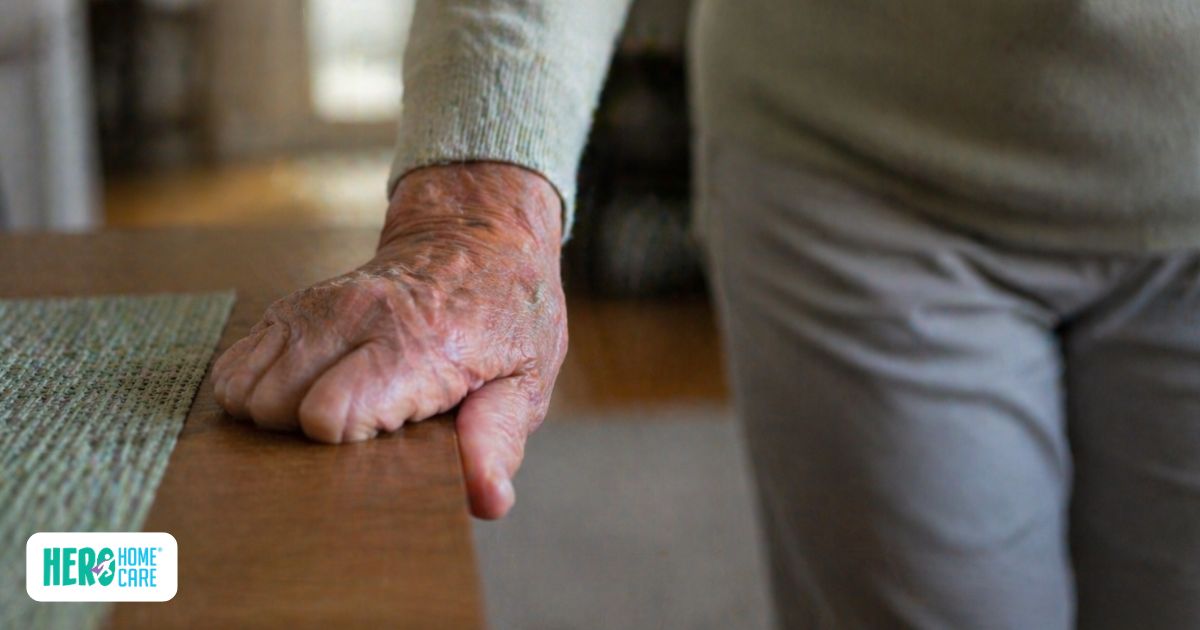
You might notice small changes in how your parent moves through familiar spaces. Walking may become slower or more cautious, with brief pauses before stepping forward. Some may begin to rely more on nearby furniture or walls for support, even in areas that were once easy to navigate.
At other times, the signs show up as near-misses rather than clear accidents. A slight slip, a moment of losing balance, or needing to steady themselves can seem minor in isolation. But when these moments happen more than once, they can point to a growing mismatch between the home and their comfort level.
The environment itself can also offer subtle clues. Items may start to feel out of place, with surfaces becoming more crowded or walkways less clear than before. What once felt organized may begin to look slightly harder to move through without extra attention.
Sarah mentioned that nothing seemed obviously wrong, but she noticed her mother hesitating before walking across the living room and lightly holding onto the edge of a table. It wasn’t a fall or an injury, just a small shift that felt different from before.
These moments may seem minor on their own, but together they can signal that the home environment is becoming harder to navigate safely.
Home Safety for Seniors Checklist: Room-by-Room Guide
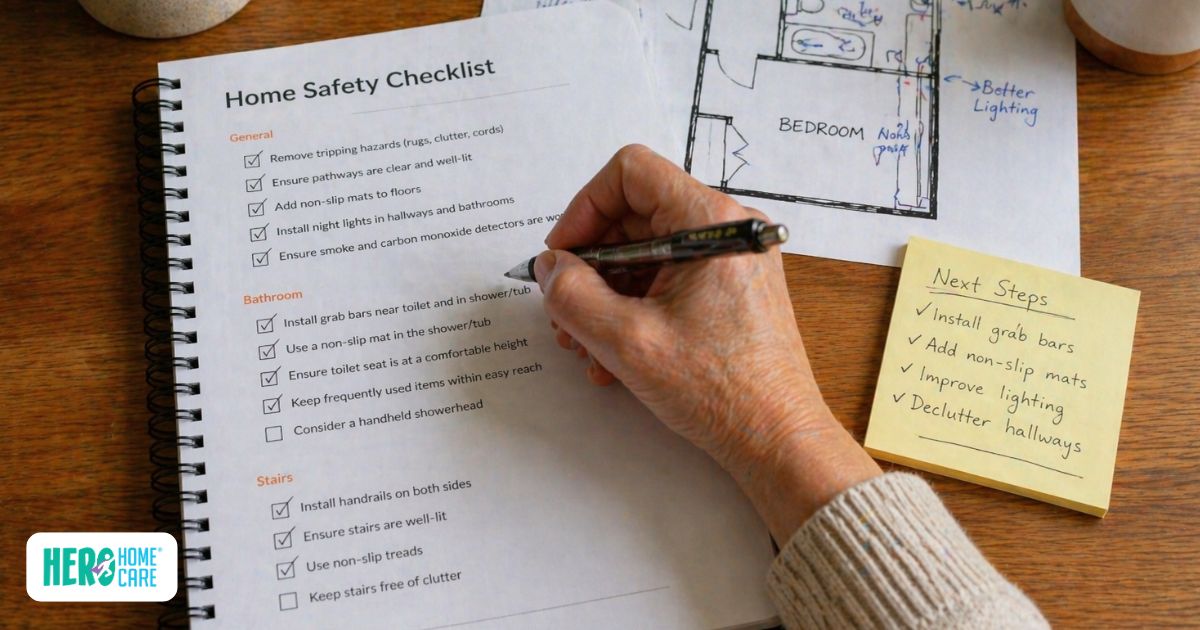
This home safety for seniors checklist is designed as a practical, room-by-room guide you can walk through step by step. It helps you look at each area of the home with fresh eyes and notice what may need attention.
You can use this home safety checklist for seniors as a working guide while moving through the space, making small adjustments as you go. The goal is not to change everything at once, but to improve safety in ways that feel manageable and realistic.
Bathroom Safety Tips for Seniors
The bathroom is one of the most commonly used spaces and often requires the most attention.
- Install non-slip mats in the shower and on the floor
- Add grab bars near the toilet and inside the shower
- Use a shower chair or bench if balance is a concern
- Keep toiletries within easy reach to avoid bending or stretching
- Ensure floors stay dry after use
Kitchen Safety Tips for Seniors
The kitchen involves daily tasks that require movement, coordination, and attention.
- Store frequently used items on lower, easy-to-reach shelves
- Keep countertops clear to maintain open workspace
- Simplify appliance use and avoid complex setups
- Keep cooking routines simple to reduce distraction
- Ensure good lighting across work areas
Bedroom Safety Tips for Seniors
The bedroom should support rest while also allowing safe movement at any time.
- Adjust bed height so it’s easy to get in and out
- Add bedside lighting or motion-sensor lights
- Keep essential items like glasses and phones within reach
- Ensure clear space on both sides of the bed
- Avoid loose rugs or clutter near walking paths
Living Room and Common Areas Safety
These areas are used frequently throughout the day and should feel open and easy to navigate.
- Remove or secure loose rugs
- Arrange furniture to create clear walking paths
- Keep floors free from small obstacles
- Maintain consistent layout to avoid confusion
- Ensure adequate lighting throughout the space
Stairways and Entryways Safety
These areas connect spaces and often require extra attention and balance.
- Ensure railings are secure on all sides
- Improve lighting along stairs and entry points
- Keep steps even and free of hazards
- Remove clutter from entryways
- Keep outdoor surfaces clear, especially in wet conditions
Essential Home Safety Tips for Seniors Living Alone
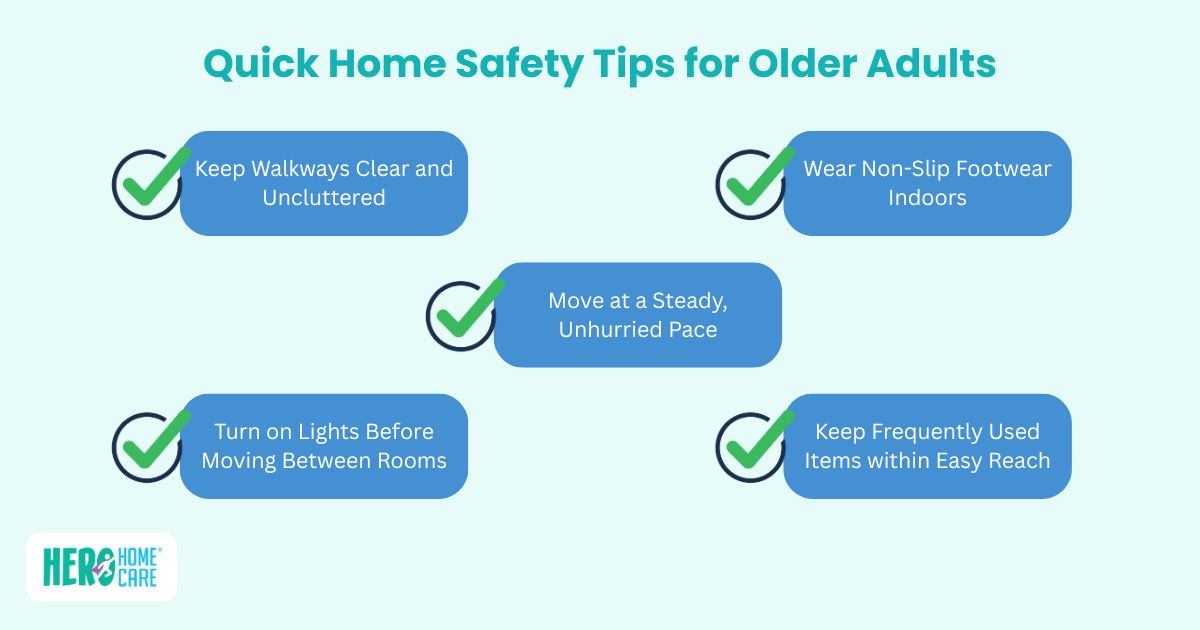
Home safety is not only about how a space is set up, but also how it is used day to day. Simple daily habits can make movement feel more stable and reduce the chances of unexpected situations. These routines often become part of everyday life without needing much effort.
Being mindful of movement throughout the home can help prevent falls. Taking a moment to turn on lights before walking into another room, moving at a steady pace, and paying attention when using stairs can make daily routines feel more controlled and less rushed.
Keeping frequently used items within easy reach can also reduce unnecessary strain. When everyday objects are easy to access, there’s less need to stretch, bend, or make extra trips across the room, which helps conserve energy and maintain balance.
Wearing proper footwear indoors can make a noticeable difference. Supportive, well-fitting shoes or non-slip slippers provide better stability than loose or smooth-soled options, especially on different types of flooring.
Staying organized is another quiet but important habit. When items are kept in consistent places and routines feel predictable, it becomes easier to move through the day without hesitation or confusion, reducing the chance of rushed or uncertain movement.
How to Prevent Falls at Home for Seniors
While general home risks affect daily safety, falls deserve special attention because they are one of the most common and serious outcomes. They often happen when small factors overlap, such as a moment of distraction, a change in lighting, or a shift in balance while moving through a familiar space. Timing also plays a role, especially during transitions like getting up, turning, or moving between rooms.
– For a more detailed breakdown, you can refer to our guide on How to Reduce Fall Risk for Seniors Living Alone in Greater Vancouver
Reducing fall risk usually comes from making the overall environment easier to navigate while also supporting more steady movement. A space that feels open and predictable, combined with better visibility and a more mindful pace, can help create a sense of control during daily routines. When movement feels less rushed and the surroundings feel more supportive, the risk tends to decrease naturally.
Fall prevention is less about making everything perfect and more about building consistency over time. Small adjustments, repeated daily, can gradually make the home feel safer and more manageable. Even minor changes in how a space is used or how movement happens can add up to a meaningful difference.
Smart Home Devices and Tools for Senior Home Safety
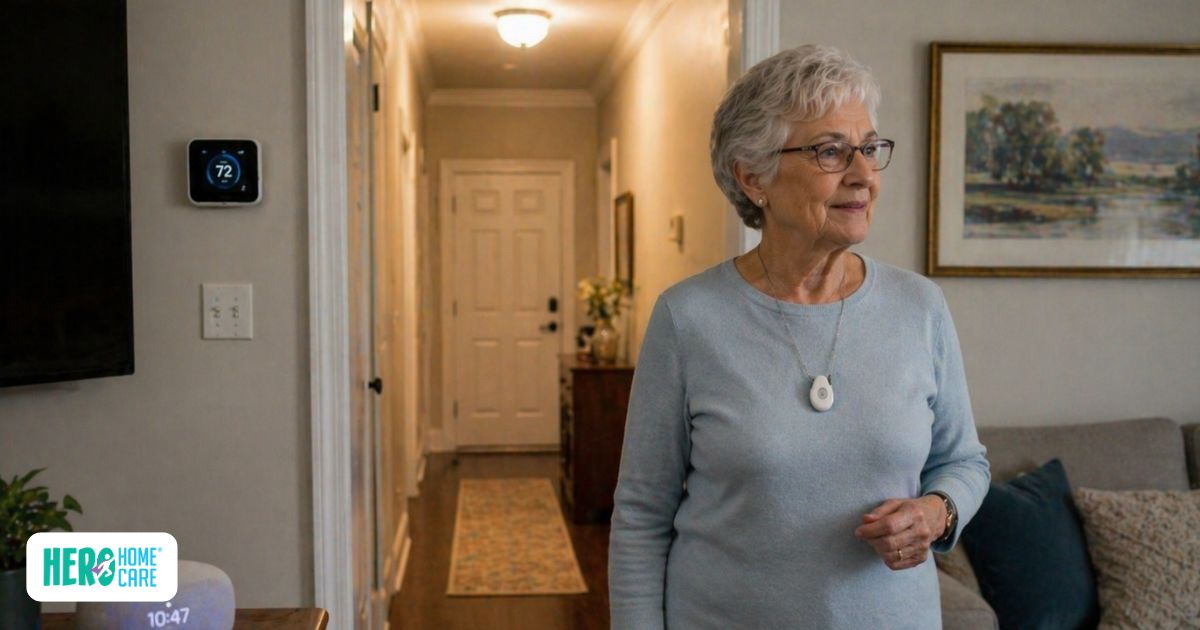
Technology can play a helpful role in supporting home safety, especially for seniors living alone. At the same time, it works best as an added layer rather than a replacement for good routines and a well-organized environment. When used thoughtfully, simple tools can make everyday life feel more supported and connected.
Emergency response systems are one of the most common types of support. These allow a senior to call for help quickly, often with a single button, if something unexpected happens. In daily life, this can provide reassurance, knowing that help is accessible without needing to reach a phone or move far.
Monitoring and alert systems offer another layer of awareness. These tools can notify a family member if something seems unusual, such as a long period of inactivity or a missed check-in. They don’t require constant attention but can help caregivers stay informed without needing to be physically present.
There are also smaller, simple tools that can support daily safety. Automatic lighting that turns on at night, reminders for important tasks, or devices that help keep track of routines can make movement and timing feel more predictable. These kinds of support often blend into daily life without feeling intrusive.
Used together, these tools can help create a more supportive environment. They offer a quiet sense of backup, making it easier for both seniors and their families to feel more at ease while maintaining independence.
What to Do in Case of a Home Emergency
If a fall or emergency happens at home, having a clear response can make a critical difference.
If a fall occurs:
- Stay calm and assess for pain or injury
- Avoid rushing to help them stand
- Call for help if there is any doubt about injury
If there are medical symptoms (confusion, breathing changes, severe discomfort):
- Treat it as urgent
- Contact emergency services immediately
After the immediate situation is under control, it’s important to take a moment to understand what may have caused it. Checking for factors like dizziness, environmental hazards, or changes in routine can help prevent similar situations from happening again.
Preparation can also make these moments easier to manage. Keeping important phone numbers accessible, knowing where medical information is stored, and having a simple plan in place can reduce hesitation and help you respond more confidently.
When to Consider Professional Help for Home Safety
Many families begin by managing home safety on their own, making small adjustments and checking in when they can. Over time, though, it’s common to reach a point where keeping everything consistent becomes more difficult. Needing additional support is a natural step, not a sign that something has gone wrong.
This shift often shows up through patterns rather than one clear moment. You might notice more frequent near-falls, increasing hesitation when moving through the home, or routines that feel less steady than before. Small changes, like needing more time to move around or becoming unsure in familiar spaces, can gradually add up in ways that are harder to manage alone.
David noticed a small pile of unopened mail collecting near the kitchen counter, mixed in with items that used to be neatly sorted. A few important papers were tucked under everyday objects, making them easy to miss. It felt like keeping things organized was becoming harder than before.
In situations like this, additional support can help create more stability. It allows safety to be maintained more consistently while still respecting independence and familiar routines. For many families, it becomes a way to share responsibility rather than carry it alone.
If safety concerns are becoming frequent, unpredictable, or difficult to manage consistently, it may be time to involve additional support.
How In-Home Care Can Improve Home Safety for Seniors
Over time, maintaining a safe home environment can become harder to manage alone. Small details may be overlooked, and routines may become less consistent. Having regular support can help bring structure and steadiness back into daily life.
A consistent presence in the home makes it easier to notice subtle changes. Small shifts in routine, energy, or awareness are more likely to be seen early, which helps prevent situations from building unnoticed. This kind of quiet monitoring supports safety without feeling intrusive.
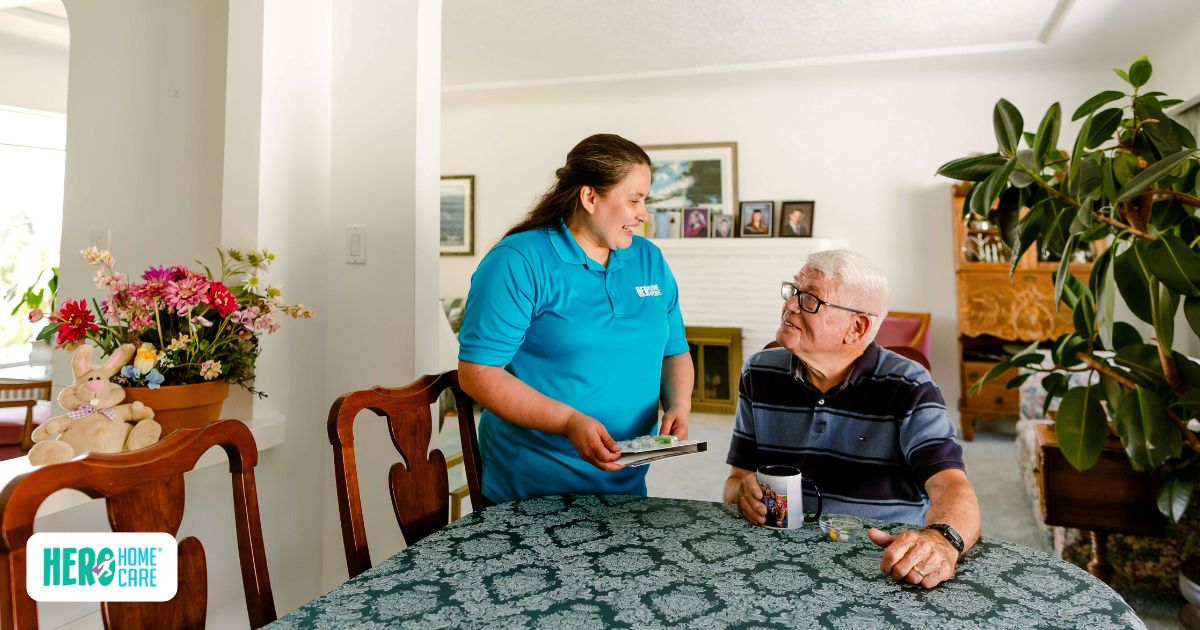
Assistance with everyday activities can also reduce risk in practical ways. Tasks like moving through the home, managing daily routines, or handling small responsibilities become easier when there is support available. This helps reduce the need to rush or overextend, making the environment feel more manageable.
Emma noticed that her father often left items in unusual places, making the space harder to navigate. After arranging Companionship Care with Hero Home Care, a caregiver named Debbie began visiting regularly. With her presence, small things were kept more consistent, and the home felt easier to move through without extra effort.
In this way, support contributes to overall stability. It helps reduce the likelihood of falls or disruptions while giving families a greater sense of reassurance, knowing that someone is there to maintain a safer, more consistent environment.
Final Thoughts: Keeping Aging Parents Safe at Home
Creating a safer home environment doesn’t require major changes all at once. Many of the risks that come up in daily life can be reduced with small, consistent adjustments that make the space easier to navigate and more predictable.
It’s also important to remember that this process doesn’t need to be perfect. Paying attention, making gradual improvements, and checking in over time can go a long way in supporting both safety and independence.
When things start to feel harder to manage, it’s okay to look for additional support. Whether that comes from family or outside help, having someone alongside you can make the process feel more steady and manageable.