

Realizing a parent or loved one may no longer be safe alone is one of the hardest moments a family can face. Often, the question does not begin with a formal care plan, but with a growing need for help for aging parents at home that suddenly feels more urgent than before. It begins after a fall, a night of confusion, a missed medication, a wandering episode, a difficult trip to the bathroom, or a hospital discharge that suddenly changes what daily life looks like at home.
In simple terms, 24-hour home care becomes necessary when a senior needs help or supervision at unpredictable times throughout both the day and the night, and leaving them alone for long stretches is no longer safe. This may happen because of frequent falls, dementia-related confusion, nighttime wandering, toileting needs, medication problems, recovery after illness or surgery, or family caregiver exhaustion.
For many families, this decision feels emotional and urgent at the same time. It can bring guilt, fear, uncertainty, and the worry that waiting too long could lead to a crisis. But understanding the signs clearly can make the next step feel more informed and less reactive. The goal is not to assume the worst. It is to match the level of support to the level of risk so your loved one can stay as safe, comfortable, and supported as possible.
Here is the Quick Answer:
A senior may need 24-hour home care when they can no longer be safely left alone for extended periods or may need help at any time (day or night).
Common signs include repeated falls, nighttime confusion or wandering, difficulty with toileting or mobility at all hours, medication errors, recovery after hospitalization, or caregiver exhaustion.
If needs are unpredictable, safety risks are constant, or supervision is required overnight, part-time care is usually no longer enough. Round-the-clock care provides continuous support, immediate response, and peace of mind while allowing the senior to remain safely at home.
What is 24-hour home care for seniors?
24-hour home care is round-the-clock support provided in a senior’s home when care or supervision may be needed at any time, including overnight. Rather than relying on a few scheduled visits during the day, this type of care is designed for situations where help may be needed unpredictably or where the person is no longer safe alone for extended periods.
In a home setting, 24-hour care is often provided through rotating caregiver shifts so support is available during both daytime and nighttime hours. This is different from occasional hourly care, where someone may come for a few hours and then leave, and it is also different from live-in care, where one caregiver stays in the home but may still need time to sleep and take breaks.
The goal of round-the-clock senior care is not simply to “have someone there.” It is to provide ongoing supervision, help with personal routines, quicker response to safety concerns, and greater peace of mind for families. Depending on the situation, this can include mobility help, toileting assistance, nighttime monitoring, dementia support, meal help, medication reminders, companionship, and coordination with family members.
For some seniors, 24-hour home care is a long-term solution. For others, it may be temporary, such as after hospitalization, surgery, or a major decline in function. What matters most is that the level of support reflects what daily life now requires.

The Main Signs a Senior May Need Round-the-Clock Senior Care
A senior may need 24-hour care when risk can arise at any time, not just during scheduled parts of the day. The pattern families often notice is this: part-time help may cover routine tasks, but the real concern is what happens in between visits, overnight, or during unpredictable moments when no one is there.
Frequent Falls or High Fall Risk
Falls are one of the clearest signs that a senior may no longer be safe alone. Repeated falls, near-falls, trouble standing up, difficulty transferring from bed to chair, or unsafe walking at night can all change the level of supervision needed.
What matters is not only whether a fall has already happened, but how likely another one is. A senior who becomes unsteady when getting to the bathroom at night, struggles with stairs, or needs hands-on help rising from a chair may be at risk even if they say they are managing. One serious fall can lead to injury, hospitalization, fear of movement, and loss of independence. In many families, this is the moment when daytime support starts to feel insufficient because the danger is no longer limited to a few predictable hours.
Wandering, Confusion, or Getting Disoriented
Memory-related risks often make overnight supervision especially important. A senior living with dementia or other cognitive decline may wake at night confused, leave the bedroom without orientation, try to leave the house, or become agitated during evening hours. Some may not recognize where they are, what time it is, or how to respond safely when they feel unsettled.

Related: A Caregiver’s Guide: Cyber Security and Internet Safety for Seniors
This matters because confusion changes safety in ways that are difficult to contain with part-time care alone. If someone may leave the home unsafely, forget how to use the bathroom safely, or become frightened and disoriented after dark, risk can arise without warning. In these situations, around-the-clock care may be less about doing more tasks and more about preventing emergencies.
Help Needed With Toileting, Bathing, Dressing, or Mobility at All Hours
Many families first arrange care around daytime routines, but nighttime needs are often what shift the situation toward 24-hour support. A senior who needs help using the bathroom at night, changing incontinence products, repositioning in bed, or transferring safely may be at risk if no one is available during those hours.

Related: Hero Home Care was recently featured in North Shore News in an article about recognizing early signs that an older loved one may need support at home. While 24-hour care is usually considered when needs become more complex, the article reinforces an important point: planning earlier can help families avoid making care decisions only after a crisis.
The issue is not simply that help is needed. It is that the help cannot always wait until morning. Seniors who try to toilet alone when they are weak, dizzy, or unsteady are at much higher risk of falling. Those who cannot move safely without assistance may become frightened, uncomfortable, or stuck trying to do something physically unsafe. When these needs occur unpredictably, true round-the-clock supervision may be necessary.
Medication Errors or Health Routines That Cannot Be Managed Alone
Medication issues can quickly become safety issues. Missed doses, double-dosing, confusion about timing, inability to follow a medication schedule, or difficulty managing chronic condition routines can all indicate that a senior needs closer oversight.
This is especially true when medications affect blood pressure, blood sugar, pain control, sleep, or cognition. A person may seem mostly independent and still be unsafe if they repeatedly forget what they have taken or when. Families should pay close attention when reminders are no longer enough and the senior cannot reliably manage routines alone.
Recovery After Surgery, Illness, or Hospitalization
Sometimes 24-hour care is needed not because of permanent decline, but because of a short-term high-risk period. After surgery, illness, or hospitalization, seniors may be weaker, less steady, more confused, in pain, or at increased risk of complications. A hospital discharge can leave families feeling unprepared for how much support is suddenly needed at home.
Temporary 24/7 home care for seniors may help during this phase by providing closer monitoring, safer mobility support, help with toileting and transfers, medication routines, and quicker response if something changes. In some cases, this level of support may reduce the chances of a preventable setback or readmission.

Family Caregiver Burnout
Sometimes the sign is not only the senior’s condition. It is the family’s level of exhaustion. When one person is sleeping lightly, listening for movement, checking medications, helping overnight, and staying alert day after day, the situation may no longer be sustainable.
Caregiver burnout matters because constant vigilance affects judgment, patience, physical health, and the ability to keep responding safely. A family may technically still be “managing,” but only through sleep deprivation and ongoing strain. That itself can be a sign that more support is now necessary.
Taken together, these signs create a pattern: supervision is needed because risk can happen at any hour. That is often the point at which a few visits a day are no longer enough. In these situations, continuous caregiver supervision for seniors becomes essential to reduce risk and respond quickly when needs arise.
What health conditions often lead to round-the-clock senior care?
Certain health conditions make it more likely that a senior will eventually need around-the-clock care at home. The issue is not just the diagnosis itself, but how it affects daily safety, memory, judgment, mobility, and the ability to respond to basic needs throughout the day and night.
Dementia and Alzheimer’s disease are among the most common reasons families consider 24-hour care. Wandering, confusion, sundowning, poor judgment, and nighttime disorientation can make it unsafe for the person to be left alone, especially overnight.
Stroke recovery may also lead to round-the-clock senior care, particularly when weakness, poor balance, speech changes, swallowing difficulties, or cognitive effects make daily life more unpredictable. Some people need temporary 24-hour support during recovery. Others need longer-term help if function does not fully return.
Parkinson’s disease can increase the need for continuous care when mobility becomes more limited, transfers become unsafe, or symptoms fluctuate significantly across the day. Frailty and advanced aging may also lead to constant supervision when even small tasks such as walking, toileting, standing up, or preparing food become risky without assistance.
Post-surgical recovery, nighttime confusion, advanced chronic illness, and end-of-life support are also common scenarios. In each case, the core question is the same: can this person be safely supported with part-time help, or do their risks and needs now require someone to be available at all times?

When part-time home care is no longer enough for a senior
Part-time home care can work very well when support needs are predictable. For example, a senior may need help bathing three times a week, meal preparation each afternoon, or assistance getting ready in the morning. In those cases, scheduled hourly care can match the routine effectively.
The problem begins when needs are no longer predictable. A few hours a day may stop being enough when the senior needs help at random times, has nighttime issues, is unsafe alone between visits, or may not be able to wait until the next caregiver arrives. A fall risk at 2 a.m., wandering after dark, repeated medication confusion, or urgent toileting needs are all examples of situations that part-time care may not safely cover.
A senior is often “not safe alone” when there is a realistic chance that something serious could happen and they could not respond appropriately or get help quickly. Families do not need to wait for multiple crises to confirm this. Sometimes one fall, one wandering event, one medication error, or one exhausting stretch of overnight supervision is enough to show that the current care plan no longer matches reality.
Frequency matters, but unpredictability matters even more. If the family is constantly worried about what happens when no one is there, that is often a sign the level of support needs to change.

24-Hour Home Care vs. Live-In Care vs. Overnight Care
Families often hear these care options mentioned together, but they are not the same. Understanding the differences can prevent confusion and help families choose the kind of supervision that best fits the situation.
| Care Option | How It Works | Level of Supervision | Best For |
| 24-Hour Home Care | Rotating Caregiver Shifts Provide Support Day and Night | Highest, with Ongoing Availability Across 24 Hours | Seniors with Wandering, Frequent Toileting, Fall Risk, Advanced Dementia, Post-Hospital Needs, or Unpredictable Care Needs |
| Live-In Care | One Caregiver Lives in the Home and Provides Support During the Day and Some Overnight Presence, with Time for Sleep and Breaks | Moderate to High, but Not the Same as Awake, Active Monitoring at All Times | Seniors Who Need Significant Daily Support but Do Not Require Constant Overnight Intervention |
| Overnight Care | A Caregiver Is Present Overnight, Either Asleep Nearby or Awake Depending on the Arrangement | Nighttime-Focused | Seniors with Nighttime Confusion, Toileting Needs, or Safety Concerns After Dark |
| Hourly or Scheduled Care | Care Is Provided During Planned Visits Only | Lowest | Seniors Who Need Help with Predictable Daytime Routines but Are Otherwise Safe Alone |
The option that provides the most supervision is true 24-hour care with rotating shifts. This is usually the best fit when a senior may need help unpredictably both day and night. Overnight care may be enough when the main concern is after-dark safety. Live-in care can work well for some families, but it is not always the same as true 24-hour monitoring, because one caregiver still needs time to sleep and cannot necessarily respond actively throughout the night.
Keep Reading: Home Care vs Long-Term Care Facility
Benefits of 24-Hour Home Care for Seniors and Families
Once a family understands why this level of care may be needed, the value becomes easier to see. The most obvious benefit is safety. A senior has help available when they need it, whether that means getting to the bathroom, recovering from a transfer, responding to confusion, or reducing the chance that a fall or medical issue goes unnoticed.
Immediate support can also lower the risk of unattended emergencies. Instead of waiting until the next visit or hoping a family member notices something is wrong, there is someone present who can respond sooner. This often helps families feel less on edge and less driven by worst-case scenarios.
For seniors, the benefit is not only supervision. It is often the comfort of staying in familiar surroundings with support that fits daily life. Routines remain more consistent. Personal care needs can be met more safely. Dementia-related confusion may be easier to manage in a familiar home environment than in an unfamiliar setting.
For families, round-the-clock care often brings relief from constant vigilance. That does not mean concern disappears, but it often means the family can move from crisis monitoring to steadier participation in care.

Can 24-hour home care help a senior stay at home longer?
In many situations, yes. Full-time care at home can help some seniors remain in their home safely for longer than they could without continuous support. Familiar surroundings, consistent routines, and one-to-one help can be especially valuable for people with dementia, frailty, or significant mobility limitations.
This does not mean 24-hour home care is the right fit in every situation. Some seniors eventually need a level of medical or environmental support that is better provided in another setting. But for many families, round-the-clock care at home can serve as a meaningful alternative to an immediate move, especially when the senior strongly wishes to remain at home and the home environment can still support safe care.
The key is realism. The purpose of 24-hour care is not to preserve independence by denying risk. It is to support as much independence and familiarity as possible within a safer structure.
How to Decide if Round-the-Clock Senior Care Is the Right Choice
Families often know something has changed before they can clearly explain it. A decision like this becomes easier when it is broken into practical questions about safety, supervision, and capacity.
Questions to Ask About Daily Safety
Think about what happens during ordinary parts of the day. Is your loved one falling, nearly falling, forgetting to eat, missing medications, or struggling with transfers? Are they physically stable enough to be left alone for several hours, or does too much risk build between check-ins?
Questions to Ask About Nighttime Supervision
Nighttime often reveals care needs more clearly than daytime. Is your loved one waking confused, trying to toilet alone, wandering, or needing help getting in and out of bed? Are family members sleeping lightly because they are listening for movement? If problems often happen after dark, overnight or 24-hour care may be more appropriate than daytime visits alone.

Questions to Ask About Family Caregiver Capacity
What is the family realistically able to sustain? Is one person doing most of the care? Is exhaustion affecting sleep, work, health, or decision-making? Are family members constantly “on call” for unpredictable problems? Sometimes the decision becomes clear not only because the senior needs more supervision, but because the family can no longer safely provide it alone.
Learn More: Sharing Caregiving Duties With Siblings
When to Talk to a Home Care Provider or Healthcare Professional
It is time to speak with a provider or healthcare professional when the family is unsure whether the senior can still be left alone safely, when a hospital discharge creates new care demands, or when falls, wandering, medication mistakes, or rapid decline are becoming more common. An experienced care team can help assess whether 24-hour care, overnight care, or another support plan is the best fit.
What services are included in 24-hour home care?
The exact care plan depends on the senior’s situation, but 24-hour home care often includes a combination of practical support, supervision, and coordination. Common services may include personal care, mobility assistance, transfer help, meal support, medication reminders, companionship, toileting assistance, nighttime monitoring, dementia support, post-hospital support, and updates for family members.
This level of care is not defined by one task. It is defined by continuity. The goal is to make sure support is available when needs arise, even when those needs are not predictable.
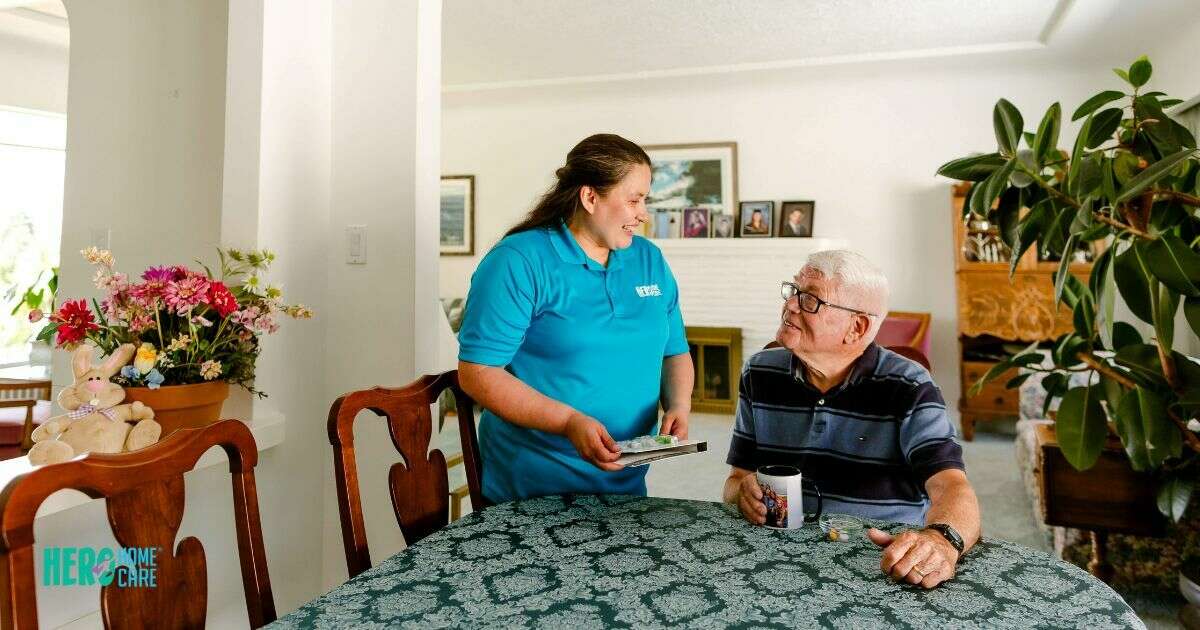
24-Hour Home Care in North Vancouver: When Local Support Matters
When care needs are changing quickly, local support matters. A nearby home care team can often respond more quickly, understand the local healthcare environment, and help families think through options before the situation becomes more urgent. For families trying to compare overnight care, live-in care, and full 24-hour care, speaking with a local provider can make the decision feel more practical and less overwhelming.
In North Vancouver, Hero Home Care helps families understand what level of care fits best and how support can be arranged at home in a way that reflects the senior’s real needs. Some families need temporary post-hospital support. Others need dementia home care, overnight supervision, or full 24-hour home care because the risks of being alone have become too high. The most important step is often not committing immediately to one path. It is getting a clear picture of what the situation now requires.
When to Reach Out for Help
Families should not feel they have to wait for a major crisis before asking questions. If repeated falls, nighttime emergencies, wandering, medication mistakes, rapid decline, caregiver exhaustion, or a difficult hospital discharge are already happening, those signs are reason enough to reach out.
The right next step may be 24-hour home care, overnight care, or another support plan. What matters is understanding the options before the risk becomes more serious.
If you are trying to decide whether your parent or loved one now needs round-the-clock senior care at home, Hero Home Care can help you talk through the situation, assess the level of support needed, and explore what kind of care would make home safer and more sustainable.