
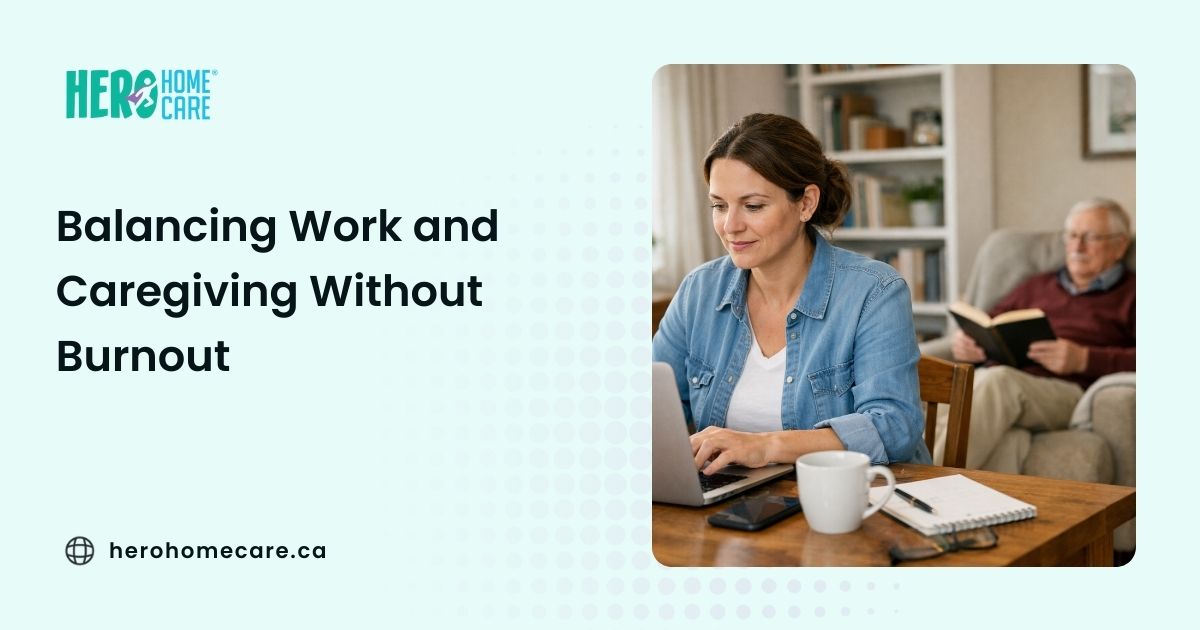
Balancing caregiving with a job can feel like holding two full-time roles at once. Many people try to meet work expectations while managing appointments, daily care, and constant worry for someone they love, often without enough rest or support. For many working caregivers in North Vancouver and surrounding communities, this balancing act becomes part of daily life.
The emotional and mental strain is real, and it’s more common than most people admit. Caregiving rarely comes with clear boundaries, and work doesn’t slow down just because life has changed. This blog is here to help you make sense of that pressure, shift how you think about balance, and explore practical ways to plan, get support, and protect your well-being.
Here is the Quick Answer:
Balancing caregiving and work often becomes difficult as responsibilities quietly grow. Feeling stretched thin, struggling to focus, and lacking time or rest are common signs that the situation may no longer be sustainable without support.
This article explains how sharing responsibility, setting realistic boundaries, and exploring flexible support, including professional home care, can help caregivers reduce pressure and maintain balance over time.
Practical Strategies for Balancing Work and Caregiving
When caregiving and work collide, the goal isn’t perfect balance; it’s sustainability. The strategies below focus on reducing daily strain by changing how responsibilities are structured, not by asking you to “push through.”

Start by containing your time, not filling it
Use time-blocking to group similar tasks together, such as work calls, caregiving check-ins, and appointments, so your day isn’t constantly fragmented. Even imperfect blocks reduce mental fatigue.
Have one clear conversation at work
You don’t need to explain your entire situation. A simple, honest discussion about capacity can lead to flexible hours, adjusted deadlines, or remote work options that make caregiving more manageable.
Decide your boundaries before others do
Clarify what you can realistically handle and communicate it to your family early. Saying “I can do this, but not that” prevents burnout later and reduces unspoken expectations.
Remove decisions wherever possible
Automate reminders for medications, appointments, and bills. Use shared calendars or task lists so you’re not holding everything in your head.
Apply the 80/20 rule to your energy
Identify the few caregiving and work tasks that truly matter, and allow the rest to be “good enough.” Perfection is often the fastest path to exhaustion.
Acknowledge the emotional weight
Guilt, worry, and frustration are part of caregiving. Naming them rather than ignoring them helps prevent emotional overload.
Bring in professional support before crisis
Even a few hours of in-home care can stabilize routines, reduce constant pressure, and give you space to work and rest without feeling on edge.
Keep Reading: How to Find the Right Caregiver for You or Your Loved One

What does balancing work and caregiving really mean today?
Balancing work and caregiving often means living in a constant state of divided attention. You’re expected to meet professional responsibilities while managing appointments, monitoring changes, and being emotionally present for someone who relies on you. Neither role truly pauses, and both feel essential.
For Jason, this showed up gradually. He worked full-time while caring for his mother after her health declined. His days were filled with meetings and deadlines; his evenings with medications, meals, and worry. “I felt like I was always failing someone,” he said, his manager during the day, his mom at night, and himself in between.
Over time, this creates layered strain. Mentally, you’re always planning ahead. Emotionally, you may feel pulled in opposite directions, wanting to be present at work while worrying about home, or feeling guilty at home because work still needs you. Practically, time disappears quickly, leaving little space to rest or reset.
Common signs of caregiver stress often show up quietly: chronic fatigue, irritability, difficulty concentrating, sleep problems, or a sense that you’re always behind. Many caregivers carry guilt: guilt for missing work, for not doing “enough” at home, or for feeling resentful at all.
Burnout doesn’t usually come from one big moment. It builds when the weight of responsibility stays high for too long without relief. Understanding this reality is the first step toward finding balance that’s sustainable, not just survivable.
Signs You’re Struggling to Balance Caregiving and Work
Struggling to balance caregiving and work rarely begins with a dramatic breaking point. More often, the strain builds gradually as responsibilities increase and recovery time disappears. The impact tends to show up across emotions, work performance, and personal life before caregivers fully recognize how stretched they’ve become.
You might notice ongoing stress, difficulty concentrating, or a sense of being constantly “on” without time to reset. Small tasks feel heavier. Patience runs thinner. Rest doesn’t feel restorative.
At work, this can appear as reduced focus, missed details, or feeling mentally divided. At home, it may show up as less energy for relationships, personal routines, or even basic self-care. These changes aren’t signs of failure. They’re indicators that more support may be needed.

Why Recognizing These Signs Early Matters
These patterns aren’t a reflection of poor coping or lack of commitment; they’re signals that the current balance isn’t sustainable. Caregiver burnout doesn’t resolve with willpower alone. Recognizing these signs early creates space to adjust expectations, redistribute responsibility, and bring in support before exhaustion becomes the norm.
Catching an imbalance sooner helps protect not only your well-being, but your ability to continue working and caring over the long term.
Top Challenges Faced by Working Caregivers
For many working caregivers, challenges show up in everyday moments when plans don’t line up, and there’s little room to adjust.
During an afternoon visit, Shorya, one of our Heroes, arrived to help with the evening routine and noticed lunch had been missed. The family caregiver had planned to stop by after work, but meetings ran late and the day moved faster than expected. It wasn’t neglect; it was overlap, and there was no margin left.
This is where common challenges take shape.
- Lack of time: Work and care responsibilities compete, leaving limited flexibility when schedules shift.
- Reduced rest: Busy days and lingering worry can gradually affect sleep and energy.
- Work disruption: Divided attention may make focus and follow-through more difficult.
- Emotional strain: Holding responsibility across roles can feel quietly draining.
- Financial pressure: Care-related costs or reduced hours may add uncertainty over time.
These challenges are common when caregiving and work run in parallel, especially without shared support.

How to Talk to Your Employer About Caregiving Responsibilities
Many working caregivers hesitate to bring up caregiving at work. You may worry about being seen as less committed or fear that flexibility will affect your role. In reality, clear communication often creates more stability, not less.
You don’t need to share every detail of your situation. A simple, professional conversation focused on capacity and solutions is usually enough.
Start by clarifying what would actually help. Would flexible start times reduce stress? Would remote work one or two days a week make appointments easier to manage? Are adjusted deadlines possible during a temporary health change?
When you speak with your employer, frame the conversation around maintaining performance. For example:
- Acknowledge your responsibilities have expanded at home.
- Reaffirm your commitment to your role.
- Suggest specific adjustments that would help you continue meeting expectations.
Many employers appreciate proactive communication. Addressing the issue early prevents misunderstandings later and shows responsibility rather than weakness.
If your workplace has HR policies around family leave, flexible scheduling, or employee assistance programs, it can help to review those beforehand. Even small adjustments can significantly reduce pressure.
You don’t need a permanent solution immediately. Sometimes a short-term arrangement during a health transition is enough to restore balance.
Opening the conversation may feel uncomfortable at first. However, keeping everything unspoken often increases stress. A structured, solution-focused discussion can create breathing room and make balancing work and caregiving more sustainable over time.
How to Know When It’s Time to Ask for Help
Many caregivers wait too long to ask for help, often because they feel they should be able to manage on their own. Over time, though, caregiving can begin to take a visible toll mentally, physically, and emotionally.
You might notice your own health slipping first. Constant fatigue, frequent headaches, irritability, or difficulty concentrating are common signs that the load has become too heavy. Emotionally, resentment or guilt can start to surface, especially when caregiving begins to feel like an obligation rather than a choice. At work, declining performance, increased absences, or ongoing stress can signal that the balance is no longer sustainable.
Asking for help isn’t a failure; it’s a response to reality. Care needs change, and what once felt manageable may no longer be. Bringing in professional support can stabilize routines, reduce constant pressure, and protect both your well-being and the quality of care your loved one receives. Support doesn’t replace love or responsibility; it helps make caregiving something you can continue without burning out.

How Professional Home Care Can Support Working Caregivers
Professional home care is often most helpful when it fits around a caregiver’s life, not on top of it. Support can be scheduled during work hours, overnight, or at specific times of day when caregiving tasks create the most strain, helping routines feel steadier and more predictable.
The right kind of support reduces daily pressure in practical ways, assisting with personal care, meals, medication routines, companionship, or transportation. These tasks are often the most time-consuming and emotionally draining, and sharing them can free up mental space to focus at work and rest afterward.
For seniors, professional care supports independence rather than replacing it. Having consistent, trained support at home allows routines to continue safely, while preserving familiarity and dignity. Care can start small and adjust over time, offering flexibility as needs change, which helps working caregivers stay involved without carrying everything alone.
How Hero Home Care Supports Working Family Caregivers in North Vancouver
Hero Home Care supports working caregivers by building care around real schedules, not ideal ones. Support can be arranged hourly, part-time, or full-time, allowing families to cover the moments that create the most strain, workdays, early mornings, evenings, or overnight.
Each family begins with a personalized care plan shaped around daily routines, work commitments, and changing needs. Heroes are thoughtfully matched, and consistency is prioritized so care feels familiar and dependable rather than disruptive.
For one North Vancouver family, this flexibility made it possible to keep working without constant worry. Antora, a Hero supporting their mother, handled morning routines and medication while the family was at work. “Knowing someone steady was there changed everything,” Sarah, the daughter, shared. “I could focus on my job without feeling like I was choosing work over care.”
By sharing responsibility in a structured, reliable way, Hero Home Care helps family caregivers remain employed, present, and supported without carrying the full weight alone.

Building a Long-Term Support System for Work-Life-Care Balance
Sustainable caregiving rarely depends on one solution alone. Most families find balance by combining support from family members, professional care, understanding employers, and intentional self-care. When responsibility is shared, caregiving becomes more manageable over time.
Planning early is key. Waiting until exhaustion or crisis makes decisions harder and options more limited. Building support gradually, even before care feels overwhelming, allows routines to stabilize and expectations to stay realistic.
Professional home care can play a steady role in that long-term system, adapting as work schedules or care needs change. When support is planned rather than reactive, caregivers are better able to stay present at work, involved at home, and healthier themselves.
Conclusion
Balancing caregiving and work is challenging, especially when responsibilities grow without clear support in place. Recognizing stress early, setting boundaries, and sharing care can make a meaningful difference in both well-being and long-term sustainability.
If this experience feels familiar, it may help to pause and talk things through. Learning about support options, asking questions, or having a conversation with Hero Home Care can be a simple way to explore what might ease the load without pressure or commitment.